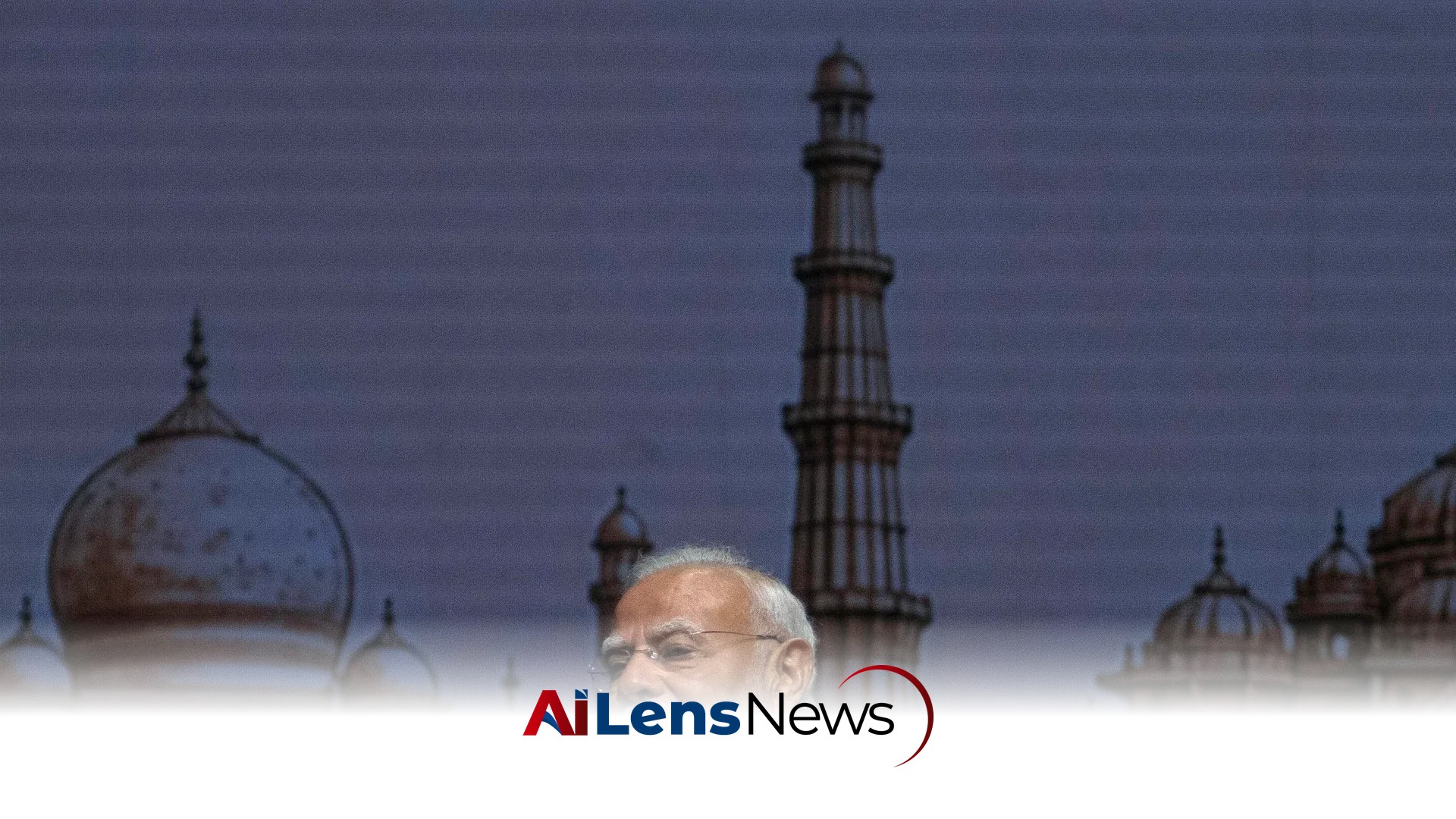


Prime Minister Narendra Modi enhances India's Indo-Pacific partnerships through key agreements amid rising tensions with China and shifting US policies.
Singapore, Singapore Jul 12, 2026 ALN: [NEW DELHI] From missiles and uranium to critical minerals and sports diplomacy, Prime Minister Narendra Modi used a three-nation tour to deepen India’s Indo-Pacific partnerships as regional powers strengthen ties amid China’s growing influence and uncertainty over US engagement. This tour is not merely a series of diplomatic gestures; it signifies a strategic pivot in India’s foreign policy, aimed at enhancing its role in a rapidly changing geopolitical landscape.
The Indo-Pacific region has emerged as a focal point of global strategic competition, particularly between the United States and China. In recent weeks, Modi has stepped up engagement across the Indo-Pacific, signing a flurry of agreements ranging from the sale of BrahMos supersonic cruise missiles to Indonesia to defence, energy, and critical minerals partnerships with Australia. These actions underscore New Delhi’s ambition to play a bigger strategic role in the region, moving beyond traditional bilateral engagements to a more integrated approach involving multiple partners.
The agreements came against a backdrop of heightened security tensions, including China testing a nuclear-capable ballistic missile in the Pacific the day before Modi arrived in Indonesia. The rare test drew protests from several countries and renewed concerns over Beijing’s expanding military reach. Such developments highlight the urgency for regional powers to bolster their security frameworks and collaborate more closely to counterbalance Chinese assertiveness.
Moreover, the deals reflect a broader effort by Indo-Pacific countries to shoulder more of the region’s security and economic burden as Washington presses allies and partners to take on a larger role while China expands its influence. This shift is indicative of a changing paradigm where nations are beginning to realize that they must rely on each other to maintain stability and security in the region.
Australia and Fiji this month also signed a defence pact dubbed the “Ocean of Peace,” marking Suva’s first formal security alliance and underscoring a wider trend towards deeper regional cooperation. This pact is not an isolated event but part of a larger movement within the Pacific Islands to enhance collective security in response to external threats, particularly from China, which has been increasing its presence in the region through investments and diplomatic overtures.
“The rise of China as a major power in the Indo-Pacific region is leading to a new landscape. Countries are responding to that,” said Ashok Malik, India chair at the Asia Group, a consulting firm. “Clearly, the US footprint is declining in the region, and other countries are trying to come together to fill the gap to whatever degree is possible.” This sentiment reflects a growing consensus among regional analysts that the dynamics of power in the Indo-Pacific are shifting, necessitating new forms of collaboration among countries.
Malik further elaborated that the agreements, including those with Japan earlier this month, all point in the same direction: countries are pooling resources in areas such as semiconductors, critical minerals, maritime security, and defence to reduce vulnerabilities as they face pressure from both the US and China. This pooling of resources signifies a strategic alignment that is not only about military cooperation but also economic interdependence, which can enhance resilience against external pressures.
“What you’re seeing emerge in the region – and I’ve been a big supporter and driver of getting New Zealand into it – is what we call mini-latticeworks or multilateral arrangements between a small set of countries,” New Zealand Prime Minister Christopher Luxon said on Saturday after meeting with Modi. This concept of mini-latticeworks highlights the flexibility and adaptability of regional partnerships, allowing countries to collaborate on specific issues without being bound by formal alliances.
“Our relationships with China are the same as what we manage with many other countries, which is we cooperate where we can, we differ where we must, and we work with like-minded countries to advance our own national interests,” Luxon said. This pragmatic approach underscores the complex nature of international relations in the Indo-Pacific, where countries are navigating their interests amidst the competing influences of major powers.
Since returning to office, US President Donald Trump has pressed allies to shoulder a greater share of the region’s security burden, imposed tariffs on partners and competitors alike, and shifted the administration’s messaging by dropping “Indo” from the name of the US Indo-Pacific Command, even as officials insist the military’s mission remains unchanged. This shift has led to concerns among allies about the reliability of US commitments, prompting countries to explore alternative partnerships and security arrangements.
China’s missile launch came up during Modi’s bilateral meeting with Australian counterpart Anthony Albanese on Thursday, according to Foreign Secretary Vikram Misri, who briefed the media in Melbourne. “There was a certain amount of concern expressed about this development,” Misri said, adding that Australia and India would intensify cooperation to ensure that “peace and security and stability in the Indo-Pacific area is continued to be maintained.” This commitment to cooperation is critical as both nations seek to address shared security concerns in a volatile region.
Modi has used the recent flurry of diplomatic meetings to repeatedly cast India’s ties with Indo-Pacific partners as being built on “mutual trust,” calling it the region’s “greatest strategic asset” during meetings with leaders in Japan and Indonesia in recent days. This emphasis on trust is crucial in fostering deeper collaborations and ensuring that partnerships are not merely transactional but grounded in shared values and mutual respect.
Modi’s trip also focused on reducing strategic vulnerabilities. Australia has agreed to supply uranium for India’s civil nuclear programme and expand energy cooperation, while both countries launched initiatives on critical minerals and technology supply chains as governments seek to lessen dependence on China for key resources and manufacturing inputs. This diversification of supply chains is particularly relevant in the context of global supply chain disruptions caused by geopolitical tensions and the COVID-19 pandemic.
Australia’s Defence Industry Minister Pat Conroy defended the decision to sell uranium to India in an interview on ABC’s Insiders on Sunday, saying he is confident it will be used for peaceful energy production. “The visit by prime minister Modi was a landmark event in the relationship between the two nations,” Conroy said. “India is a rising global power, the biggest democracy in the world, and is a force for good on the international stage, and we want to work closely together with them.” This endorsement from Australia signifies a growing recognition of India’s role as a stabilizing force in the region.
India and Australia have steadily expanded cooperation in recent years through the Quad grouping with the US and Japan. Defence, maritime security, and resilient supply chains have become central pillars of a relationship increasingly shaped by strategic competition in the Indo-Pacific. The Quad, originally formed to address maritime security challenges, has evolved into a broader platform for collaboration on various issues, including climate change, technology, and public health.
Alongside defence cooperation, energy security has also become a key focus of Modi’s diplomacy, with agreements aimed at securing new supplies of coal, gas, and critical minerals. The push comes as the conflict involving Iran highlights the risks for an economy that depends heavily on the Middle East for its energy needs. Diversifying energy sources is not merely an economic imperative but also a strategic necessity for India to enhance its energy security and reduce vulnerabilities to external shocks.
Even as New Delhi deepens cooperation with these nations, it still remains heavily reliant on China for the machines and inputs – not least rare earths – critical to its manufacturing ambitions and is tentatively seeking to improve ties with Beijing. This balancing act is emblematic of India’s broader foreign policy strategy, which seeks to navigate complex relationships with major powers while advancing its own national interests. As the geopolitical landscape continues to evolve, India’s ability to manage its relationships with both the US and China will be crucial in determining its future role in the Indo-Pacific.
To learn more about the latest developments in Leaders & Politicians, stay updated with our exclusive reports and analyses on AiLensNews.

