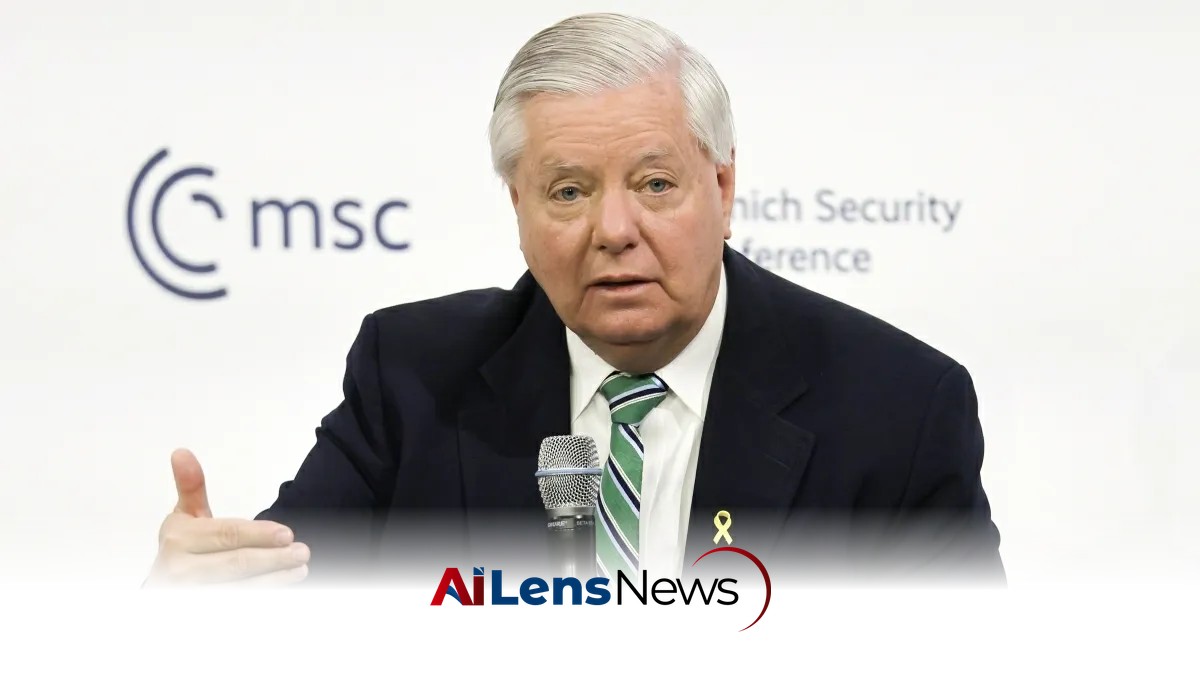


US Senator Lindsey Graham has died at 71 after a brief illness, prompting tributes from political leaders including President Trump.
Riyadh, Saudi Arabia Jul 12, 2026 ALN: WASHINGTON — US Sen. Lindsey Graham, a longtime Republican lawmaker from South Carolina and one of President Donald Trump's closest allies in Congress, has died at the age of 71 following what his office described as a "brief and sudden illness." This unexpected loss has sent ripples through the political landscape, as Graham was a prominent figure in the Senate and a key player in various legislative initiatives over his long career.
A statement released by Graham's office late Saturday did not disclose the cause of death and said his family "appreciates prayers at this time and asks for privacy during this incredibly difficult period." The sudden nature of his passing has left many in shock, as Graham had been actively engaged in political activities and campaigning for his reelection just before his illness.
President Trump paid tribute to Graham in a social media post early Sunday, reflecting on the senator's impact and character. "Senator Lindsey Graham, one of the greatest people and Senators I have ever known, is dead!" Trump wrote. "He was always working, and was a true American Patriot. Lindsey will be greatly missed." This statement underscores the strong bond that developed between Trump and Graham over the years, particularly during Trump's presidency.
Senate Majority Leader John Thune described Graham as "a strong advocate for the United States and a strong ally to freedom-loving countries across the globe." Thune's remarks highlight Graham's commitment to foreign policy and national security, areas where he was particularly influential. "He believed in the might of America to achieve good in the world and dedicated his life to advancing that cause," Thune said, capturing the essence of Graham's political philosophy.
Elected to the Senate in 2002 after serving in the House of Representatives, Graham became one of the Republican Party's leading voices on national security and foreign policy. His tenure in the Senate was marked by a consistent advocacy for a strong US military and an active American role overseas. Graham's background as a lawyer and his military service as a judge advocate general in the U.S. Air Force Reserves informed his perspectives on many issues, particularly those related to defense and international relations.
Although he initially opposed Trump's 2016 presidential bid and called him "unfit for office," the two later developed a close political alliance after Trump entered the White House. Graham became one of the president's most trusted advisers on foreign policy and remained a key ally throughout Trump's second term. This transformation in Graham's relationship with Trump reflects the broader dynamics within the Republican Party during a time of significant political polarization. Graham’s shift from critic to ally exemplifies the party's evolving stance as it navigated the complexities of Trump's leadership.
Graham played a prominent role in shaping Republican legislative priorities, serving as chairman of the Senate Budget Committee and previously leading the Senate Judiciary Committee during the confirmation of Supreme Court Justice Amy Coney Barrett in 2020. His leadership in these roles was critical in advancing conservative judicial appointments, which have had a lasting impact on the American legal landscape. The implications of these appointments are profound, as they shape the judiciary's interpretation of laws and the Constitution for decades to come.
In addition to his work on the judiciary, Graham also helped craft a bipartisan immigration reform proposal in 2013, although the legislation ultimately failed to become law. This effort illustrated his willingness to cross party lines and engage in collaborative policymaking, a trait that earned him both praise and criticism from different factions within the Republican Party. Graham's approach to immigration reform underscored the challenges of achieving bipartisan consensus in a deeply divided political environment.
In recent years, Graham was a vocal supporter of Ukraine, especially in light of the ongoing conflict with Russia. He frequently traveled abroad to meet world leaders, advocating for a strong response to Russian aggression and supporting Ukraine's sovereignty. Ukrainian President Volodymyr Zelenskyy described him as "a true defender of freedom," while Israeli Prime Minister Benjamin Netanyahu called him "a great friend of Israel." These endorsements reflect Graham's commitment to international alliances and his role as a prominent voice on issues of global importance, particularly during a time when geopolitical tensions were escalating.
Graham was serving his fifth term in the Senate and was campaigning for reelection, demonstrating his ongoing commitment to public service and representation of South Carolina's interests. His passing raises questions about the future of his Senate seat and the direction of Republican leadership in the state. Under South Carolina law, Republican Gov. Henry McMaster will appoint a temporary replacement to serve until January, which will be a significant decision as the state prepares for the upcoming election cycle. This appointment could influence the political landscape in South Carolina, especially as the Republican Party seeks to maintain its influence in a state that has become a key battleground in national elections.
Graham never married and had no children, a personal choice that he often spoke about in the context of his dedication to his work. He is survived by his sister, Darline Graham Nordone, who, along with the rest of the family, is now navigating this profound loss. Graham's life and career were defined by his commitment to public service, and his legacy will continue to influence the political landscape in South Carolina and beyond. His absence will be felt not only among his family and friends but also among the many constituents whose lives he touched through his work.
As tributes pour in from colleagues and constituents alike, the impact of Lindsey Graham's work in the Senate will be remembered by many. His ability to forge alliances, advocate for military strength, and engage in complex foreign policy discussions positioned him as a significant figure within the Republican Party. The implications of his passing will be felt not only in South Carolina but also across the nation as the political landscape continues to evolve in the wake of his departure. Graham's unique blend of pragmatism and partisanship, along with his willingness to engage in difficult conversations, will leave a lasting imprint on the Senate and the Republican Party as they navigate the challenges ahead.
To learn more about the latest developments in Leaders & Politicians, stay updated with our exclusive reports and analyses on AiLensNews.

