

Qatar issued a security alert and swiftly neutralized a threat amid escalating U.S.-Iran tensions, urging dialogue and adherence to the MOU.
Doha, Qatar Jul 9, 2026 ALN: Qatar issued a security alert and later ‘eliminated the threat’ amid rising U.S.-Iran tensions, as Doha condemned attacks on vessels and urged dialogue.
On Thursday morning, residents of Qatar received an elevated security threat alert, followed by an all-clear message approximately eight minutes later. This marked the first such alert sequence in nearly three months. The rapid response underscores Qatar's commitment to maintaining security and stability within its borders, particularly in a region often characterized by geopolitical volatility.
The brief window between the two notifications indicates a swift interception, consistent with Qatar’s established missile defense protocols. Qatar has invested significantly in its defense capabilities, particularly in light of its geographical proximity to Iran and the ongoing tensions in the Gulf region. The country's defense strategy includes a combination of advanced technology and partnerships with allies, notably the United States, which maintains a military presence in the region.
Iran’s semi-government Tasnim News Agency reported that its forces targeted a satellite antenna used as an early-warning site in Qatar, alongside attacks on U.S. military targets in Kuwait and Bahrain. The alerts coincided with a sharp escalation in the U.S.-Iran conflict, with U.S. Central Command launching strikes on over 80 Iranian targets overnight, including air defense systems, radar sites, and IRGC vessels in and near the Strait of Hormuz. This action was a response to Iranian attacks on commercial shipping, including the Qatari tanker Al Rekayyat. The Strait of Hormuz is a critical maritime chokepoint through which a significant portion of the world's oil supply is transported, making stability in this area essential not only for regional countries but also for global markets.
In light of these developments, Qatar’s Ministry of Foreign Affairs summoned Iran’s Deputy Ambassador to deliver a formal protest note regarding the Al Rekayyat incident. This diplomatic maneuver reflects Qatar's position as a mediator in regional conflicts, emphasizing its commitment to maintaining open lines of communication even amidst rising tensions. Qatar has historically played a role in facilitating dialogue between conflicting parties, leveraging its unique relationships with both Western and regional powers.
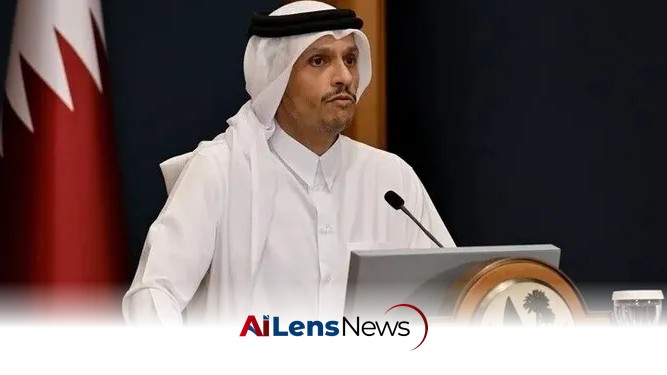
Against this backdrop, Qatar’s Prime Minister and Minister of Foreign Affairs, Sheikh Mohammed bin Abdulrahman Al Thani, engaged in a phone call with Iranian Foreign Minister Abbas Araghchi. During this conversation, Sheikh Mohammed conveyed Qatar’s condemnation of the attacks on commercial vessels and emphasized the necessity for all parties to adhere to dialogue and implement the terms of the Memorandum of Understanding (MOU). The MOU, which aims to promote cooperation and reduce tensions, is critical in the context of the ongoing U.S.-Iran standoff, which has seen numerous incidents escalate since the U.S. withdrawal from the Joint Comprehensive Plan of Action (JCPOA) in 2018.
Sheikh Mohammed also held discussions with several key regional figures, including Saudi Foreign Minister Prince Faisal bin Farhan, UAE Deputy Prime Minister and Foreign Minister Sheikh Abdullah bin Zayed Al Nahyan, Oman’s Foreign Minister Sayyid Badr bin Hamad Al Busaidi, and Turkey’s Foreign Minister Hakan Fidan. In each of these calls, he reaffirmed Qatar’s commitment to de-escalation and the pursuit of a comprehensive agreement that fosters lasting regional peace. Qatar's diplomatic efforts reflect a broader strategy to position itself as a stabilizing force in the Gulf, particularly as it navigates complex relationships with both Iran and its Gulf Cooperation Council (GCC) neighbors.
As tensions continue to rise, Qatar’s proactive measures and diplomatic engagements highlight its role as a mediator in the region, advocating for dialogue and cooperation among neighboring states. This role is particularly significant given the historical context of the Gulf Cooperation Council, which has seen internal divisions, especially between Qatar and its neighbors following the 2017 blockade imposed by Saudi Arabia, the UAE, Bahrain, and Egypt. Qatar’s ability to maintain open communication channels with Iran, while also engaging with its GCC partners, positions it uniquely within the regional dynamics.
The implications of Qatar's actions extend beyond immediate security concerns. The current situation underscores the fragility of the regional order and the potential for miscalculations that could lead to broader conflicts. The U.S.-Iran tensions, exacerbated by military actions and retaliatory strikes, could have far-reaching consequences on energy markets, international shipping, and diplomatic relations. Qatar's emphasis on dialogue and de-escalation is not only a reflection of its national interests but also a recognition of the interconnectedness of security in the Gulf. A conflict that draws in Iran and the U.S. could destabilize the entire region, affecting countries far beyond the immediate vicinity.
Moreover, Qatar's diplomatic efforts could serve as a template for conflict resolution in other regions facing similar tensions. By prioritizing dialogue over confrontation, Qatar aims to foster an environment where mutual understanding can replace hostility. This approach is particularly relevant in the context of ongoing conflicts in the Middle East, where entrenched positions often hinder peace efforts. Qatar's ability to navigate these complex relationships may offer lessons for other nations seeking to mediate in international disputes.
In conclusion, as Qatar navigates the current security landscape and the escalating U.S.-Iran tensions, its actions reflect a broader commitment to peace and stability in the region. The swift response to the security threat, coupled with proactive diplomatic engagements, underscores Qatar's role as a key player in fostering dialogue and cooperation among its neighbors. As the situation develops, the international community will be closely watching how Qatar balances its relationships with both Iran and its Gulf partners, and whether its efforts can lead to a more stable and peaceful regional order.
To learn more about the latest developments in Government & Governance, stay updated with our exclusive reports and analyses on AiLensNews.

