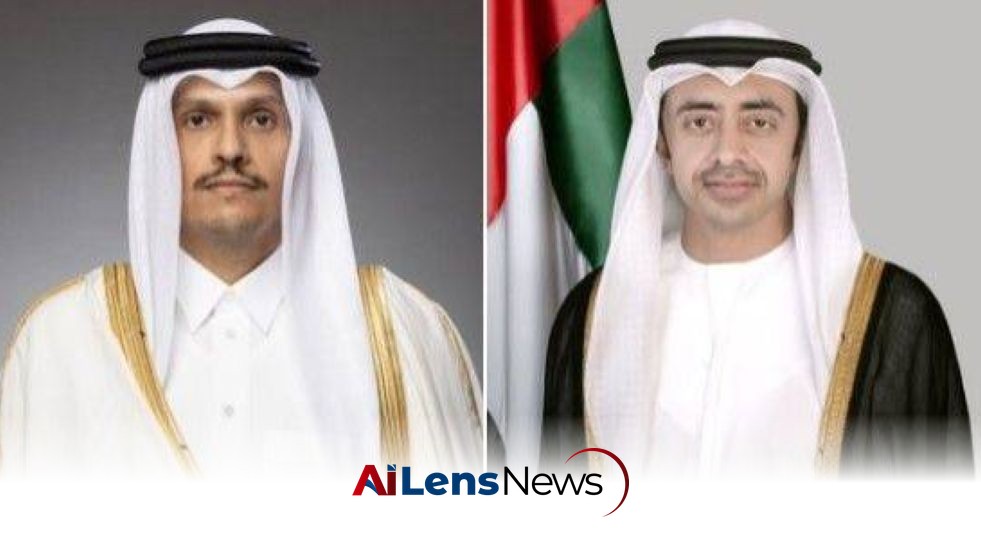


In a recent call, Qatar's Prime Minister and UAE's Deputy PM reviewed bilateral relations and discussed regional stability efforts.
Doha, Qatar Jul 12, 2026 ALN: Prime Minister and Minister of Foreign Affairs HE Sheikh Mohammed bin Abdulrahman bin Jassim Al Thani received a telephone call from Deputy Prime Minister and Minister of Foreign Affairs of the United Arab Emirates HH Sheikh Abdullah bin Zayed Al Nahyan. This communication underscores the ongoing collaboration between Qatar and the UAE, two nations that have historically shared both cooperative and competitive dynamics in the Gulf region. The relationship between these two countries has evolved significantly over the years, shaped by regional events, economic interests, and diplomatic initiatives.
During the call, they reviewed bilateral relations and ways to support and strengthen them. The relationship between Qatar and the UAE has seen fluctuations, particularly in light of the Gulf crisis that began in 2017, when several Arab states, including the UAE, imposed a blockade on Qatar. This blockade stemmed from accusations against Qatar of supporting terrorism and engaging in activities that were deemed destabilizing by its neighbors. The blockade led to significant economic and social ramifications for Qatar, prompting it to seek new alliances and bolster its self-sufficiency. However, recent years have indicated a thawing of relations, with both countries seeking to enhance their diplomatic ties and economic partnerships. This ongoing dialogue is vital for fostering stability in the Gulf region, which is characterized by complex geopolitical challenges.
In addition to discussing bilateral relations, the leaders addressed the latest regional developments, particularly the diplomatic efforts and joint coordination to de-escalate tensions and enhance security and stability in the region. The Middle East has been a focal point for various conflicts, including the ongoing situations in Yemen and Syria, as well as tensions between Iran and other Gulf states. The need for dialogue and diplomacy has never been more pressing, as these tensions have the potential to disrupt not only regional stability but also global economic interests. The discussions also reflect a broader understanding that stability in the Gulf is interconnected with global security, as conflicts in this region can have far-reaching implications.
The Prime Minister and Minister of Foreign Affairs emphasized the importance of all parties adhering to dialogue and diplomacy. This call for dialogue aligns with broader international efforts to mediate conflicts and foster cooperation among Gulf states. The region has historically been marked by a lack of effective communication channels, which has often led to misunderstandings and escalations. By promoting dialogue, Qatar and the UAE are contributing to a more stable and secure environment, which is essential not only for their national interests but also for the overall peace in the Middle East.
One key point of discussion was the implementation of the agreements reached within the framework of the Memorandum of Understanding between the United States of America and the Islamic Republic of Iran. The memorandum, which addresses various security concerns, is crucial for maintaining peace in the region, particularly in strategic areas such as the Strait of Hormuz. This waterway is vital for global oil transportation and has been a flashpoint for tensions between Iran and Western nations, especially the United States. Ensuring freedom of navigation in this strait is not only essential for regional security but also for the global economy, which relies heavily on the oil transported through these waters. The implications of these agreements extend to the broader international community, as disruptions in this region can lead to significant economic repercussions worldwide.
In reiterating the State of Qatar's full support for all efforts aimed at defusing tensions, the Prime Minister highlighted Qatar's role as a mediator in regional conflicts. Qatar has positioned itself as a neutral ground for dialogue, often hosting discussions between conflicting parties. This diplomatic stance has allowed Qatar to build relationships with various factions, including those that are often marginalized in traditional diplomatic circles. By acting as a mediator, Qatar not only enhances its own diplomatic profile but also contributes to a more nuanced and multifaceted approach to conflict resolution in the region.
The implications of these discussions extend beyond Qatar and the UAE. The stability of the Gulf region is of paramount importance not only to its neighbors but also to global powers that have vested interests in the area. The United States, for instance, has a significant military presence in the Gulf and relies on stable relations with Gulf Cooperation Council (GCC) countries to maintain its strategic interests. Furthermore, the ongoing tensions with Iran have led to a reevaluation of security strategies among GCC nations, prompting a need for collective security arrangements and collaborative defense strategies. The changing dynamics in the region necessitate a unified approach to address potential threats and ensure the security of all member states within the GCC.
Moreover, the economic implications of stability in the region cannot be overstated. The Gulf states, including Qatar and the UAE, are major players in the global energy market. Any disruption in this region can lead to fluctuations in oil prices, affecting economies worldwide. Therefore, fostering a climate of cooperation and understanding is not only beneficial for the countries involved but is also critical for global economic stability. The economic interdependence of Gulf states with global markets underscores the need for a stable and secure environment, which can facilitate trade and investment opportunities.
As the conversation between the two leaders illustrates, the path forward involves a commitment to dialogue and a shared vision for a peaceful and prosperous region. The ability of Qatar and the UAE to navigate their bilateral relationship while addressing broader regional concerns will be a significant factor in shaping the future of Gulf diplomacy. The regional landscape is constantly evolving, and the proactive engagement of these two nations can set a precedent for other countries in the region to follow.
In conclusion, the recent telephone call between the Prime Minister of Qatar and the Deputy Prime Minister of the UAE highlights the importance of diplomatic engagement in addressing regional challenges. The commitment to dialogue, adherence to agreements, and a focus on mutual security interests are essential for fostering a stable and secure environment in the Gulf. As both nations continue to work together, their efforts could serve as a model for other countries in the region, demonstrating that cooperation and diplomacy can lead to lasting peace and stability. The continued dialogue between Qatar and the UAE not only reflects their mutual interests but also signifies a broader commitment to regional cooperation and a collective approach to addressing the challenges that lie ahead.
To learn more about the latest developments in Leaders & Politicians, stay updated with our exclusive reports and analyses on AiLensNews.

