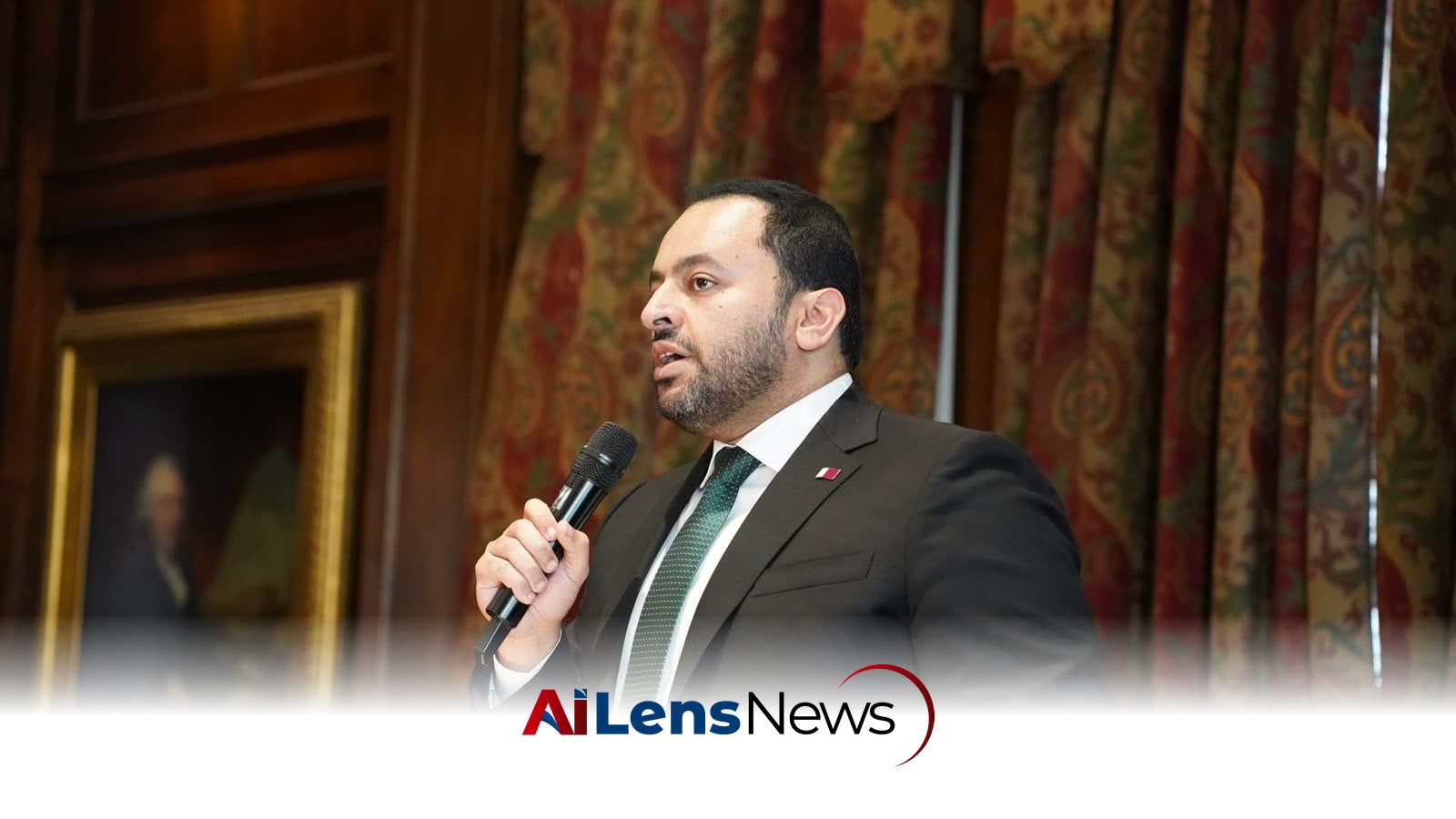


Qatar’s Minister of State for Foreign Affairs, Mohammed bin Abdulaziz Al-Khulaifi, asserts that mediation is a constitutional commitment, essential for international peace and dialogue.
Doha, Qatar Jul 9, 2026 ALN: Qatar’s Al-Khulaifi says mediation is a constitutional commitment, highlighting Doha’s role in diplomacy, dialogue, and conflict resolution.
In recent years, Qatar has emerged as a significant player in global diplomacy, often taking on the role of mediator in various international conflicts. This diplomatic approach is not merely a strategic choice but is embedded in the very fabric of the nation’s constitution. Qatar’s Minister of State at the Ministry of Foreign Affairs, Mohammed bin Abdulaziz Al-Khulaifi, articulated this perspective during a speech at the Royal Institute of International Affairs, Chatham House, in London. He emphasized that Qatar views mediation as a constitutional commitment, which reflects its broader approach to international relations.
Article 7 of Qatar’s constitution serves as the guiding principle for its foreign policy, advocating for the promotion of international peace and security through peaceful means of resolving disputes. This constitutional mandate underscores Qatar's commitment to mediation as a fundamental aspect of its identity on the global stage. Al-Khulaifi stated, "Qatar does not view mediation as merely a tool of foreign policy, but rather as a reflection of a firmly established constitutional conviction." This distinction is crucial as it positions Qatar not just as a participant in global diplomacy but as a nation whose diplomatic efforts are rooted in its national values and legal framework.
Qatar's unique position in the Middle East, a region often fraught with tension and conflict, allows it to leverage its diplomatic capabilities effectively. The country has cultivated relationships across various political spectrums, which has enabled it to act as a neutral mediator in disputes that might otherwise be intractable. This ability to facilitate dialogue is particularly significant given the geopolitical complexities of the region, characterized by longstanding rivalries and alliances.
Al-Khulaifi elaborated on Qatar’s diplomatic philosophy, emphasizing the importance of preserving relationships with all parties involved in conflicts. He noted that maintaining open lines of communication, especially during periods of disagreement, is essential for effective mediation. "Communication with all parties should not be understood as an agreement with them," he remarked, highlighting the nuanced nature of diplomacy. Keeping dialogue channels open during crises can be seen as "the highest responsible contribution" a middle-power state can make, reinforcing the idea that proactive engagement is vital for conflict resolution.
The complexities of modern conflicts necessitate a multifaceted approach to diplomacy. Al-Khulaifi pointed out that contemporary disputes often encompass a range of dimensions—political, military, economic, technological, and humanitarian. As such, he argued that mediation has become a strategic necessity. "Dialogue is not a reward for agreement, but rather the path leading to it," he stated, indicating that the process of mediation is as important as the outcomes it seeks to achieve.
In outlining the key elements of successful mediation, Al-Khulaifi identified three main pillars: access, trust, and perseverance. He emphasized that establishing and maintaining communication channels, ensuring confidentiality, and demonstrating consistency are critical to building confidence between conflicting parties. This approach aligns with the broader understanding of diplomacy as a long-term endeavor rather than a series of isolated events. "Diplomacy is not measured by headlines, but by sustainable results," he remarked, suggesting that the true success of diplomatic efforts is seen in the lasting peace and stability they foster.
Qatar's mediation efforts have been notable in several regions, including Afghanistan, Gaza, Chad, and the Democratic Republic of Congo. Al-Khulaifi highlighted that experience shows progress often comes through patient engagement rather than sudden breakthroughs. This perspective is particularly relevant in a world where immediate results are often expected, yet history has demonstrated that lasting peace typically requires time and persistent effort.
Importantly, Al-Khulaifi clarified the role of a mediator, stating that it is not to impose outcomes but rather to create conducive conditions for dialogue. He emphasized that the mediator cannot create a political will that does not exist, indicating that the responsibility lies in ensuring "channels of dialogue remain open when opportunities for peace arise." This understanding reflects a mature approach to diplomacy, recognizing the limits of influence while also acknowledging the critical role of facilitators in the peace process.
The growing role of middle-power countries like Qatar in global diplomacy is increasingly significant. Al-Khulaifi asserted that the influence of these nations is based less on military or economic strength and more on credibility and trust. In a world where large powers often dominate international relations, the ability of smaller states to mediate effectively can provide a counterbalance and foster more inclusive dialogue. "Complete neutrality may be rare in international relations, but fairness always remains possible," he stated, underscoring the importance of perception and integrity in diplomatic efforts.
Concluding his remarks, Al-Khulaifi invoked the wisdom of former South African president Nelson Mandela, quoting, "If you want to make peace with your enemy, you have to work with your enemy." This statement encapsulates the essence of Qatar’s diplomatic philosophy—recognizing that engagement, even with adversaries, is essential for achieving peace. He emphasized that the future of diplomacy would depend not only on power dynamics but also on the willingness of nations to build trust, maintain dialogue, and pursue peaceful solutions to conflicts.
As Qatar continues to navigate its role on the international stage, its commitment to mediation as a constitutional principle may serve as a model for other nations. The emphasis on dialogue and relationship-building could contribute to a more stable and peaceful international community. In a time when global tensions are high, Qatar’s approach may offer valuable lessons on the importance of dialogue, patience, and the pursuit of common ground in the quest for peace.
Moreover, Qatar's investments in soft power, including hosting international conferences and engaging in cultural diplomacy, further enhance its credibility as a mediator. The country's efforts to position itself as a hub for dialogue and negotiation reflect a comprehensive strategy that goes beyond mere political maneuvering. By fostering a culture of diplomacy, Qatar not only seeks to resolve current conflicts but also aims to prevent future disputes through understanding and collaboration.
The implications of Qatar's mediation strategy extend beyond its borders. As the nation continues to assert its influence in international affairs, it challenges traditional power dynamics and encourages a more inclusive approach to global governance. In an era where multilateralism is often questioned, Qatar’s commitment to dialogue and mediation exemplifies how smaller nations can play a pivotal role in shaping the international order.
In conclusion, Qatar’s emphasis on mediation as a constitutional commitment highlights its unique approach to diplomacy. By prioritizing dialogue, maintaining relationships, and fostering trust, Qatar positions itself as a key player in conflict resolution on the global stage. The lessons drawn from its experiences may inspire other nations to adopt similar strategies, ultimately contributing to a more peaceful and cooperative international community.
To learn more about the latest developments in Government & Governance, stay updated with our exclusive reports and analyses on AiLensNews.

