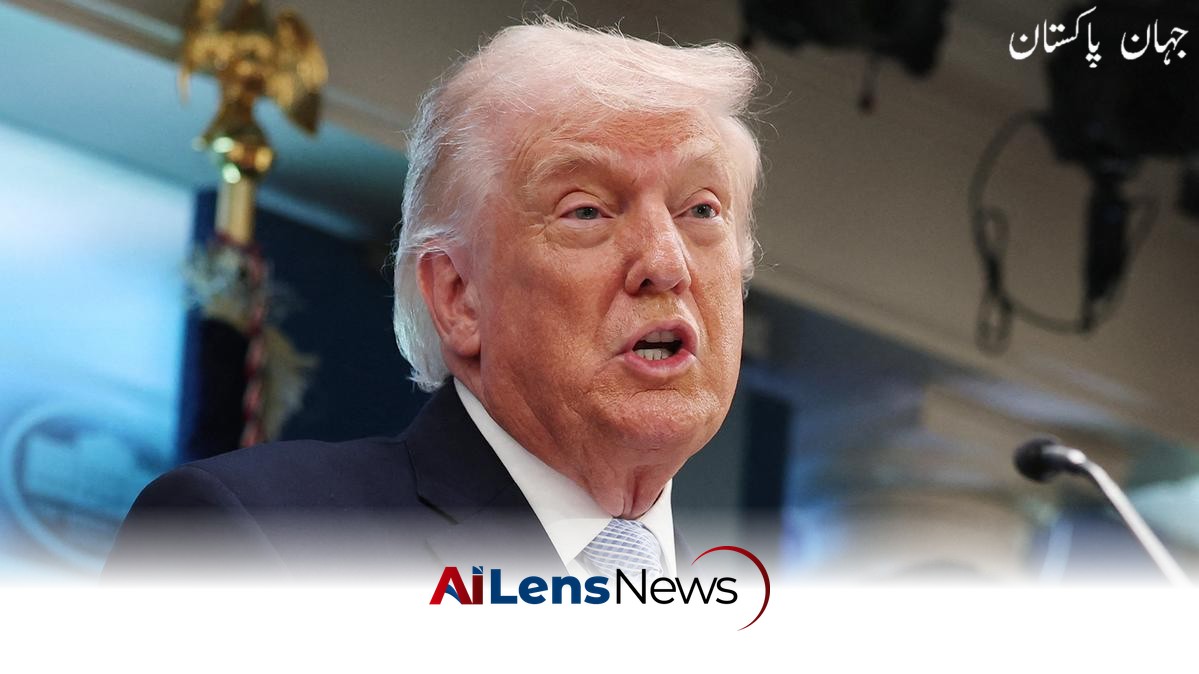


Former President Donald Trump claims Iran seeks to reopen the Strait of Hormuz to recover $500 million daily lost due to its closure.
Islamabad, Pakistan Apr 22, 2026 ALN: Former President Donald Trump recently stated that Iran is eager to keep the Strait of Hormuz open, aiming to recover approximately $500 million daily that they are losing due to its closure. In a statement, Trump emphasized that Iran does not want the strait to remain blocked, as the United States has imposed a complete blockade on this crucial waterway.
The Strait of Hormuz is a narrow passage that connects the Persian Gulf to the Gulf of Oman and the Arabian Sea. It is one of the most strategically important waterways in the world, with approximately 20% of the global oil supply passing through it. This vital corridor is flanked by Iran to the north and Oman to the south, making it a focal point for international trade and energy transport. The closure of the strait can lead to immediate and far-reaching consequences for global oil prices and supply chains, affecting not just the countries in the region but also economies around the world.
According to Trump, the Iranian leadership is merely expressing a desire to keep the strait closed to avoid embarrassment. He mentioned that just four days ago, people contacted him, stating that Iran wants to reopen the Strait of Hormuz. This assertion touches on a complex web of geopolitical tensions involving Iran, the United States, and other nations reliant on oil exports from the region. Trump's comments highlight the ongoing struggle for power and influence in the Middle East, where oil remains a critical resource driving both economic and political agendas.
The geopolitical landscape surrounding the Strait of Hormuz has been fraught with tension, particularly since the U.S. withdrew from the Joint Comprehensive Plan of Action (JCPOA) in 2018. This agreement, aimed at curbing Iran's nuclear ambitions in exchange for sanctions relief, was a significant diplomatic effort that has since unraveled. The re-imposition of sanctions has severely impacted Iran’s economy, leading to increased hostilities and military posturing in the region. The withdrawal from the JCPOA not only strained U.S.-Iran relations but also affected the broader dynamics of international diplomacy concerning nuclear proliferation and regional security.
Trump further asserted that if the Strait of Hormuz were to be opened, the U.S. would never be able to negotiate a deal with Iran again. He indicated that no deal could be reached unless the U.S. completely destroys the rest of Iran, including its leadership. This statement reflects a hardline stance that has characterized U.S.-Iran relations in recent years, where diplomatic solutions have often been overshadowed by threats and military actions. Such rhetoric raises concerns about the potential for conflict, as it suggests a willingness to escalate tensions rather than seek peaceful resolutions.
On the other hand, Amir Saeed Iravani, Iran's permanent representative to the United Nations, has indicated that they have received signals regarding the potential end of the U.S. blockade. This statement suggests a possible opening for dialogue, although the complexities of U.S.-Iran relations make any negotiations fraught with challenges. The Iranian economy has been under immense pressure due to sanctions, and the potential for economic recovery may hinge on the reopening of the Strait of Hormuz. Iran's leadership is aware that the strait's closure not only affects their economy but also has implications for their political standing in the region.
The implications of the closure of the Strait of Hormuz extend beyond Iran and the United States. Countries such as Saudi Arabia, the United Arab Emirates, and other Gulf nations depend heavily on this passage for their oil exports. Any disruption can lead to spikes in oil prices, affecting economies worldwide. The international community, particularly major economies like China, Japan, and the European Union, closely monitors the situation, as their energy security is directly tied to the stability of this maritime route. The potential for increased oil prices can create ripple effects, influencing inflation rates and economic stability in countries far removed from the immediate conflict.
As discussions around the Strait of Hormuz unfold, the international community watches closely, aware of the potential consequences for global oil markets and regional stability. The maritime security of the Strait of Hormuz is a priority for many nations, and any threat to its openness could lead to military interventions or increased naval presence in the region. The U.S. has historically maintained a military presence in the Gulf to ensure the free flow of oil, which has sometimes led to confrontations with Iranian forces, further complicating the security situation.
The history of tensions in the Strait of Hormuz is long and complex. Incidents such as the tanker wars of the 1980s during the Iran-Iraq War, where ships were targeted, and more recent confrontations between Iranian forces and U.S. naval vessels highlight the fragile security situation. The U.S. has maintained a military presence in the region to ensure the free flow of maritime traffic, which has sometimes led to escalations in tensions with Iran. The presence of U.S. naval forces is often viewed by Iran as a provocation, leading to a cycle of military posturing and aggressive rhetoric from both sides.
In light of these dynamics, the potential reopening of the Strait of Hormuz could serve as a catalyst for renewed diplomatic efforts. However, the path to negotiation is complicated by deep-seated mistrust and divergent interests. Iran's desire to restore its oil exports and the U.S. insistence on curbing Iran's regional influence and nuclear capabilities create a challenging environment for any meaningful dialogue. The stakes are high, as both nations navigate a landscape marked by historical grievances, national pride, and strategic calculations.
In conclusion, the Strait of Hormuz remains a focal point of international relations, particularly between Iran and the United States. The statements made by Trump underscore the high stakes involved in this geopolitical chess game, where economic interests, national security, and regional stability are intertwined. As the situation evolves, the global community will continue to pay close attention to developments in this critical maritime corridor, which has far-reaching implications for energy markets and international diplomacy. The future of the Strait of Hormuz is uncertain, and its importance as a strategic passageway ensures that it will remain a central issue in global politics for the foreseeable future.
To learn more about the latest developments in Political Controversies, stay updated with our exclusive reports and analyses on AiLensNews.

