

President Donald Trump announced that the interim agreement to end hostilities with Iran is no longer valid, signaling potential new military actions.
Kuwait City, Kuwait Jul 12, 2026 ALN: ANKARA/DUBAI: President Donald Trump has declared that the interim agreement aimed at de-escalating the conflict with Iran is "over," signaling a potential shift in U.S. military strategy in the region. This announcement comes in the wake of Iranian attacks on U.S. military bases in the Gulf, which have heightened tensions and raised the specter of renewed military engagement. The situation has already led to a significant increase in oil prices, as Iran confirmed its involvement in targeting U.S. military installations in Bahrain and Kuwait, following a series of U.S. retaliatory strikes against Iranian strikes on tankers in the strategically important Strait of Hormuz.
The ongoing conflict has further destabilized a fragile ceasefire that had been in place, diminishing hopes that the memorandum of understanding signed on June 17 would evolve into a lasting peace agreement. The hostilities began escalating significantly with U.S. airstrikes against Iranian targets on February 28, marking a critical turning point in U.S.-Iran relations. In a recent statement, Trump expressed skepticism about the possibility of a genuine deal with Iran, remarking, "If we make a deal with Iran I’m not sure that will stick, because I found them to be very dishonorable people." This sentiment reflects a broader frustration among U.S. officials regarding Iran's compliance with previous agreements and its perceived role in regional instability.
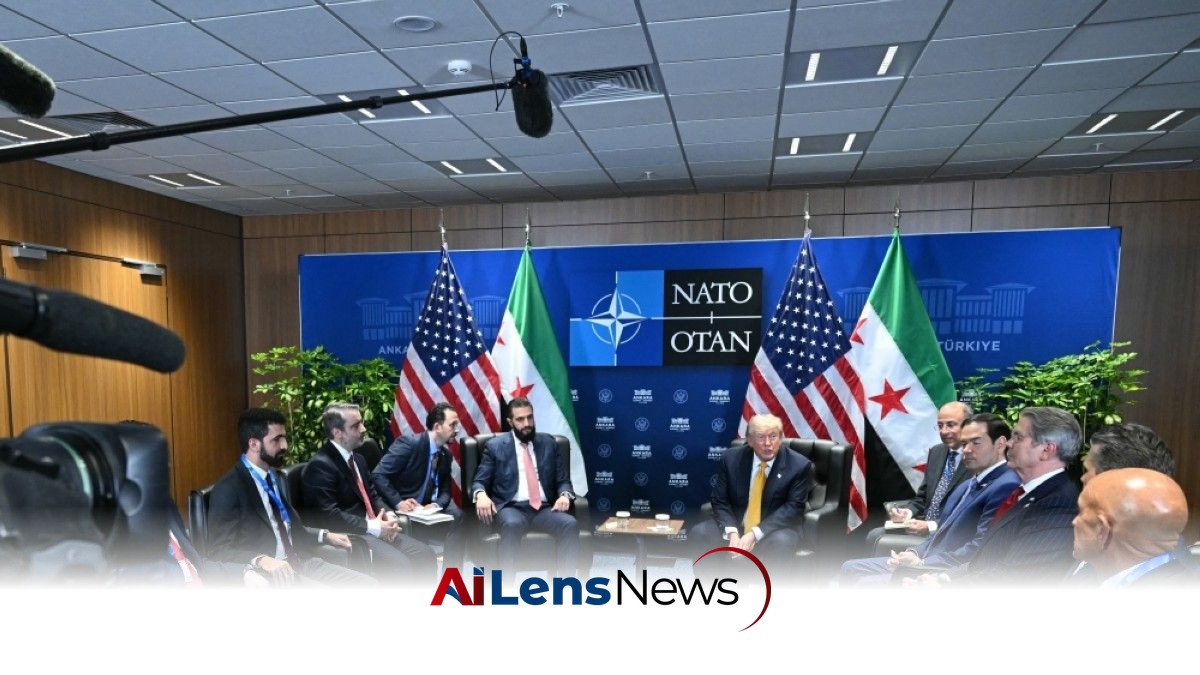
While Trump did not explicitly announce a return to full-scale war, the ambiguity of his statements leaves room for interpretation regarding the future of U.S.-Iran negotiations. When asked about the status of the memorandum before a NATO summit in Turkey, Trump responded, "It’s a very interesting question. To me, I think it’s over. I don’t want to deal with them." His remarks included strong language about Iranian leadership, whom he characterized as "sick people," indicating a personal disdain that could complicate diplomatic efforts moving forward.
A source familiar with discussions in Ankara noted that Trump, while refraining from reiterating his comments about the interim deal during the NATO summit, did caution about impending strikes before meeting with Ukrainian President Volodymyr Zelenskiy. Trump warned reporters, "We’re going to hit them hard tonight," a statement that underscores the seriousness of the U.S. response to Iranian provocations. The latest Iranian attacks have raised significant concerns about safety in the Strait of Hormuz, a vital maritime corridor for global oil shipments, with shipping data indicating that at least four oil and gas tankers opted to turn back rather than risk navigating the increasingly perilous waters.
The escalation of hostilities has had immediate economic repercussions, particularly in the oil market. Although Trump has previously moderated his threats against Iran, the latest developments have caused oil prices to surge sharply, with Brent crude futures rising over 5 percent to $78.48 a barrel. This increase, while still lower than the peaks above $120 seen during earlier conflicts, has reignited inflation risks in the bond market, particularly as ongoing hostilities have continued to deplete global oil inventories. The financial markets reacted negatively, with Wall Street's main indexes experiencing declines amid growing uncertainty.
In a bold move, Iran's Revolutionary Guards (IRGC) claimed responsibility for the attacks on U.S. military sites and reported shooting down a U.S. MQ-9 drone that they alleged attempted to interfere with their operations. Bahrain's military later announced that it had successfully thwarted Iranian attacks, further complicating the regional security landscape. This pattern of escalating military engagement underscores the precarious nature of the situation and the potential for a broader conflict.
The U.S. response to earlier Iranian assaults on three tankers in the Strait was swift, with new military strikes launched and a license permitting Iran to sell oil revoked. The U.S. Central Command reported that over 60 small boats operated by the IRGC were targeted in an operation intended to impose significant costs on Iran for its violation of the ceasefire. Trump confirmed that U.S. forces had "knocked out 28 boats last night," and hinted at further military action, acknowledging that U.S. forces had targeted Iran's primary oil hub, Kharg Island. He reiterated the possibility that U.S. forces could take control of the island again, emphasizing the strategic importance of this location in the context of U.S.-Iran relations.
NATO Secretary General Mark Rutte described the U.S. strikes on Iran as "absolutely necessary," reflecting a consensus among some Western allies regarding the need for a robust response to Iranian aggression. EU foreign policy chief Kaja Kallas later remarked that the exchanges of fire complicate already tense negotiations to conclude the war, labeling Iran's actions against Bahrain and Kuwait as unacceptable. This sentiment highlights the broader geopolitical implications of the conflict, as European nations grapple with the ramifications of U.S. military actions in the region.
In response, Iran's top military command denounced the U.S. strikes as a "blatant act of aggression" and threatened a "crushing response," asserting that Tehran would not tolerate U.S. interference in the management of the Strait of Hormuz. Iranian parliament speaker Mohammad Baqer Qalibaf accused the U.S. of violating the ceasefire agreement, declaring, "The era of bullying and extortion is over. We don’t fold." This rhetoric suggests that Iran is prepared to escalate its military posture in response to U.S. actions, raising the stakes for both sides.
Reports from Iranian media indicated explosions in key locations, including Kharg Island, where Iran exports 90 percent of its crude oil. A U.S. official confirmed that strikes targeted Iranian air defense systems, coastal surveillance systems, surface-to-air missiles, anti-ship cruise missiles, and drone launch sites, indicating a comprehensive approach to degrading Iran's military capabilities. Notably, no civilian casualties were reported in Iran, which may be a strategic consideration for both sides as they navigate the complexities of this conflict.
The control of the Strait of Hormuz, a crucial maritime route between Iran and Oman, has given Tehran significant leverage in negotiations with Washington. Approximately 20 percent of the world's oil supply transits through this narrow waterway, making it a focal point of international maritime security. The ongoing tensions in the Strait have the potential to disrupt global oil markets and exacerbate existing geopolitical rivalries.
Under the interim U.S.-Iran agreement, the U.S. Treasury had issued a general license allowing the sale of Iranian crude oil and petroleum products through August 21. However, this license was revoked on Tuesday, giving Iran until July 17 to cease any transactions. This development represents a significant shift in U.S. policy and underscores the administration's commitment to exerting maximum pressure on Iran.
Iran's foreign ministry condemned this action as a violation of the framework agreement to end the war, stating that Iran would take any necessary measures to protect its interests and national security. As the situation continues to evolve, the implications for regional stability, global oil markets, and U.S.-Iran relations remain uncertain. The potential for further military engagement looms large, as both sides appear entrenched in their positions, raising concerns about the prospects for a peaceful resolution to the ongoing conflict.
To learn more about the latest developments in Leaders & Politicians, stay updated with our exclusive reports and analyses on AiLensNews.

