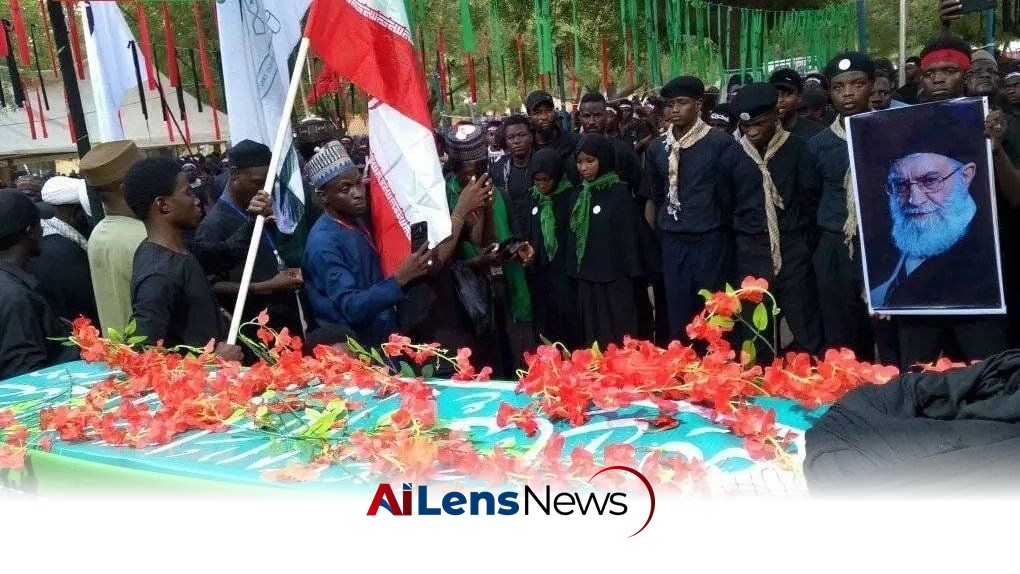


TEHRAN — As the remains of the martyred Leader of the Islamic Revolution, Ayatollah Seyyed Ali Khamenei, were laid to rest at the holy shrine of Imam Reza (AS) in Mashhad on Thursday, a wave of profound grief and unwavering loyalty swept across the globe.
Tehran, Iran Jul 11, 2026 ALN: TEHRAN — As the remains of the martyred Leader of the Islamic Revolution, Ayatollah Seyyed Ali Khamenei, were laid to rest at the holy shrine of Imam Reza (AS) in Mashhad on Thursday, a wave of profound grief and unwavering loyalty swept across the globe. The death of Khamenei, a pivotal figure in Iran’s political landscape, has not only left a significant void within the country but has also ignited a fervent response from his supporters around the world. His leadership spanned decades, during which he became a symbol of resistance against Western influence and a champion of Shia Islam, shaping the political discourse in Iran and beyond.
The symbolic nature of the funeral processions held in various countries underscores the deep connections and shared sentiments among Shia Muslims and supporters of the Islamic Revolution. From the mountain valleys of Pakistan to the streets of Bahrain and the plains of Nigeria, mourners held symbolic funeral processions, demonstrating that the martyrdom of the Leader of the Ummah has resonated far beyond Iran’s borders. This global outpouring of grief reflects both the ideological ties that bind these communities and the profound impact Khamenei had on the Islamic world. His advocacy for the Palestinian cause, opposition to U.S. hegemony, and promotion of Islamic unity were central themes during his leadership, fostering a sense of solidarity among Shia communities worldwide.
In Pakistan’s northern Gilgit-Baltistan region, the city of Skardu became a sea of black-clad mourners. Thousands gathered as live footage of the historic Mashhad procession was broadcast, filling the air with slogans and elegies. The imagery of mourners dressed in black, a traditional sign of mourning in many cultures, symbolizes their solidarity and respect for Khamenei’s legacy. Participants renewed their covenant with the ideals of the Islamic Revolution, a sentiment echoed in Karachi’s Jafar Tayyar district, where a symbolic coffin was carried through the streets. This act of carrying a coffin, though symbolic, serves as a powerful reminder of the collective grief and the commitment to uphold the values that Khamenei championed. The gatherings in Pakistan were not merely acts of mourning; they were also expressions of political identity and resistance against perceived injustices faced by the Shia community.
Majlis Wahdat-e-Muslimeen, a prominent Shia political organization in Pakistan, organized a major memorial in Karachi. The gathering not only served as a tribute to Khamenei but also as a platform for attendees to reaffirm their commitment to the Leader’s chosen successor, Ayatollah Seyyed Mojtaba Khamenei. This transition of leadership is crucial for the continuity of the movement that Khamenei represented, and the public displays of loyalty signal a desire among supporters to maintain the ideological framework established during his leadership. The political implications of this transition are significant, as it may determine the future trajectory of Iran's influence in the region and the ongoing struggle for Shia rights in predominantly Sunni areas.
In Bahrain, despite the suffocating security crackdown and repression under the brutal Al Khalifa regime, oppressed mourners held a symbolic funeral procession, defying bans and restrictions to honor the martyred Leader. The participation of Bahrainis in these ceremonies highlights the ongoing struggles faced by Shia communities in the region, where expressions of solidarity with Iran and its leaders are often met with severe government repression. Reports indicate that ceremonies were held in various locations, with participants expressing their enduring loyalty to the late Leader of the Islamic Revolution, demonstrating that the desire for political and religious expression persists even in the face of authoritarianism. The bravery displayed by these mourners underscores the deep-rooted grievances within the Bahraini Shia community, who have long felt marginalized and oppressed.
The African continent was not silent either. In Nigeria, thousands of members of the Islamic Movement in Nigeria (IMN) gathered in Zaria and surrounding areas to hold a symbolic funeral. The IMN has historically faced challenges and repression from the Nigerian government, yet their ability to mobilize large crowds for such events underscores the resilience of their movement and their commitment to the principles Khamenei espoused. Days later, in Bauchi State, Shia residents gathered at the Muhammad Bauchi Hussainiya to symbolically carry and escort the pure body of the martyred Leader. This act of carrying Khamenei's symbolic body serves to reinforce the connection between local struggles and the broader narrative of resistance against perceived oppression. The IMN's response to Khamenei's death illustrates the intricate relationship between local and international Shia movements, as they seek to draw inspiration from his leadership in their own fight for recognition and rights.
These global expressions of grief culminated in what has been described as the largest funeral in human history. The week-long rites began on July 3, with official tributes from dozens of countries, showcasing the international dimension of Khamenei’s influence. Following massive processions in Tehran, Qom, and the Iraqi holy cities of Najaf and Karbala, millions flooded the streets of Mashhad, where Khamenei was laid to rest. The sheer scale of these gatherings indicates not only the reverence for Khamenei but also the political mobilization that his death has inspired among his supporters. The processions were marked by chants and slogans that echoed his calls for resistance, unity, and the importance of standing against oppression, highlighting his enduring impact on the collective consciousness of his followers.
Ayatollah Khamenei was martyred on February 28 in a joint U.S.-Israeli airstrike on his residence and office in Tehran, alongside several family members. This tragic event has been framed by his supporters as an act of aggression against the Islamic Republic and a direct assault on the principles Khamenei stood for. The circumstances surrounding his death are likely to have long-lasting implications for Iran's foreign policy and its approach to regional conflicts. The interment at the Imam Reza (AS) Shrine capped a 131-day odyssey of grief that has drawn Iran and the Resistance Front closer than ever before. The Resistance Front, which includes various groups across the Middle East that oppose Western influence and support for Israel, may find renewed vigor in the wake of Khamenei's martyrdom, as they rally around his legacy and the ideals he promoted. The response from Iran's leadership and its allies will likely shape the geopolitical landscape in the region, particularly in relation to U.S. interests and the ongoing conflicts in Syria, Iraq, and Yemen.
In conclusion, the global mourning for Ayatollah Khamenei is not just a reflection of personal loss but a significant moment in the ongoing narrative of resistance against perceived oppression and external intervention in the Islamic world. The outpouring of grief and loyalty observed across continents illustrates the interconnectedness of Shia communities and their shared commitment to the values Khamenei championed. As these communities navigate the complexities of their political landscapes, Khamenei’s legacy will likely continue to influence their actions and aspirations for the future. The implications of his death will resonate in the political, social, and religious spheres, potentially shaping the dynamics of Shia identity and resistance movements for generations to come.
To learn more about the latest developments in Leaders & Politicians, stay updated with our exclusive reports and analyses on AiLensNews.

