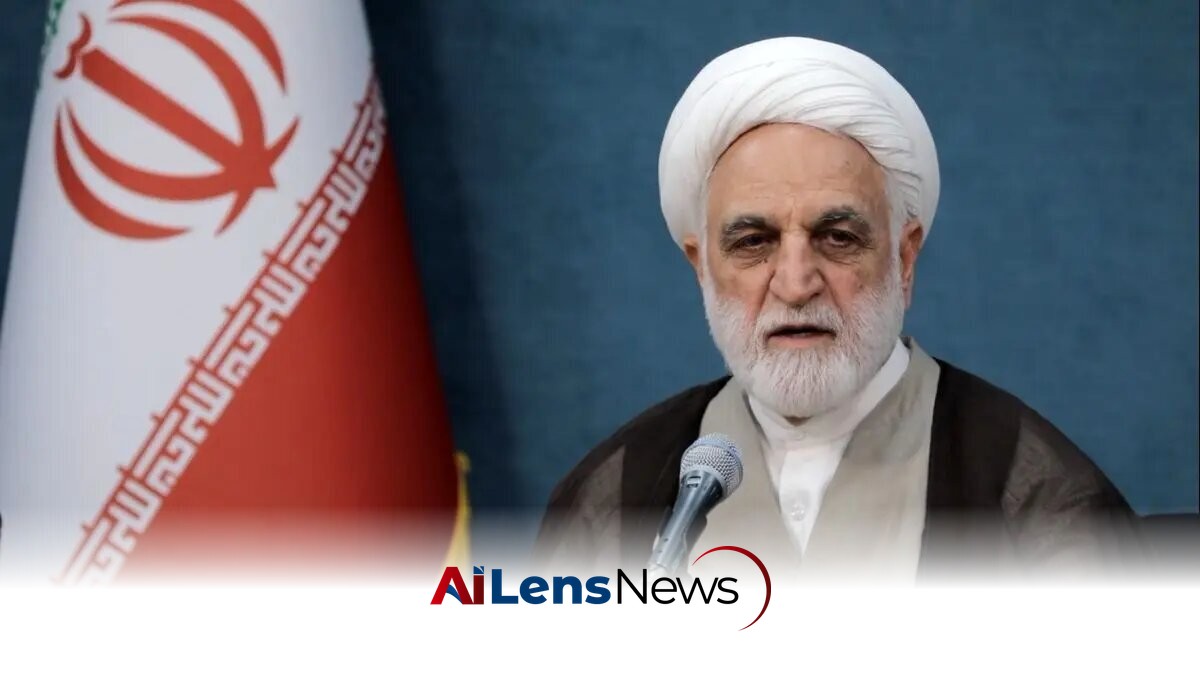


Iran is determined to pursue legal action against those responsible for war crimes committed by the US and Israel, Judiciary Chief Gholamhossein Mohseni Ejei stated.
Tehran, Iran Jul 11, 2026 ALN: TEHRAN- Iran is determined to pursue legal action against those responsible for war crimes committed by the United States and the Israeli regime, Judiciary Chief Gholamhossein Mohseni Ejei said, stressing that those found responsible must face punishment and pay compensation for the damage inflicted. This declaration reflects Iran's long-standing grievances against both nations, rooted in historical conflicts and geopolitical tensions that have shaped the region for decades.
In his remarks, Ejei outlined the Iranian government's commitment to holding accountable those it deems responsible for atrocities committed during what he refers to as two wars of aggression against Iran. These wars are often identified as the Iran-Iraq War from 1980 to 1988 and the more recent conflicts involving U.S. military action in the region, including the 2003 invasion of Iraq. Iran's perspective on these events is deeply influenced by its historical narrative, which emphasizes victimhood and resistance against foreign intervention.
Speaking at a meeting with a group of international lawyers and legal experts involved in pursuing war crimes cases, Ejei emphasized the need for broader cooperation with legal professionals worldwide to advance efforts to prosecute those responsible for crimes committed against the Iranian people. The call for international legal collaboration underscores Iran's strategy to leverage global legal frameworks to seek justice, which has become increasingly important in a world where international law is often seen as a tool for political maneuvering.
He stated that Iran holds the United States and the Israeli regime accountable for war crimes, asserting that these actions have caused significant suffering to the Iranian populace. The Iranian Judiciary, according to Ejei, is committed to pursuing these cases through all available legal avenues, which may include international courts and tribunals. This approach reflects a broader trend among nations seeking to challenge the actions of more powerful states within established legal systems, despite the inherent challenges posed by geopolitical realities.
"The perpetrators must be punished in proportion to the crimes they have committed and must also pay compensation," Ejei said.
In his address, Ejei urged international lawyers and legal experts to strengthen their cooperation with Iran, suggesting that coordinated legal efforts could open "a new chapter" in the prosecution of alleged war criminals. This call for collaboration is indicative of Iran's desire to build alliances with like-minded nations and legal advocates who share its concerns regarding the conduct of the U.S. and Israel in the Middle East.
However, Ejei also acknowledged the challenges posed by the influence of major powers within international institutions and courts. The United States, in particular, has historically wielded significant power in international legal and political arenas, often using its influence to shield itself and its allies from accountability. Despite these challenges, Iran's leadership has expressed a steadfast resolve to continue pursuing these cases until those deemed responsible are held accountable.
Reaffirming the Islamic Republic's policy of supporting oppressed people worldwide, Ejei stated that Iran would continue to advocate for those who suffer injustices, regardless of their religion, ethnicity, or nationality. This principle is particularly evident in Iran's support for the Palestinian people and its vocal opposition to Israeli policies in Gaza and Lebanon. Ejei's remarks reflect Iran's strategic positioning as a champion of resistance against perceived imperialism and oppression, a narrative that resonates with many in the region.
Referring to Israel's actions in Palestine and Lebanon, he accused the Israeli regime of decades of crimes, including mass killings, genocide, and the killing of children. This rhetoric is consistent with Iran's long-standing criticisms of Israeli military actions, particularly during conflicts such as the Gaza Wars and the Lebanon War, where civilian casualties have been high. Ejei's statements highlight Iran's commitment to supporting efforts to confront Israeli aggression, which it views as a direct threat to regional stability.
"The voice of truth can never be silenced," Ejei said, urging justice advocates, international lawyers, and legal experts to work together in confronting injustice. He argued that military and material power cannot suppress the pursuit of justice.
In his concluding remarks, Ejei emphasized the importance of documenting alleged crimes and exposing those responsible before both international courts and global public opinion. This focus on documentation is crucial, as it forms the basis for any legal proceedings that may arise in the future. By building a comprehensive record of alleged war crimes, Iran aims to strengthen its case and garner international support for its claims.
Furthermore, the Iranian Judiciary's International Affairs Department and the Judiciary Lawyers' Center are actively engaged in pursuing these cases, reflecting a systematic approach to legal advocacy. This structured effort indicates a recognition of the complexities involved in international law and the necessity of a coordinated, multi-faceted strategy to achieve justice.
Concluding his remarks, Ejei reiterated Iran's determination to pursue those it considers responsible for war crimes and to seek compensation for the losses inflicted on the Iranian nation. This pursuit of justice, framed within the context of international law, presents both opportunities and challenges for Iran as it navigates the intricate landscape of global politics and legal frameworks.
The implications of Iran's legal pursuits extend beyond its borders, potentially influencing international relations, particularly with the United States and Israel. As Iran seeks to frame its narrative within the context of international law, it may also aim to galvanize support from other nations that have experienced similar grievances against more powerful states. The outcomes of these legal efforts could have lasting effects on the geopolitical dynamics of the Middle East and the broader international community, particularly as tensions continue to simmer in the region.
In conclusion, Iran's commitment to pursuing war crimes cases against the U.S. and Israel reflects a broader strategy to assert its position on the global stage, challenge the narratives of its adversaries, and seek justice for its people. As the Iranian leadership continues to advocate for accountability, the complexities of international law, power dynamics, and regional politics will undoubtedly shape the trajectory of these legal efforts.
To learn more about the latest developments in Political Controversies, stay updated with our exclusive reports and analyses on AiLensNews.

