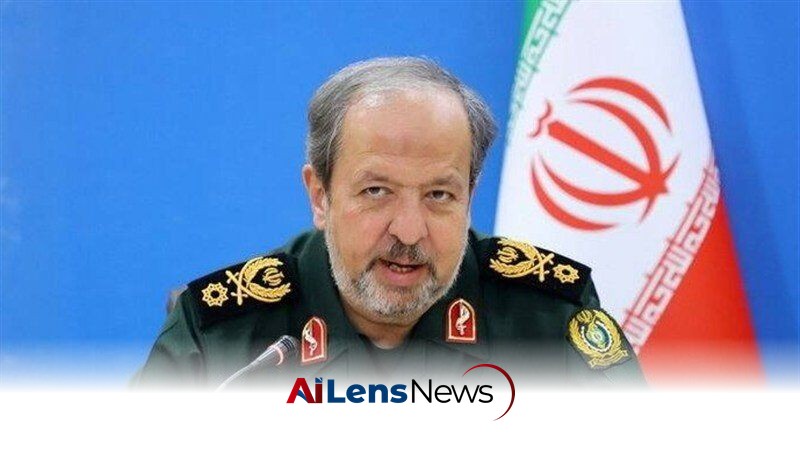


Iran's defense minister announced a threefold increase in drone production during the ongoing US-Israeli aggression, emphasizing the nation's defense capabilities.
Tehran, Iran Jul 11, 2026 ALN: TEHRAN - Iran’s caretaker defense minister stated on Saturday that the production of various types of domestically developed unmanned aerial vehicles has surged threefold amid ongoing US-Israeli aggression.
Brigadier General Majid Ibn al-Reza made this announcement during a meeting with members of the Parliament’s Commission on National Security and Foreign Policy. He highlighted that the recent conflict has underscored the importance of Iranian elites and investment in advanced technologies as crucial pillars of the country's defense strength.
“Not only did the production of defense equipment continue uninterrupted in the midst of the war, but our drone production capacity also grew threefold,” Ibn al-Reza asserted.
The minister reiterated the Armed Forces’ full preparedness and their ongoing efforts to enhance Iran’s defense and deterrence capabilities.
The conflict escalated when the United States and Israel initiated their second unprovoked war against Iran on February 28, marked by the assassination of the Leader of the Islamic Revolution, Ayatollah Seyyed Ali Khamenei, along with several high-ranking military officials. This incident was a significant turning point in the already tense relations between Iran and these two nations, which have been fraught with animosity and conflict for decades.
The assassination of Khamenei and senior military officials was perceived by Iran not only as a direct attack on its leadership but also as an affront to its sovereignty and national pride. This act of psychological warfare backfired, prompting a swift and powerful response from the Iranian Armed Forces. The Iranian government framed this response as a matter of national dignity and resistance against foreign aggression.
Over the course of 39 days of warfare, the Iranian military executed 100 waves of meticulously planned counterattacks. These retaliatory strikes targeted vulnerable US and Israeli military assets throughout the region, causing significant tactical damage and dispelling Western notions of invincibility. The Iranian military's strategy involved leveraging its drone technology, which has become a critical component of its asymmetric warfare capabilities. Drones have been utilized not only for reconnaissance but also for precision strikes, allowing Iran to project power beyond its borders without engaging in traditional military confrontations.
The implications of Iran's increased drone production are multifaceted. Firstly, it signals a robust commitment to enhancing its military capabilities in response to perceived external threats. By tripling its drone production, Iran aims to bolster its strategic deterrence, showcasing its ability to retaliate against adversaries effectively. This move may also serve to reassure Iranian citizens of their government's resolve in the face of aggression, potentially strengthening domestic support for the regime.
Moreover, the escalation of drone production comes at a time when the geopolitical landscape in the Middle East is increasingly complex. The US-Israeli alliance has historically viewed Iran as a significant threat, and Iran's advancements in drone technology could exacerbate tensions further. The ability to deploy drones effectively may lead to a recalibration of military strategies among Iran's adversaries, who may feel compelled to enhance their own defenses or reconsider their engagement strategies in the region.
Following a decisive strategic defeat on the battlefield, the US was compelled to pursue diplomatic avenues. This shift illustrates the challenges faced by the US and its allies in countering Iran's military capabilities, particularly as Iran continues to develop and deploy advanced technologies. The Iranian government's emphasis on self-sufficiency in defense production, especially in drones, reflects a broader trend of countries seeking to enhance their military capabilities independently of foreign assistance.
In summary, the Iranian defense minister's remarks reflect the nation's commitment to bolstering its military capabilities in response to external threats, particularly amid the current geopolitical tensions. The tripling of drone production signifies not only a tactical response to immediate threats but also a strategic long-term investment in Iran's military capabilities. As the region continues to navigate the complexities of power dynamics, Iran's advancements in drone technology may play a pivotal role in shaping future conflicts and diplomatic negotiations.
Historically, Iran has faced numerous sanctions and military pressures from the US and its allies, particularly since the 1979 Islamic Revolution. The country's military strategy has evolved in response to these pressures, emphasizing asymmetric warfare and the development of indigenous military technologies. Drones have emerged as a focal point of this strategy, offering Iran a means to project power while avoiding direct confrontation with more conventional military forces.
As the conflict continues to unfold, the international community will be closely monitoring Iran's military developments and the implications for regional stability. The potential for escalation remains high, particularly if Iran's drone capabilities are perceived as a direct threat to US and Israeli interests in the region. The situation underscores the necessity for diplomatic engagement to address underlying tensions and prevent further military confrontations.
In conclusion, the announcement of a threefold increase in drone production is a significant development in Iran's military strategy and reflects the broader geopolitical dynamics at play. As tensions escalate, the implications of this increase will reverberate throughout the region, influencing both military strategies and diplomatic relations among key players in the Middle East.
The surge in drone production also highlights Iran's focus on technological advancements in warfare. Drones offer unique advantages, such as lower operational costs and reduced risk to personnel, making them an attractive option for modern military operations. This aligns with global trends where many nations are increasingly investing in drone technology for both defensive and offensive capabilities.
Furthermore, the move to enhance drone production may also be interpreted as Iran's response to the evolving military landscape, where non-state actors and unconventional warfare tactics are becoming more prominent. By increasing its drone capabilities, Iran may be positioning itself to better support allied groups in the region, such as Hezbollah in Lebanon and various militia groups in Iraq and Syria, thereby extending its influence across the Middle East.
In light of these developments, the international community faces a complex challenge. The rise of Iran's drone capabilities not only poses a direct challenge to US and Israeli interests but also raises concerns among Gulf Cooperation Council (GCC) countries, who may feel threatened by Iran's expanding military reach. This could lead to an arms race in the region, with neighboring countries seeking to bolster their own military capabilities in response.
Additionally, the increase in drone production may complicate ongoing diplomatic efforts aimed at curbing Iran's nuclear ambitions and regional influence. As Iran demonstrates its willingness and capability to engage in asymmetric warfare, negotiations may become more challenging, with adversaries seeking to deter Iran's military advancements while also addressing the nuclear issue.
Ultimately, the tripling of drone production in Iran is not merely a reflection of current tensions but a strategic maneuver that could reshape the balance of power in the Middle East. As regional dynamics continue to evolve, the international community will need to navigate these complexities with caution, balancing the need for security with the imperative of dialogue and diplomacy to avoid further escalation.
To learn more about the latest developments in Government & Governance, stay updated with our exclusive reports and analyses on AiLensNews.

