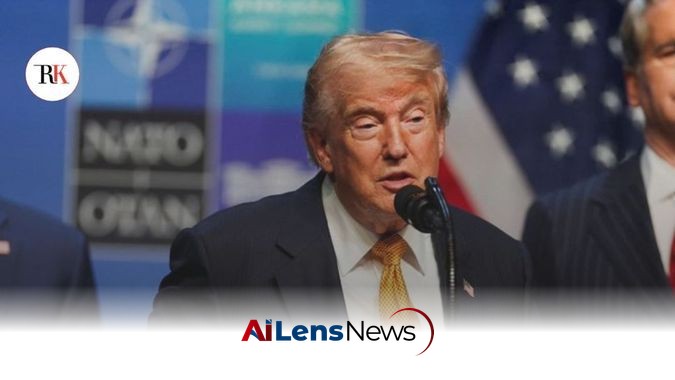


In a recent interview, President Trump declared the Strait of Hormuz open to commercial traffic, rejecting Iranian claims of control amid escalating tensions.
New Delhi, India Jul 12, 2026 ALN: In a recent interview on NBC's Meet the Press, US President Donald Trump made definitive statements regarding the status of the Strait of Hormuz, asserting that it continues to be open for commercial traffic despite Iranian claims to the contrary. This assertion follows a series of military confrontations in the region, which have heightened tensions between the United States and Iran. The Strait of Hormuz is a crucial maritime chokepoint, through which a significant percentage of the world's oil supply is transported, making its security a matter of international concern.
The remarks made by President Trump come in the aftermath of what he described as a breakdown of diplomatic negotiations with Iran. He indicated that a tentative agreement had been reached with Iranian representatives, which included substantial concessions from Iran, such as a commitment to cease all nuclear and military activities. However, he claimed that this agreement fell apart shortly after it was made, following an alleged Iranian drone strike against a commercial vessel. This incident has been characterized by Trump as a blatant act of aggression that undermined the diplomatic progress that had been achieved.
During the interview, President Trump expressed his frustration with the Iranian leadership, labeling them as "very, very evil and sick people." His comments reflect a broader narrative that has emerged from the Trump administration regarding Iran, which has often been portrayed as a destabilizing force in the Middle East. The President's rhetoric underscores the administration's hardline stance on Iran, particularly in the context of its nuclear program and regional military activities.
In response to the alleged Iranian aggression, the United States has ramped up its military presence in the region. President Trump confirmed that US forces executed significant military operations against Iranian targets, asserting that the Strait of Hormuz remains open and accessible for international shipping. He emphasized the US commitment to maintaining freedom of navigation in this vital waterway, which is often viewed as a barometer for broader geopolitical stability in the region.
The US Central Command (CENTCOM) has also weighed in on the situation, countering Iranian claims of control over the Strait of Hormuz. In a statement, CENTCOM declared that Iran does not possess authority over this critical maritime passage and affirmed that the waterway remains an international corridor. This assertion is significant given the strategic importance of the Strait of Hormuz, which connects the Persian Gulf to the Gulf of Oman and subsequently to the Arabian Sea.
In a post on social media platform X, CENTCOM provided a "fact-check" of the Iranian claims, stating that the Iranian military's assertions regarding the monitoring and control of foreign vessels in the Strait are unfounded. The US military's position is that it is prepared to ensure the safety and security of maritime traffic in the area, reflecting a commitment to uphold international maritime law.
On the other hand, Iranian authorities have maintained their stance, asserting that the Strait of Hormuz is closed to foreign vessels unless they comply with regulations set forth by Iranian maritime authorities. The Persian Gulf Strait Authority (PGSA), which is responsible for overseeing maritime traffic in the region, announced that due to what they termed "recent illegal movements" of US military forces, no vessels would be allowed passage until stability is restored. This declaration signals Iran's intent to assert its sovereignty over the Strait, even in the face of US military operations.
The PGSA's statement included a call for vessels to apply for a transit permit through their official channels, further complicating the situation. This move can be interpreted as a strategic maneuver by Iran to reassert its influence in the region, especially as tensions continue to escalate. The insistence on permits may serve as a warning to foreign shipping interests that they must navigate carefully in an increasingly volatile environment.
The ongoing tensions in the Strait of Hormuz have broader implications for global energy markets and international relations. Any disruption to shipping in this region can lead to significant fluctuations in oil prices, affecting economies worldwide. The Strait of Hormuz is particularly vital for oil exports from Gulf countries, with estimates suggesting that approximately 20% of the world's oil supply passes through this narrow waterway. As such, the security of the Strait is not only a regional concern but also a matter of global economic stability.
Moreover, the situation exemplifies the complex dynamics of US-Iran relations, which have been fraught with tension since the US withdrawal from the Iran nuclear deal in 2018. The re-imposition of sanctions on Iran has further strained relations, leading to a series of military confrontations and diplomatic stalemates. The current situation in the Strait of Hormuz can be seen as a microcosm of the larger geopolitical struggle between the United States and Iran, with implications that extend beyond the immediate region.
As the situation develops, the international community is closely monitoring the events in the Strait of Hormuz. The potential for escalation remains high, and diplomatic efforts may be necessary to prevent further conflict. The US and its allies will likely continue to assert their presence in the region to deter Iranian aggression, while Iran may seek to leverage its position to negotiate concessions on the international stage.
In conclusion, the assertions made by President Trump regarding the Strait of Hormuz highlight the ongoing tensions between the United States and Iran. The interplay of military action, diplomatic negotiations, and geopolitical strategy will continue to shape the narrative surrounding this vital waterway. As both nations navigate this complex landscape, the implications for regional and global stability remain uncertain, underscoring the need for continued dialogue and engagement in the pursuit of peace and security in the Middle East.
To learn more about the latest developments in Political Controversies, stay updated with our exclusive reports and analyses on AiLensNews.

