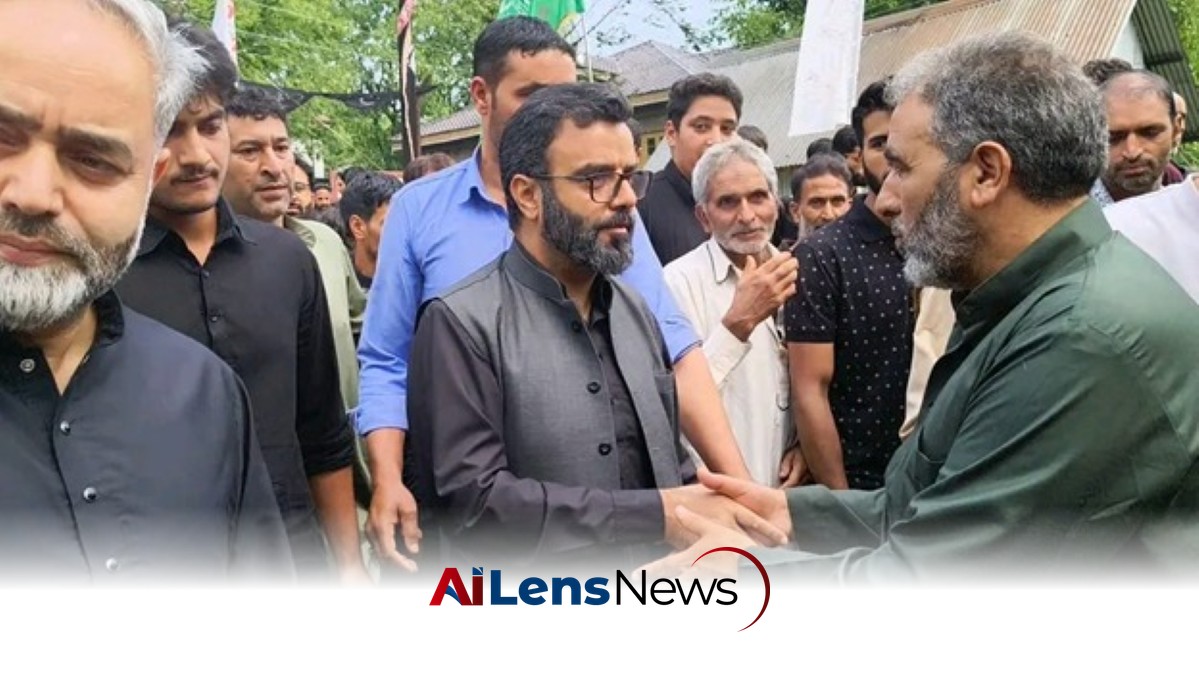


National Conference MP Aga Syed Ruhullah Mehdi expressed his distance from the party, stating he was not invited to a recent convention and criticized the shift in political focus from Article 370 to statehood.
New Delhi, India Jul 11, 2026 ALN: National Conference Member of Parliament Aga Syed Ruhullah Mehdi on Saturday stated that the party "doesn't need" him anymore, distancing himself from a party convention held to mark Begum Akbar Jahan's death anniversary and from the National Conference's Jantar Mantar protest on statehood.
Speaking to reporters in Kulgam, Ruhullah explained that he did not attend the convention as he was neither invited nor required to attend. His remarks come at a time when the political landscape in Jammu and Kashmir is undergoing significant changes, especially following the abrogation of Article 370 in August 2019, which previously granted special status to the region. The National Conference, historically a major player in the politics of Jammu and Kashmir, has faced challenges in maintaining its influence amid shifting public sentiment and the emergence of new political narratives.
“How many times do I have to answer this question? They don't need me. I was not called and I was not there. I already had programmes in Kulgam, Srinagar and other places in connection with Muharram, so I remained busy. They don't need me anymore,” he said. His statement reflects not only his personal feelings of exclusion but also hints at broader tensions within the party regarding its direction and leadership.
When asked whether he would join the Jantar Mantar protest, Ruhullah ruled out his participation. “They are going to protest for statehood, a responsibility for which people have not given them a mandate. I will go among the people of Jammu and Kashmir and speak about Article 370. I will work on the people's agenda,” he asserted. This insistence on prioritizing the dialogue surrounding Article 370 over statehood highlights a significant ideological divide between Ruhullah and the current leadership of the National Conference, which may be perceived as shifting its focus in response to the current political climate.
Ruhullah alleged that shifting the political discourse from Article 370 to statehood amounts to advancing the BJP's narrative. “The National Conference had campaigned against the abrogation of Article 370 during the elections. We all campaigned on that issue. Whoever walks away from that and speaks only about statehood is helping normalize the status quo and advancing the BJP's propaganda,” he stated. This assertion underscores the complexities of political allegiance in Jammu and Kashmir, where historical grievances, identity politics, and contemporary issues intersect in often contentious ways.
In summary, Ruhullah's comments reflect a significant shift in his relationship with the National Conference, as he emphasizes his commitment to the people's agenda over party politics. His statements could also be indicative of a broader trend within regional parties, where members are increasingly questioning their party's strategies and aligning themselves more closely with the sentiments of their constituents.
The political backdrop of Jammu and Kashmir is marked by the 2019 abrogation of Article 370, which has been a focal point of contention among various political factions in the region. The National Conference, led by prominent leaders, has traditionally advocated for the restoration of this article, which granted special autonomy to Jammu and Kashmir. The BJP, on the other hand, has framed its policies around the integration of Jammu and Kashmir into the Indian Union, emphasizing national unity and security.
Ruhullah's remarks also resonate with a segment of the population that feels disillusioned with the political establishment, particularly in light of the perceived failure of regional parties to effectively counter the central government's policies. The call for statehood, while significant, may not fully address the aspirations of those who prioritize the restoration of Article 370 as a matter of identity and self-determination.
As political dynamics evolve, the implications of Ruhullah's statements may extend beyond his personal relationship with the National Conference. They may signal a growing rift within the party and potentially influence its future electoral strategies. The National Conference has historically relied on its legacy and deep-rooted connections with the people of Jammu and Kashmir; however, the challenge now lies in reconciling that legacy with contemporary political realities.
Furthermore, Ruhullah's focus on grassroots engagement and his intention to speak directly to the people of Jammu and Kashmir may resonate with constituents who feel disconnected from traditional political narratives. His approach could potentially attract support from those who prioritize local issues over broader party agendas, thereby reshaping the political landscape in the region.
In conclusion, Aga Syed Ruhullah Mehdi's recent comments not only highlight his personal sentiments regarding his role in the National Conference but also reflect broader issues at play within the political framework of Jammu and Kashmir. As the region continues to navigate the complexities of its political identity post-abrogation, the responses from various political actors will be crucial in determining the future trajectory of governance and representation in Jammu and Kashmir.
To understand the full implications of Ruhullah's statements, it is essential to consider the historical context of Jammu and Kashmir's political landscape. The region has a long history of political strife, with various parties vying for power and influence. The National Conference has been a dominant force in the region for decades, advocating for the rights of the people of Jammu and Kashmir and often positioning itself against the central government's policies.
The abrogation of Article 370 was a watershed moment in Jammu and Kashmir's history, as it not only stripped the region of its special status but also altered the political dynamics significantly. Since then, various political leaders and parties have had to reassess their strategies and narratives in response to the changing political environment. The National Conference's traditional stance on autonomy and self-determination has been challenged, leading to internal debates about its future direction.
Ruhullah's decision to focus on the issue of Article 370 rather than statehood could indicate a strategic pivot aimed at rallying public support around a cause that resonates deeply with the sentiments of many residents of Jammu and Kashmir. The notion of statehood, while important, may not evoke the same level of emotional and political investment as the fight for the restoration of Article 370, which is seen by many as a symbol of their identity and rights.
This divergence in focus also reflects a broader trend where politicians are increasingly aware of the need to align their messages with the priorities of their constituents. The disconnect between political parties and the populace has been a recurring theme in Jammu and Kashmir, with many residents feeling that their voices are not adequately represented in the political discourse. Ruhullah's emphasis on engaging with the people directly may be an attempt to bridge this gap and re-establish a connection with the electorate.
Moreover, as the political landscape continues to evolve, the role of regional parties like the National Conference will be under scrutiny. The challenge will be to balance their historical legacy with the need for innovative strategies that address contemporary issues. This may involve redefining their narratives and engaging in more grassroots-oriented politics that resonate with the aspirations of the people.
In light of Ruhullah's comments, the National Conference may need to reflect on its current trajectory and consider how it can adapt to the changing political climate. This could involve a reassessment of its leadership, strategies, and engagement with the electorate. The party's ability to navigate these challenges will be crucial in determining its relevance and effectiveness in the years to come.
In essence, Ruhullah's statements serve as a microcosm of the broader political currents in Jammu and Kashmir. As the region grapples with its identity and political representation in the aftermath of significant constitutional changes, the responses from various political actors, including the National Conference and its members, will play a pivotal role in shaping the future of governance and political discourse in Jammu and Kashmir.
To learn more about the latest developments in Political Controversies, stay updated with our exclusive reports and analyses on AiLensNews.

