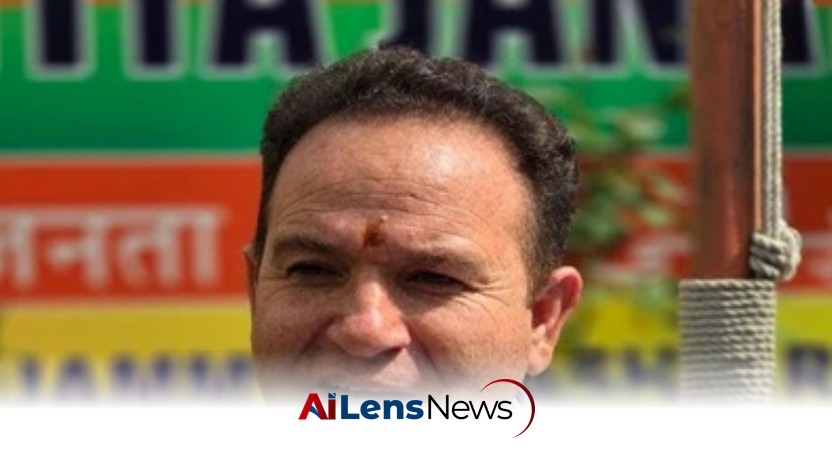


Sunil Kumar Sharma demands proof from Omar Abdullah regarding BJP bribery claims, asserting it's a distraction from unfulfilled promises.
Leh, India Jul 13, 2026 ALN: Jammu, 12 July: Leader of Opposition Sunil Kumar Sharma on Sunday stated that Chief Minister Omar Abdullah is attempting to rebrand himself as a warrior against the Bharatiya Janata Party (BJP) to evade the discontent of the people of Jammu & Kashmir. This assertion comes in the wake of Abdullah's alleged failure to deliver on promises made during the 2024 Assembly elections, a period during which Sharma claims Abdullah was more focused on leisure activities than governance, spending significant time between marathon tracks and the ski slopes of Gulmarg.
The political landscape in Jammu & Kashmir has been fraught with tension, particularly in the wake of the abrogation of Article 370 in August 2019, which granted special status to the region. The BJP has been a dominant force in the region since this pivotal moment, and the subsequent elections have seen a significant shift in political allegiances and public sentiment. Abdullah, a prominent figure from the National Conference party, has been vocal in his opposition to the BJP's policies, often framing their actions as detrimental to the interests of the people of Jammu & Kashmir.
Sharma challenged Omar Abdullah to provide evidence of his claims that the BJP offered ₹20–30 crore to one of his MLAs to switch sides. This allegation, if substantiated, could have serious implications not only for the BJP but also for the integrity of the political process in the region. Sharma's demand for proof highlights a broader issue within Indian politics, where accusations of bribery and corruption are not uncommon, and the burden of proof often lies heavily on the accuser.
“Let him produce proof before the people of Jammu & Kashmir. If there is even an iota of truth in his claims, I will apologize to him publicly,” Sharma stated, adding that the BJP would be compelled to initiate legal proceedings against him if he fails to provide evidence. This statement underscores the high stakes involved in political discourse in the region, where reputations and careers can be made or broken based on the outcome of such allegations.
Sharma remarked that the Chief Minister’s allegations are merely a smokescreen to divert attention from the public's anger regarding the promises made during the 2024 Assembly elections. The sentiment in Jammu & Kashmir has been one of dissatisfaction, particularly among those who feel that their needs and concerns have been overlooked by the current administration. The public's anger is not unfounded; many citizens feel that the promises made by their leaders during election campaigns often go unfulfilled, leading to a growing sense of disillusionment with the political process.
“Omar Abdullah finds himself trapped by the lies and deception he resorted to at that time. Now he is cornered and is using his last card — portraying himself as a crusader against the BJP before the people of Kashmir,” Sharma said. This characterization of Abdullah's political maneuvers suggests a deep-seated belief among some political leaders that their opponents resort to dramatic narratives when faced with political pressure. The portrayal of Abdullah as a 'warrior' against the BJP may resonate with certain segments of the population who feel marginalized or disenfranchised by the current political climate.
Sharma further alleged that Omar Abdullah is aware of his uncertain political future and now seeks to be remembered as a warrior who fought against the BJP. This assertion taps into the broader narrative of political legacy, where leaders are often concerned with how they will be remembered by their constituents and history. Abdullah's attempts to position himself as a defender of Kashmiri interests could be seen as a strategic move to garner support from those disillusioned with the BJP's governance.
The political rivalry between the National Conference and the BJP is emblematic of the larger ideological battle playing out across India. The BJP, with its strong nationalist rhetoric, often portrays itself as the party of development and stability, while opposition parties like the National Conference seek to highlight issues of regional autonomy and cultural identity. This clash of narratives is not just a local issue; it reflects the broader tensions within Indian society regarding secularism, regionalism, and national identity.
As the political climate continues to evolve, it remains to be seen how these allegations and counter-allegations will play out in the public sphere. The people of Jammu & Kashmir are increasingly aware of the dynamics at play and are likely to demand accountability from their leaders. The outcome of this political tussle could have significant implications for future elections and the overall governance of the region.
In conclusion, the ongoing political discourse between Sunil Kumar Sharma and Omar Abdullah highlights the complexities of governance in Jammu & Kashmir. With the backdrop of recent electoral history, public dissatisfaction, and the overarching influence of national politics, the stakes remain high for all parties involved. The demand for transparency and accountability is more pressing than ever, as the citizens of Jammu & Kashmir seek leaders who can genuinely address their concerns and aspirations.
To understand the significance of these political exchanges, it is important to consider the historical context of Jammu & Kashmir. The region has a complex history of conflict and political strife, stemming from its unique demographic makeup and the contentious relationship between various political parties and the central government. The abrogation of Article 370 was a landmark decision that altered the political landscape, leading to widespread protests and a reconfiguration of political alliances.
Since the abrogation, the BJP has sought to consolidate its power in Jammu & Kashmir, positioning itself as a proponent of development and stability. However, this has not been without challenges, as the region continues to grapple with issues of governance, security, and civil rights. Abdullah's National Conference party has positioned itself as a defender of regional interests, advocating for the restoration of special status and greater autonomy for Jammu & Kashmir.
The accusations exchanged between Sharma and Abdullah are indicative of a larger political strategy employed by both parties. For the BJP, discrediting Abdullah's leadership can help solidify its narrative of being the party of progress and development. Conversely, Abdullah's attempts to frame himself as a victim of BJP aggression may resonate with voters who feel alienated by the current political climate.
The implications of these political dynamics extend beyond the immediate electoral landscape. They reflect the broader societal tensions within Jammu & Kashmir, where issues of identity, governance, and representation are at the forefront of public discourse. The dissatisfaction among citizens regarding unfulfilled promises and perceived neglect by their leaders can lead to increased political mobilization and activism.
As the region approaches future elections, the stakes will undoubtedly rise. Both the BJP and the National Conference will need to navigate the complex realities of public sentiment, balancing their political narratives with the pressing needs of the populace. The demand for accountability and transparency will continue to shape the political discourse, as citizens increasingly seek leaders who can genuinely address their concerns.
In summary, the ongoing political rivalry between Omar Abdullah and Sunil Kumar Sharma serves as a microcosm of the larger struggles within Jammu & Kashmir and Indian politics at large. The interplay of accusations, counter-accusations, and public sentiment will play a critical role in shaping the future of governance in the region. As the political landscape evolves, the need for effective leadership that prioritizes the needs of the people remains paramount.
To learn more about the latest developments in Political Controversies, stay updated with our exclusive reports and analyses on AiLensNews.

