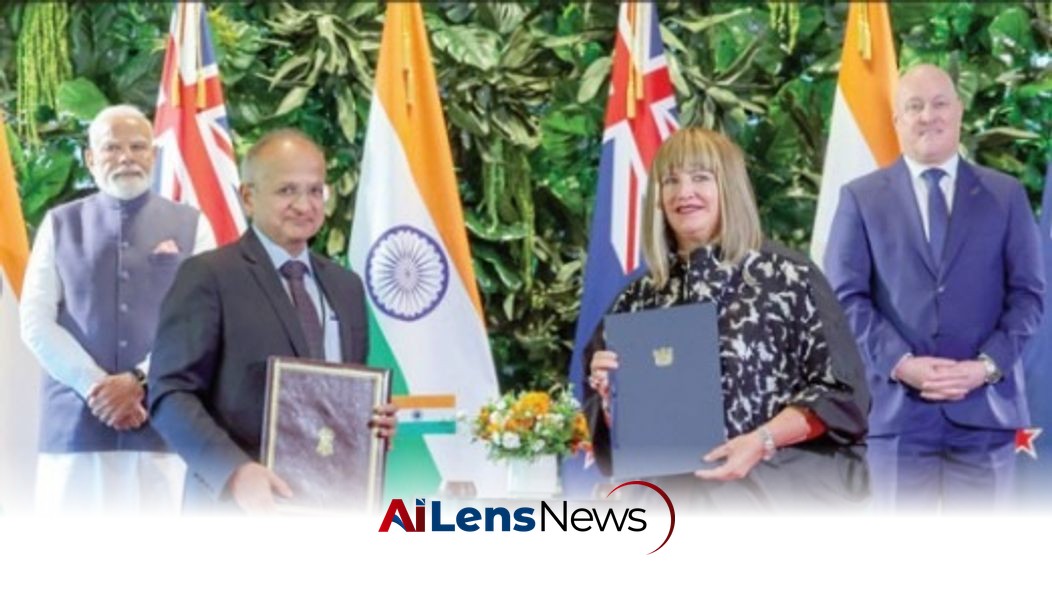


Prime Minister Modi and New Zealand's Luxon highlight a new era in bilateral relations, focusing on trade, sports, and innovation at a gala luncheon.
Leh, India Jul 12, 2026 ALN: Prime Minister Narendra Modi on Saturday attended a special gala luncheon hosted by his New Zealand counterpart, Christopher Luxon, under the theme “India-New Zealand: A Winning Partnership”, where the two leaders highlighted the growing momentum in bilateral relations and unveiled a shared vision for closer cooperation across trade, sports, and innovation.
The event was significant in showcasing the evolving dynamics between India and New Zealand, two nations that have historically enjoyed cordial relations. The gathering brought together leading personalities from various sectors, including politics, business, industry, academia, technology, sports, and the arts, reflecting the broad-based nature of the relationship between the two countries. This diversity underscores the multifaceted engagement that both nations are striving to enhance.
Welcoming the attendees, Prime Minister Luxon emphasized the deep and enduring ties that exist between India and New Zealand. He articulated a common vision aimed at strengthening bilateral cooperation and promoting shared prosperity, which is increasingly important in a global environment marked by rapid change and uncertainty. This sentiment resonates with the broader trend of countries seeking to forge stronger partnerships that can withstand the pressures of geopolitical shifts and economic challenges.
Addressing the gathering, Prime Minister Modi remarked that the elevation of bilateral ties to a Strategic Partnership marks a new chapter in India-New Zealand relations. This strategic partnership is not merely symbolic but is expected to facilitate deeper cooperation in various sectors, including trade, defense, and cultural exchanges. Modi noted the complementarities between the two economies, highlighting the potential for collaboration in areas such as technology, agriculture, and education, which can lead to mutual benefits and enhanced economic growth.
One of the key highlights of the luncheon was the discussion surrounding the India-New Zealand Free Trade Agreement, which was concluded in record time. Modi stated that this agreement would create new opportunities for businesses, farmers, and young people in both countries. The ambitious target of doubling bilateral trade by 2030 reflects a strong commitment to enhancing economic ties and fostering a more integrated economic relationship. The agreement is expected to reduce trade barriers, promote investment, and increase market access for goods and services from both nations.
Following the luncheon, the two Prime Ministers toured an exhibition showcasing innovative sports equipment, which served as a platform for interaction with decorated New Zealand athletes and representatives of the country’s high-performance sports sector. This engagement highlights the importance of sports as a vehicle for diplomacy and cultural exchange, as well as a means to foster goodwill between nations.
Recalling a century of sporting engagement between India and New Zealand, Prime Minister Modi expressed optimism about the future of sports collaboration. He announced the signing of the Sports Joint Action Plan during the visit, which is designed to broaden cooperation beyond cricket, a sport that has historically dominated the sporting ties between the two nations. This plan aims to deepen collaboration across multiple disciplines, reflecting the growing recognition of the importance of diverse sports and athletic development.
The sports initiative is particularly timely as India prepares to host the 2030 Commonwealth Games. This event presents an opportunity for India to showcase its capabilities in hosting major international sporting events and to further strengthen its ties with New Zealand in the realm of sports. Both countries are committed to expanding cooperation in high-performance sports and athlete development, which is essential for nurturing talent and achieving excellence on the global stage.
India-New Zealand visit: Key outcomes
In conclusion, the recent engagement between India and New Zealand marks a significant step towards strengthening bilateral relations across multiple sectors. The outcomes of the gala luncheon reflect a mutual desire to enhance cooperation, foster economic growth, and promote cultural exchanges. As both nations work towards realizing the goals outlined in the Strategic Partnership, the implications of this collaboration are likely to resonate beyond their borders, contributing to regional stability and prosperity in the Indo-Pacific region. The emphasis on sports, trade, and innovation not only underscores the versatility of this partnership but also positions both countries as proactive players in the global arena, capable of navigating the complexities of modern international relations.
To learn more about the latest developments in Leaders & Politicians, stay updated with our exclusive reports and analyses on AiLensNews.

