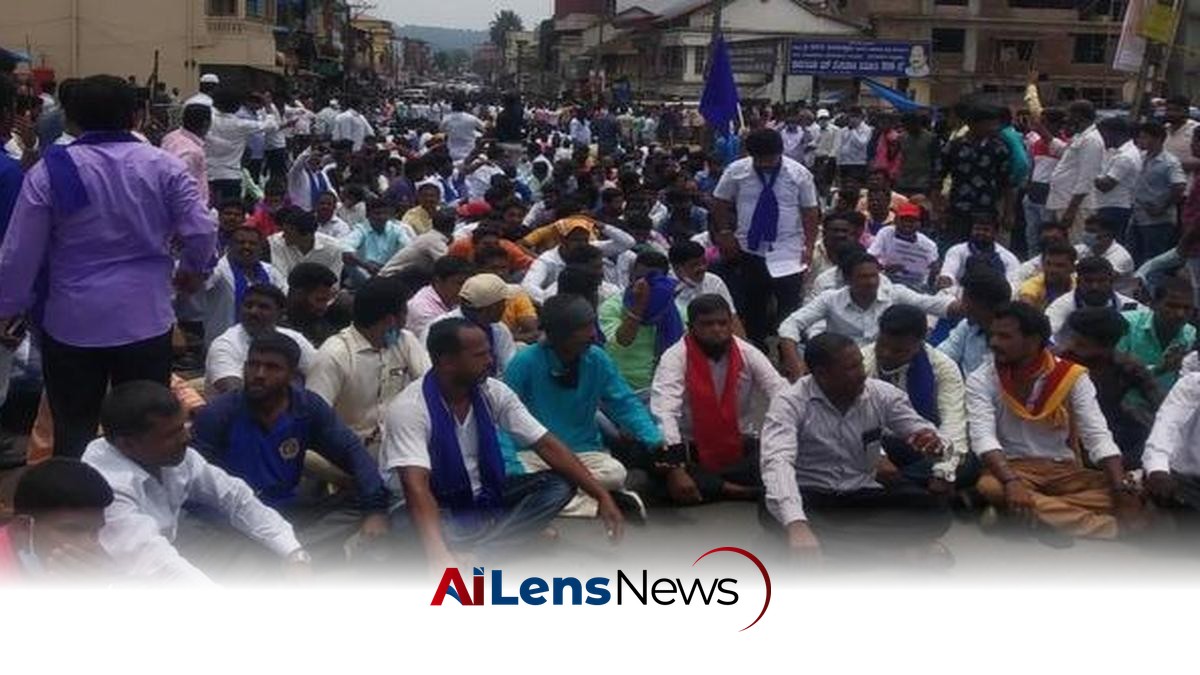


Hundreds protested in Sakleshpur, blocking BM Road to demand the arrest of a man who made derogatory remarks about B.R. Ambedkar and Dalits.
Leh, India Apr 12, 2021 ALN: On Monday, a significant protest unfolded in Sakleshpur, a town situated in the Hassan district of Karnataka, India. Hundreds of local residents participated in a dharna, effectively halting traffic on the busy Bangalore-Mangalore (BM) Road. The protesters were united in their demand for the immediate arrest of an individual accused of making derogatory remarks about Dr. B.R. Ambedkar, a prominent figure in Indian history and a key architect of the Indian Constitution, as well as about the Dalit community.
The individual at the center of this controversy is Arun Gowda, a resident of Kumbrahalli, a village in the Sakleshpur taluk. Reports indicate that Gowda allegedly contacted a Dalit youth via phone and insulted him based on his caste, while also making disparaging comments about Dr. Ambedkar. The conversation was recorded, and an audio clip of this interaction subsequently went viral within the region, causing widespread outrage among the local population, particularly among Dalit activists and community leaders.
Dr. B.R. Ambedkar, who was born into a Dalit family, is celebrated for his relentless fight against social discrimination and caste-based injustices in India. His contributions to the Indian Constitution are monumental, as he sought to ensure equality and justice for all citizens, regardless of caste. The remarks made by Gowda, therefore, not only targeted an individual but also struck at the very heart of the values that Ambedkar stood for, leading to heightened sensitivities among Dalit communities.
In light of the incident, leaders from various pro-Dalit organizations called for a bandh (strike) in Sakleshpur on Monday. The bandh was a strategic move aimed at amplifying their demands for justice and accountability. As the protest unfolded, many local businesses chose to close their shops in solidarity with the movement, resulting in a noticeable impact on the local economy. Reports indicated that several shopkeepers voluntarily shut down their establishments, reflecting the community's collective stance against the derogatory remarks and the perceived inaction of law enforcement.
The protestors gathered at a key junction on BM Road, which is a vital thoroughfare connecting various parts of Karnataka. The blocking of this busy road not only disrupted daily commutes but also underscored the seriousness of the protestors' demands. As traffic came to a standstill, leaders of the protest addressed the crowd, reiterating their call for immediate action from the police regarding the arrest of Arun Gowda.
In addition to halting traffic, the protest culminated in a formal submission of a memorandum to the local tahsildar, the administrative officer responsible for the taluk. This memorandum likely outlined the community's demands, including a request for swift legal action against Gowda and measures to ensure the protection of Dalit rights in the region. The act of submitting a memorandum is a traditional form of protest in India, often used to formally communicate grievances to government officials.
The incident and subsequent protests highlight ongoing tensions surrounding caste dynamics in India, particularly in rural areas where traditional social hierarchies can still exert significant influence. Despite various legal frameworks aimed at protecting marginalized communities, instances of caste-based discrimination and violence persist, prompting activists to remain vigilant and proactive in their advocacy for justice.
In recent years, the rise of social media has played a crucial role in amplifying voices against caste discrimination. The viral spread of the audio clip in this case serves as a reminder of how digital platforms can galvanize communities and mobilize collective action. Activists have increasingly utilized these platforms to raise awareness about social injustices and to organize protests, indicating a shift in the strategy employed by marginalized groups to assert their rights.
The Sakleshpur protest also reflects a broader trend in India, where there has been a resurgence of Dalit activism in response to perceived injustices. This activism often manifests in various forms, including protests, awareness campaigns, and legal challenges against discriminatory practices. The demand for accountability and justice in this case is emblematic of a growing consciousness among Dalit communities regarding their rights and the need for systemic change.
As the situation develops, the response from local law enforcement and government officials will be crucial in determining the next steps. If the authorities fail to act, it could lead to further unrest and mobilization within the community, as seen in similar instances across the country. Conversely, a prompt and decisive response could help to restore some degree of trust between marginalized communities and the state, potentially alleviating tensions and fostering a more inclusive dialogue around caste issues.
In conclusion, the dharna in Sakleshpur serves as a poignant reminder of the ongoing struggles faced by Dalit communities in India. The demand for justice in the face of derogatory remarks about Dr. Ambedkar and caste-based discrimination underscores the necessity for continued advocacy and reform. As the community awaits action from authorities, the incident has opened up important conversations about caste, discrimination, and the role of activism in driving social change in contemporary India.
To provide further context, the caste system in India has deep historical roots, with significant implications for social structure and individual rights. The caste system traditionally divided society into hierarchical groups, with Dalits, formerly referred to as 'untouchables', positioned at the bottom. This stratification has led to systemic discrimination and social exclusion, which continues to affect millions of lives across the country today.
Despite constitutional protections and affirmative action policies aimed at uplifting Dalit communities, the reality on the ground often reflects a different story. Instances of caste-based violence, discrimination in employment, education, and social interactions remain prevalent. This underscores the necessity of sustained activism, education, and policy reform to address the ingrained prejudices that persist in society.
Moreover, the role of public figures, local leaders, and activists in advocating for Dalit rights cannot be overstated. These individuals often serve as catalysts for change, mobilizing communities to challenge injustices and demand accountability from those in power. The Sakleshpur protest is just one of many instances where grassroots activism has sought to confront and address these deep-seated issues.
The national discourse surrounding caste and social justice has also been influenced by various movements and campaigns that have gained traction in recent years. Movements such as the 'Rohith Vemula protests' and 'Bhima Koregaon' have brought attention to the struggles faced by Dalit communities and the need for systemic reform. These events have galvanized support and solidarity across diverse sections of society, highlighting the interconnectedness of social justice issues.
As the protest in Sakleshpur unfolds, it serves as a microcosm of the larger battle for equality and justice faced by marginalized communities in India. The ability of the community to mobilize and demand accountability is a testament to their resilience and determination to challenge the status quo. The implications of this protest extend beyond the immediate demands for justice; they speak to the broader societal need for recognition, respect, and dignity for all individuals, irrespective of their caste or background.
In conclusion, the events in Sakleshpur are a reminder of the ongoing struggle for social justice in India. The protest not only highlights the specific grievances related to caste discrimination but also reflects the larger dynamics of power, privilege, and resistance in contemporary society. As communities continue to advocate for their rights, the hope for a more equitable and just society remains a crucial aspiration that drives their efforts.
To learn more about the latest developments in Political Controversies, stay updated with our exclusive reports and analyses on AiLensNews.

