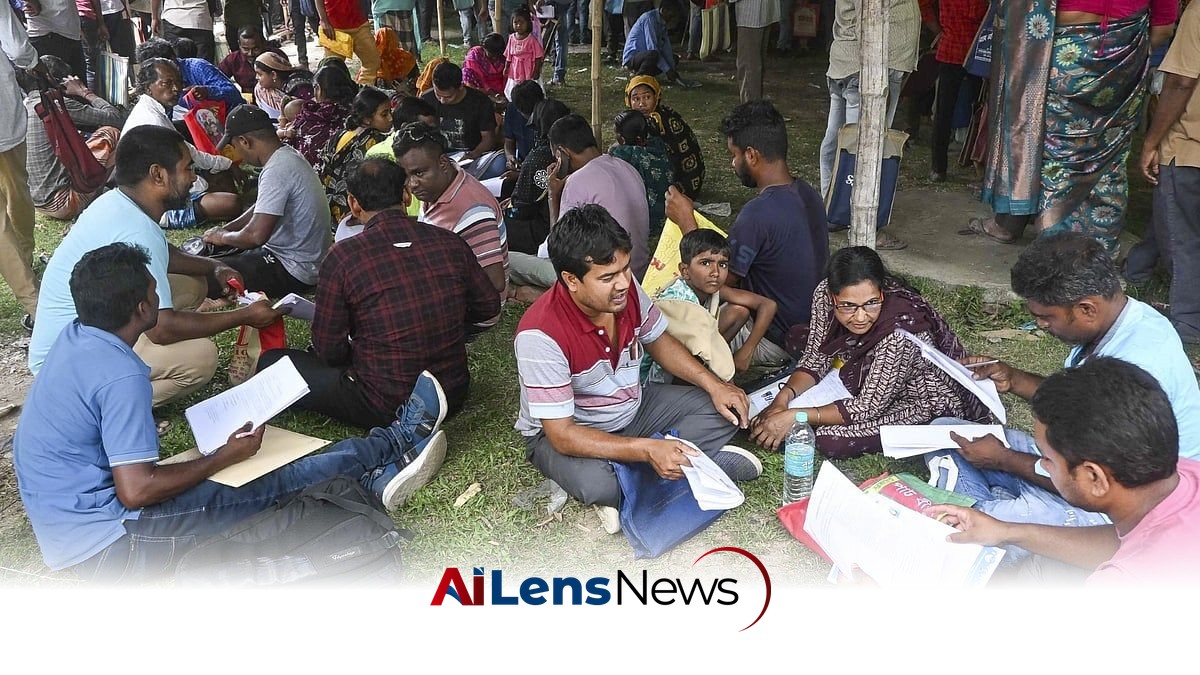


The Election Commission of India has revised Form 6 to include a parental SIR declaration for new voters amid ongoing electoral roll updates.
New Delhi, India Jul 12, 2026 ALN: The Election Commission of India (ECI) has made a significant update to the online version of Form 6, which is the application form used for new voter registration. This update introduces a new requirement that compels applicants to declare whether their parents were listed in the last Special Intensive Revision (SIR) of electoral rolls. This change comes at a time when the ECI is conducting ongoing SIR exercises across various states and union territories, and follows the deletion of over 5.58 crore names from electoral rolls since 2025. The implications of this update are multifaceted, affecting not only the registration process but also the broader electoral landscape in India.
The new section in the online Form 6 appears as an unlettered “declaration form” on the ECINET portal. Applicants are now required to indicate if their own names or their parents’ names were included in the last SIR, and if so, they must provide specific details such as assembly constituency, booth number, and serial number. Notably, the online form does not permit submission unless this section is completed, even though it is not explicitly marked as mandatory. This has raised concerns regarding the clarity of the process and the potential for confusion among applicants.
While the online version of Form 6 has been updated, the statutory Form 6 that is available for physical submission has not undergone any amendments. This discrepancy between the online and physical forms raises questions about the consistency and legality of the voter registration process. The new declaration offers three options for applicants: whether their name exists in the last SIR, whether their parents’ names exist, or whether neither does. Should applicants select the first two options, they are required to provide additional details, but the procedure for those who cannot furnish this information remains ambiguous.
According to the Representation of the People Act, 1950, it is stipulated that only the Central government has the authority to amend electoral forms, including Form 6, through a formal process and official notification. As of July 12, 2026, no such amendment or notification has been issued by the Law and Justice Ministry, leading to questions about the legal standing of the new section in the online Form 6. The Election Commission has yet to respond to inquiries regarding the legal implications of this update, leaving many applicants and stakeholders in a state of uncertainty.
“The EC cannot even add a comma to the form on its own,” a former senior Election Commission official stated, emphasizing the legal requirement that any amendments must be officially notified by the Central government.
Concerns have been raised about the potential for arbitrary disenfranchisement, particularly in light of the large-scale deletions that have occurred in states like West Bengal and Bihar during the SIR process. Reports indicate that in West Bengal alone, over 27 lakh electors have been deleted, with many appeals still pending before various tribunals. This raises significant implications for the children of those whose names have been deleted, as they may now face additional hurdles in their quest to register as voters.
During the ongoing SIR, it has been reported that the ECINET portal’s Form 6 requires the SIR declaration from applicants in all states and union territories where the SIR has either concluded or is currently underway, with the exception of Bihar and Assam. In Assam, the SIR process is currently on hold due to the ongoing National Register of Citizens exercise, further complicating the registration landscape in that state.
“New applicants, predominantly people who have recently turned 18, are now required to trace themselves or their parents to the last SIR,” a report highlighted, pointing to the practical challenges faced by young voters who may not have easy access to historical electoral data.
The SIR declaration is particularly significant as the current revision process is stated to be more intensive than previous annual updates. This means that applicants may be required to provide more documentation and undergo more rigorous verification processes. The Election Commission's data indicates that the majority of deletions from the electoral rolls have been attributed to reasons such as deaths, migration, or duplicate enrolments. However, the overall impact of these deletions on new voter enrolment is still being evaluated.
The legal framework surrounding electoral forms is clear: any modification to Form 6 must be officially notified by the Central government after consulting with the Election Commission. The lack of such notification regarding the new online requirement raises significant questions about its enforceability and the implications for applicants who are unable to provide the requested parental SIR details. This situation could potentially disenfranchise a segment of the population, particularly young voters who may not have the necessary information at hand.
The introduction of this new requirement has sparked a broader conversation about the accessibility of the electoral process in India. The ability to register to vote is a fundamental democratic right, and any barriers to this process can lead to disenfranchisement and disillusionment among the electorate. As the ECI continues to navigate the complexities of electoral rolls and voter registration, the implications of these changes will likely be felt across the political landscape, influencing voter turnout and engagement in future elections.
As this situation continues to unfold, it remains crucial for the Election Commission to provide clear guidance and support to potential voters, ensuring that the electoral process is transparent and inclusive. The introduction of the new declaration in Form 6 is a pivotal moment that could redefine how voter registration is approached in India, and its long-term effects will require careful monitoring and analysis.
Note: This article is produced using AI-assisted tools and is based on publicly available information. It has been reviewed by The Quint's editorial team before publishing.
To learn more about the latest developments in Elections, stay updated with our exclusive reports and analyses on AiLensNews.

