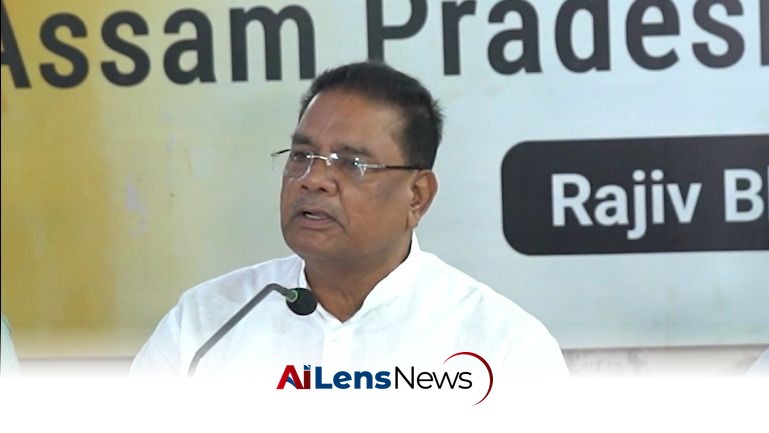


The Congress party has condemned the Assam Budget 2026-27, labeling it as lacking substance and a mere tool for electoral gain.
New Delhi, India Jul 11, 2026 ALN: The Opposition Congress has launched a sharp attack on the Assam Budget 2026-27, describing it as a "vote bank perpetuation Budget" that lacks a clear roadmap for the State's overall development.
Addressing a press conference at Rajiv Bhawan on Friday after the Budget was tabled in the Assam Legislative Assembly, senior Congress leaders alleged that it relied heavily on Central funds while failing to address critical issues such as unemployment, price rise, floods, erosion, agriculture, and healthcare.
The criticism of the Assam Budget is not an isolated incident but part of a broader political discourse in the region where fiscal policies are often scrutinized for their effectiveness and responsiveness to local needs. The Assam Budget, like many state budgets across India, is expected to reflect the priorities of the government in power, and opposition parties frequently use budget sessions as a platform to highlight perceived failures and shortcomings.
Former Assam Pradesh Congress Committee (APCC) president and former minister Ripun Bora termed the 117-page Budget "nothing but an essay" with little substance for Assam’s development. He claimed that 69.68 percent of the State’s resources would come from central tax devolution, centrally sponsored schemes, Finance Commission grants, and public debt, making it a "dependent" Budget. This reliance on Central funds raises questions about the state government's capacity to generate its own revenue and implement sustainable development policies.
In many Indian states, including Assam, the dependence on Central funds can be a double-edged sword. While these funds are essential for financing various programs and projects, over-reliance can lead to a lack of accountability and innovation at the state level. Critics argue that this dependency can stifle local initiatives that might better address the unique challenges faced by communities within the state.
Bora alleged that the Budget was aimed at benefiting selected sections for electoral gains and lacked meaningful provisions to tackle unemployment, inflation, floods, and erosion through scientific measures. Referring to the Chief Minister’s 2021 promise of one lakh jobs annually, he said the commitment remained unfulfilled and questioned the government’s announcement of two lakh additional jobs without a plan for Assam’s 35 lakh registered unemployed youths. The issue of unemployment is particularly pressing in Assam, where a significant youth population is seeking jobs, and the failure to deliver on employment promises can have long-term social and economic implications.
He also claimed that around 40 percent of last year’s Budget remained unimplemented, a statistic that, if accurate, raises serious concerns about the government's ability to execute its plans effectively. The implementation gap is a common issue in many states, where the allocation of funds does not translate into actual outcomes due to various factors, including bureaucratic inefficiencies, lack of coordination among departments, and inadequate monitoring mechanisms.
Furthermore, Bora pointed to shortages of specialist doctors in government hospitals, inadequate support for Anganwadi workers, and the poor condition of Guwahati under the Smart City Mission. These issues highlight the broader challenges facing the healthcare and social welfare systems in Assam. The shortage of medical professionals can lead to increased morbidity and mortality rates, particularly in rural areas where access to healthcare is already limited. Similarly, the plight of Anganwadi workers, who play a crucial role in child nutrition and education, underscores the need for better support and recognition for frontline workers in the welfare system.
Deputy Leader of the Congress Legislature Party Dr. Joy Prakash Das said the Budget offered "nothing new," alleging that it failed to address rising prices and unemployment despite highlighting growth in per capita income. The contrast between reported economic growth and the lived experiences of citizens can lead to disillusionment and a sense of disconnect between the government and the populace. When budgets do not translate into tangible benefits for the average citizen, it can erode trust in political institutions.
He also cited the absence of clarity on schemes for girl students, minimum wages for tea garden workers, and adequate focus on tourism destinations such as Majuli and Kaziranga. Assam, known for its rich cultural heritage and biodiversity, has significant potential for tourism development. However, without targeted investments and strategic planning, this potential remains largely untapped. The tea industry, a cornerstone of Assam's economy, also faces challenges, including labor rights issues, which require urgent attention from policymakers.
Senior Congress leader and former minister Nilamani Sen Deka termed it one of the "worst" Budgets for Assam's economy, alleging that it favored a handful of industrialists while neglecting workers, farmers, women, and rural communities. This sentiment reflects a growing concern among various segments of society that economic policies are increasingly skewed in favor of corporate interests rather than addressing the needs of the broader population. In a state like Assam, where agriculture and small-scale industries play a vital role in the economy, neglecting these sectors can have dire consequences for food security and livelihoods.
Former MP Abdul Khaleque also raised the issue of vacancies in various government departments. The presence of unfilled positions can hinder the delivery of essential services and exacerbate existing challenges in governance. It is crucial for the state government to prioritize the filling of these vacancies to ensure that public services are adequately staffed and can meet the needs of the population.
As the political landscape in Assam continues to evolve, the discourse surrounding the Budget reflects deeper issues related to governance, accountability, and the role of government in addressing the needs of its citizens. The criticisms from the Congress party highlight the importance of robust debate and scrutiny in the legislative process, ensuring that the voices of opposition are heard and considered in the formulation of policies that impact the lives of millions.
In conclusion, the Assam Budget 2026-27 has sparked significant debate and criticism from the Opposition, particularly the Congress party. The concerns raised regarding reliance on Central funds, unfulfilled promises, and the neglect of critical sectors underscore the need for a more comprehensive and inclusive approach to budgetary planning and execution. As the state moves forward, it will be essential for the government to address these criticisms constructively, ensuring that the Budget not only serves electoral purposes but also lays the groundwork for sustainable development and improved quality of life for all citizens in Assam.
To learn more about the latest developments in Political Controversies, stay updated with our exclusive reports and analyses on AiLensNews.

