

The Congress party has called for a Supreme Court-monitored inquiry into alleged embezzlement of donations at the Ram Temple in Ayodhya, questioning PM Modi's silence on the matter.
New Delhi, India Jul 11, 2026 ALN: The Congress party has recently intensified its scrutiny of the financial management of the Ram Temple in Ayodhya, demanding a Supreme Court-monitored judicial inquiry into allegations of embezzlement of donations. The controversy surrounding the temple's funding has sparked significant political debate, raising questions about accountability and transparency in religious institutions. This demand comes against the backdrop of a broader narrative concerning the management of religious trusts and the intersection of politics and religion in India.
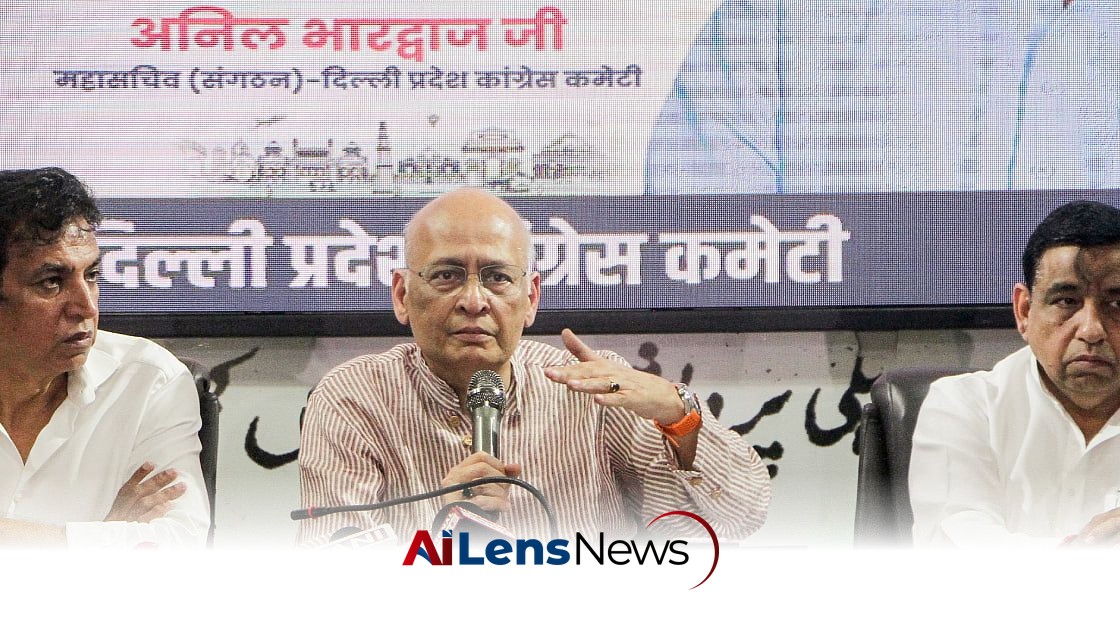
At a press conference held at the Delhi Pradesh Congress Committee (DPCC) office, senior Congress leader Abhishek Manu Singhvi, who is also a member of the Congress Working Committee (CWC), articulated the party's concerns. He was joined by DPCC president Devender Yadav and senior party leader Anil Bhardwaj. Singhvi emphasized that the alleged financial irregularities had undermined public trust and warranted an independent investigation to restore faith among devotees and the general public.
Call for Judicial Inquiry
Singhvi's call for a judicial inquiry was underscored by his assertion that the investigation should be led by a senior figure from the Supreme Court, someone whose name commands respect and trust. He further advocated for a forensic audit of the Shri Ram Janmabhoomi Teerth Kshetra Trust's accounts, dating back to its establishment. This trust has been at the center of the temple's construction and fundraising efforts, and its financial dealings are now under scrutiny.
In a pointed critique, Singhvi suggested that the current composition of the Trust, which he alleges is heavily influenced by members of the Bharatiya Janata Party (BJP) and the Rashtriya Swayamsevak Sangh , needs restructuring. He proposed that the Trust include eminent citizens and representatives from civil society, asserting that this would enhance the integrity and transparency of its operations.
Pattern of Corruption
Singhvi's allegations extend beyond the Ram Temple, suggesting a broader pattern of corruption associated with the BJP. He referenced incidents in Ujjain, where a land scam had previously been reported, to bolster his claims that religious institutions are not immune to financial misconduct under the current government. This assertion raises concerns about the management of other religious trusts and institutions in India, particularly those with significant financial resources and public support.
One of the critical questions raised by Singhvi pertains to accountability within the Trust. He noted that while some lower-level employees have faced repercussions, no senior officials or office-bearers have been held accountable for the alleged embezzlement. This lack of accountability raises questions about the internal governance structures of the Trust and the mechanisms in place to prevent financial misconduct.
Details of Allegations
The allegations against the Trust include specific instances of theft from the temple's donation counting room, as outlined in a preliminary report from a Special Investigation Team (SIT). Singhvi claimed that there were approximately seventy reported instances of theft occurring between late April and early June, leading to the arrest of eight individuals. However, he pointed out that former Trust general secretary Champat Rai, who played a pivotal role in overseeing land acquisition and donation management, was notably absent from the preliminary report, raising further questions about the thoroughness of the investigation.
Moreover, Singhvi highlighted significant expenditures flagged by the SIT's preliminary audit, including around Rs 113 crore spent on the Pran Pratishtha ceremony and over Rs 10 crore for a flag-hoisting event. He characterized these findings as merely the "tip of the iceberg," suggesting that the investigation has not yet fully explored the extent of the alleged financial irregularities within the Trust.
Impact on Religious Sentiments
The implications of the alleged embezzlement extend beyond financial misconduct; they touch on the religious sentiments of millions of Hindus who view the Ram Temple as a symbol of faith and cultural identity. Devender Yadav, the Delhi Congress president, articulated this sentiment, stating that the issue transcends financial irregularities and constitutes an attack on the faith of Hindus. He echoed Singhvi's demand for a Supreme Court-supervised investigation, emphasizing the need for transparency and accountability in managing funds that are sacred to many.
The Congress party's criticism of Prime Minister Narendra Modi's silence on the issue further amplifies the political stakes involved. Singhvi remarked that Modi's lack of public commentary on the matter is both "intriguing and not surprising," given the Prime Minister's history of remaining silent on contentious issues. This silence may be interpreted as a strategic move to avoid alienating the temple's supporters while also addressing concerns about governance and accountability.
RSS Response
In response to the allegations, the Rashtriya Swayamsevak Sangh has acknowledged the emotional impact of the situation. General Secretary Dattatreya Hosabale expressed that the theft of temple donations has "deeply hurt" societal sentiments and reiterated the need for strict action against those responsible, aligning with the Congress's call for accountability. RSS chief Mohan Bhagwat also echoed this sentiment, indicating that the organization recognizes the gravity of the situation and the need for a thorough investigation.
Ongoing Investigation
The investigation into the alleged embezzlement of Ram Temple donations began to unfold publicly on June 7, with a formal FIR registered on June 25 following the SIT's preliminary report. As the investigation progresses, it remains to be seen how the findings will affect the Trust, its leadership, and the broader political landscape. The situation exemplifies the challenges of managing religious institutions in a politically charged environment and raises critical questions about the intersection of faith, governance, and accountability in contemporary India.
The ongoing developments in this case will likely continue to draw attention from both political factions and the public, as the implications of the findings could resonate far beyond the immediate allegations, influencing public trust in both the Trust and the political entities associated with it.
To learn more about the latest developments in Political Controversies, stay updated with our exclusive reports and analyses on AiLensNews.

