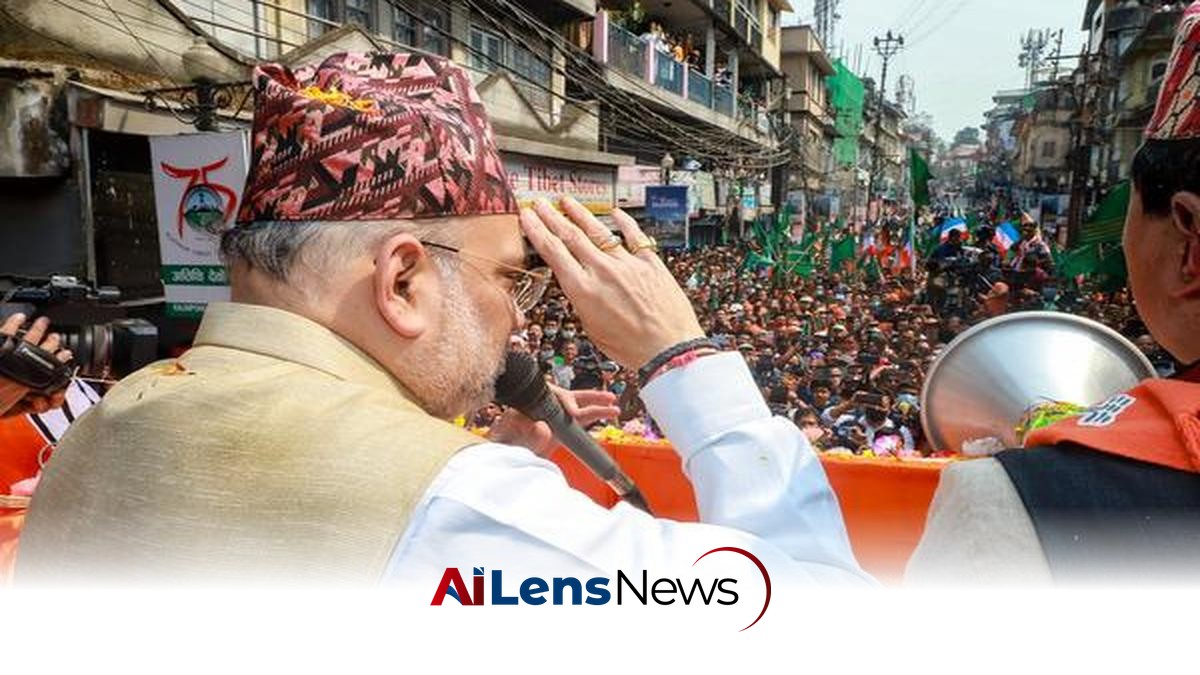


Union Home Minister Amit Shah reassures Gorkhas that the NRC will not affect them, criticizing TMC for spreading fear during the West Bengal Assembly elections.
New Delhi, India Apr 12, 2021 ALN: In a recent political rally in Kalimpong, Union Home Minister Amit Shah sought to address the concerns of the Gorkha community regarding the National Register of Citizens (NRC) amid the ongoing West Bengal Assembly elections. His remarks were aimed at countering the narrative propagated by the Trinamool Congress (TMC), led by Chief Minister Mamata Banerjee, which has suggested that the NRC could adversely affect the Gorkhas, a significant ethnic group in the region.
The NRC is a contentious issue in India, particularly in the northeastern states, where it has been associated with fears of statelessness among various communities. The register is intended to document all legal citizens of India, and its implementation has led to widespread anxiety among groups who fear they might be left out. In this context, Amit Shah’s assurances to the Gorkhas were meant to quell fears that they might be targeted or face displacement as a result of the NRC.
During his speech, Shah emphasized that under the current BJP government, no Gorkha would be harmed by the NRC, stating, “NRC has not yet been implemented, but whenever it is done, not a single Gorkha will be asked to leave.” This declaration is significant as it directly addresses the historical grievances of the Gorkha people, who have faced various challenges over the decades, including demands for a separate state of Gorkhaland.
Historically, the Gorkhas have been involved in a long-standing struggle for recognition and rights in West Bengal, particularly in the Darjeeling district and its surroundings. The movement for Gorkhaland gained momentum in the 1980s, leading to significant unrest and violence, with over 1,200 Gorkhas reportedly losing their lives during protests in 1986. Shah’s reference to these events highlights the ongoing sense of injustice felt within the community and the BJP's intention to position itself as a defender of Gorkha rights.
Shah further criticized the TMC, accusing the party of using fear tactics to manipulate the Gorkha population. He stated, “The Trinamool Congress is lying about the possible fallout of NRC on the Gorkhas in order to create fear among them.” This assertion reflects a broader strategy by the BJP to frame the TMC as a party that is out of touch with the concerns of local communities, particularly those that feel marginalized.
Moreover, Shah pointed out the alleged failures of the Mamata Banerjee government, claiming that it has been responsible for the deaths of many Gorkhas in recent times. This statement underscores the BJP's narrative that the TMC has neglected the needs and safety of the Gorkha community. In response to these grievances, Shah announced the formation of a Special Investigation Team (SIT) to look into the alleged atrocities against the Gorkhas, signaling a commitment to accountability and justice for the community.
The political landscape in Darjeeling and Kalimpong has been shaped by a series of protests and movements advocating for Gorkhaland, with notable unrest occurring in 2017 as well. These movements have often been marked by violence and have drawn national attention to the unique identity and aspirations of the Gorkha people. The BJP's engagement with the Gorkha community is part of a broader strategy to consolidate support in regions where identity politics play a significant role.
Following his address in Kalimpong, Shah continued his campaign in the Dhupguri Assembly constituency, where he claimed that the BJP is leading in 92 out of the 135 seats that had gone to polls in the initial phases of the West Bengal elections. His comments reflect the BJP's ambition to secure a robust victory in the state, which has traditionally been a stronghold of the TMC.
Shah urged voters to ensure a decisive win for the BJP, suggesting that a victory of over 200 seats would represent a grand farewell to Chief Minister Mamata Banerjee. His remarks were accompanied by a critique of Banerjee’s focus on him rather than on state governance, implying that her campaign strategy may be flawed. This tactic of personalizing the political discourse is common in Indian politics, where leaders often seek to undermine their opponents by highlighting perceived weaknesses.
In a dramatic moment during his speech, Shah mentioned that he had a resignation letter ready, asking the crowd if they wanted him to resign following a tragic incident involving the Central Industrial Security Force (CISF), which resulted in the deaths of four individuals during polling. This statement not only served to connect with the audience emotionally but also aimed to position Shah as a leader willing to take responsibility for the actions of security forces during elections.
The Dhupguri constituency is set to go to the polls in the fifth phase of the elections, and the BJP is keen to capitalize on any momentum gained from Shah's rally. The political dynamics in West Bengal are complex, with a history of electoral volatility and changing allegiances. The BJP's strategy in this election appears to be focused on consolidating its base among various communities, including the Gorkhas, while also appealing to broader voter sentiments against the ruling TMC.
As the elections progress, the implications of Shah's statements and the BJP's campaign strategies will be closely watched. The outcome of the West Bengal Assembly elections could have significant ramifications not only for the state but also for the BJP's position nationally, as it seeks to expand its influence in regions where it has historically struggled to gain a foothold. The Gorkha community's response to the BJP's overtures will be particularly crucial in determining the party's success in this politically charged environment.
The Gorkha community, primarily residing in the Darjeeling hills and parts of Kalimpong, has a rich cultural heritage and a distinct identity that has been at the center of political discussions in West Bengal. Their demands for Gorkhaland have not only been about territorial autonomy but also about recognition of their linguistic and cultural rights. The Gorkha National Liberation Front (GNLF) and the Gorkha Janmukti Morcha (GJM) have been at the forefront of this struggle, advocating for the rights and welfare of the Gorkha people.
In recent years, the political landscape in West Bengal has seen significant shifts, with the BJP making inroads in areas that were previously dominated by the TMC. The party's outreach to the Gorkha community is part of a broader strategy to consolidate its position in the state, where identity politics plays a pivotal role. The BJP's focus on the Gorkha issue signals its recognition of the community's importance in the electoral calculus of West Bengal.
The TMC's response to the BJP's claims and strategies will be crucial in the coming days. The party has historically relied on its grassroots connections and promises of welfare to secure votes. However, the BJP's aggressive campaign and focus on identity politics may challenge the TMC's traditional support base, particularly among the Gorkhas, who have felt marginalized in the past.
The implications of the NRC debate extend beyond West Bengal, as it ties into larger national conversations about citizenship, identity, and the rights of various communities in India. The BJP's framing of the NRC as a protective measure for the Gorkhas could resonate with voters who are concerned about their status and rights in a rapidly changing political landscape.
As the elections approach their climax, the political maneuvering by both the BJP and TMC will be scrutinized closely by analysts and voters alike. The outcome will not only determine the future of governance in West Bengal but also set the tone for the BJP's national strategy as it seeks to strengthen its foothold in regions that have historically been resistant to its influence. The Gorkha community's vote will be a critical factor in this equation, and how they respond to the BJP’s overtures will be pivotal in shaping the electoral outcome.
To learn more about the latest developments in Elections, stay updated with our exclusive reports and analyses on AiLensNews.

