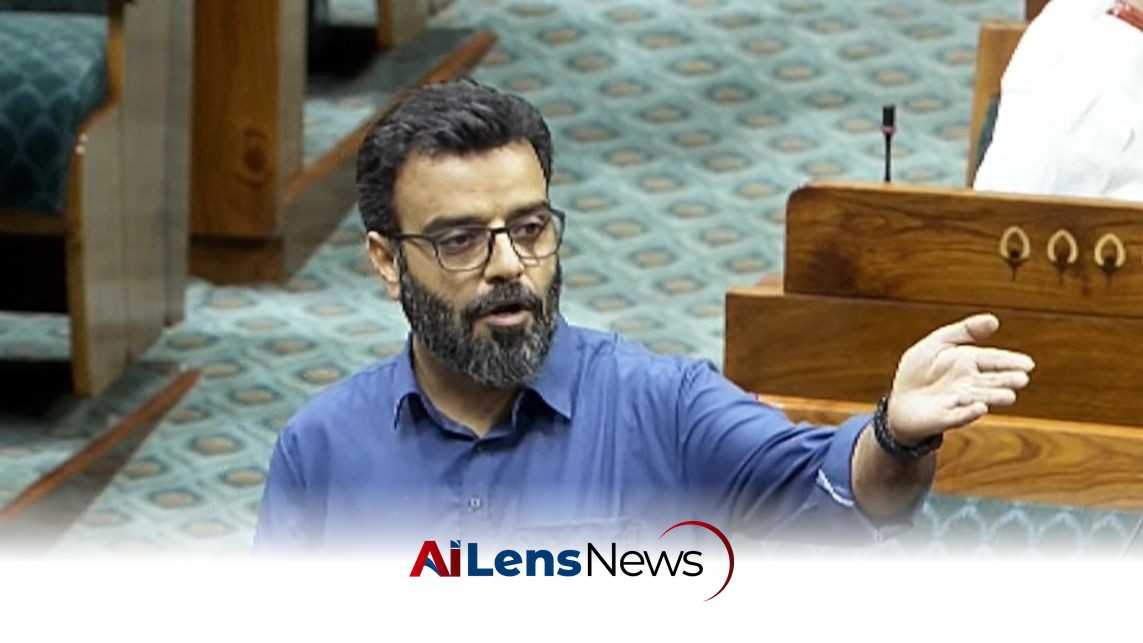


Aga Syed Ruhullah Mehdi, MP from the National Conference, expresses his detachment from the party's statehood protest, stating he was not invited to key events.
New Delhi, India Jul 11, 2026 ALN: National Conference Member of Parliament Aga Syed Ruhullah Mehdi has publicly distanced himself from the party's recent activities, stating that the party "doesn’t need" him anymore. His comments come in the wake of a notable absence from a party convention commemorating the death anniversary of Begum Akbar Jahan, a significant figure in the National Conference’s history. Ruhullah's remarks not only highlight a personal disconnect from the party but also raise questions about the current political landscape in Jammu and Kashmir.
During a press interaction in Kulgam, Ruhullah elaborated on his absence from the convention, noting that he was neither invited to attend nor felt compelled to participate. He mentioned that he had prior commitments in Kulgam, Srinagar, and other locations related to Muharram, a month of mourning in the Islamic calendar, which further occupied his schedule. "How many times do I have to answer this question? They don’t need me. I was not called and I was not there. I already had programmes in Kulgam, Srinagar, and other locations in connection with Muharram, so I remained busy. They don’t need me anymore," he remarked, suggesting a sense of alienation from the party's current activities and priorities.
Ruhullah's distancing from the National Conference is significant, especially considering the party's ongoing struggle to regain its footing in the political narrative of Jammu and Kashmir post-abrogation of Article 370 in August 2019. This article had granted special status to the region, and its revocation has been a contentious issue that has polarized political discourse. The National Conference, historically a proponent of preserving this status, has faced challenges in redefining its role and message in the wake of this major political shift.
The abrogation of Article 370 was a landmark event in Indian politics, particularly for Jammu and Kashmir, as it ended the region's autonomy and integrated it more closely with the Indian Union. The National Conference, which has been a dominant political force in Jammu and Kashmir for decades, has traditionally advocated for the rights and autonomy of the region's residents. The party's leadership, including figures like Farooq Abdullah and Omar Abdullah, has had to navigate a complex landscape where their historical positions are now under scrutiny in light of the new political realities.
In addition to his comments on his absence from the party convention, Ruhullah also addressed the National Conference’s recent Jantar Mantar protest, which aimed to advocate for the restoration of statehood to Jammu and Kashmir. He explicitly ruled out any involvement in this protest, emphasizing that his focus would remain on issues that directly affect the people of Jammu and Kashmir. "They are going to protest for statehood, a responsibility for which people have not given them a mandate. I will go among the people of Jammu and Kashmir and speak about Article 370. I will work on the people’s agenda," Ruhullah stated, indicating a preference for grassroots engagement over political theater.
Ruhullah's critique of the National Conference's shift in focus from Article 370 to statehood is particularly noteworthy. He argues that this shift serves to advance the narrative of the Bharatiya Janata Party (BJP), which has positioned itself as the architect of the changes in Jammu and Kashmir's political landscape. "The National Conference had campaigned against the abrogation of Article 370 during the elections. We all campaigned on that issue. Whoever walks away from that and speaks only about statehood is helping normalize the status quo and advancing the BJP’s propaganda," he concluded. This perspective underscores a broader concern among some political leaders in the region about the implications of shifting the focus away from the special status issue, which remains a deeply emotional and politically charged topic for many residents of Jammu and Kashmir.
The political dynamics in Jammu and Kashmir have been in flux since the revocation of Article 370, with various parties attempting to recalibrate their strategies in response to the changing landscape. The National Conference, led by Farooq Abdullah and his son Omar Abdullah, has been one of the key players in this arena. However, the party has faced criticism for not effectively addressing the aspirations of the people, particularly the youth, who feel disillusioned by the political process. Many young people in Jammu and Kashmir are increasingly frustrated with the lack of tangible progress on issues that matter to them, including employment, education, and social justice.
Ruhullah's comments may reflect a growing sentiment among certain factions within the National Conference, who are advocating for a return to the party's foundational issues rather than a focus on statehood, which they perceive as a diversion from the core issue of autonomy and self-determination. This internal dissent could have implications for the party's future strategies and its ability to connect with its base. The National Conference's leadership may need to engage in a reevaluation of its priorities to ensure that it resonates with the electorate, especially as the political environment continues to evolve.
Furthermore, Ruhullah's distancing from the National Conference's recent activities signals a potential rift within the party as it grapples with its identity and purpose in a post-Article 370 era. The party's leadership may need to address these concerns to maintain cohesion and relevance in the eyes of the electorate. If dissenting voices within the party continue to rise, it could lead to a fragmentation of the National Conference's support base, potentially benefiting rival parties that are also vying for influence in Jammu and Kashmir.
The broader political discourse in Jammu and Kashmir may shift as different parties recalibrate their positions on statehood and autonomy, potentially leading to new alliances or conflicts in the region. As the National Conference navigates these challenges, it will be crucial for the party to strike a balance between addressing the aspirations of its constituents while also engaging in effective political strategies that resonate with the changing sentiments of the populace.
In conclusion, Aga Syed Ruhullah Mehdi's distancing from the National Conference's recent activities and his critique of the party's focus on statehood over Article 370 raises important questions about the future of political discourse in Jammu and Kashmir. As the region continues to navigate the complexities of its political landscape, the voices of leaders like Ruhullah may play a crucial role in shaping the narrative and addressing the aspirations of the people. The coming months will likely reveal how these dynamics unfold and the impact they will have on the political fabric of Jammu and Kashmir. As political parties continue to adapt to the shifting realities, the engagement of leaders who prioritize grassroots issues over political maneuvering could prove essential in reconnecting with the electorate and fostering a more inclusive political environment.
To learn more about the latest developments in Political Controversies, stay updated with our exclusive reports and analyses on AiLensNews.

