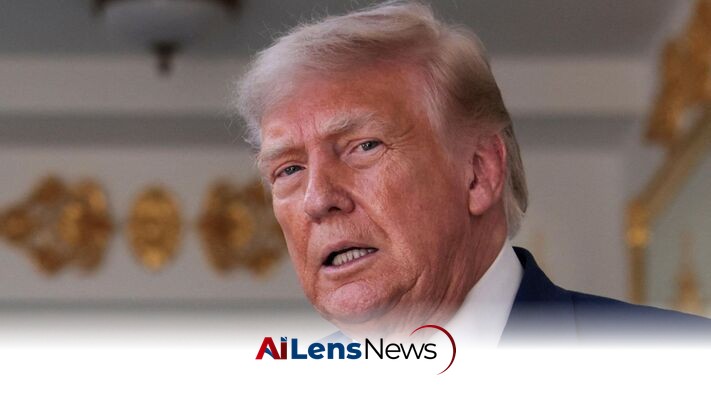


In a recent interview, President Trump emphasized the US's strong military stance on Iran while expressing a preference for avoiding military action due to humanitarian concerns.
Islamabad, Pakistan Jul 29, 2026 ALN: US President Donald Trump has made headlines by asserting that Washington holds a "very strong position" on Iran, a country that has been a focal point of US foreign policy for decades. His remarks come amid heightened tensions between the United States and Iran, which have persisted despite various diplomatic efforts aimed at reducing conflict. Trump’s statements reflect a complex interplay of military strategy, diplomatic engagement, and humanitarian concerns.
In a recent interview with Fox News, Trump emphasized the military capabilities of the United States, claiming that they could effectively target Iran's critical infrastructure with devastating efficiency. He noted that the US military could destroy most of Iran’s bridges in less than an hour and disable all of Iran’s power plants within a single day. This assertion underscores the significant military power that the United States maintains in the region, a power that has been a cornerstone of its foreign policy since the 1979 Iranian Revolution.
Historically, the relationship between the United States and Iran has been fraught with tension. Following the overthrow of the US-backed Shah of Iran and the subsequent establishment of the Islamic Republic, diplomatic relations were severed, leading to decades of animosity. The US has accused Iran of supporting terrorism, pursuing nuclear weapons, and destabilizing the Middle East. Conversely, Iran has accused the US of imperialism and interference in its internal affairs. This historical backdrop is crucial for understanding the current dynamics and the implications of Trump's statements.
The Iranian Revolution of 1979 marked a significant turning point in US-Iran relations. The revolution led to the establishment of a theocratic regime that was fundamentally opposed to US influence in the region. The subsequent hostage crisis, during which 52 American diplomats and citizens were held for 444 days, solidified a deep-seated mistrust between the two nations. Over the years, various administrations have attempted to engage with Iran, but these efforts have often been met with resistance and skepticism from both sides.
Trump's comments also reflect the ongoing debate within his administration regarding military action versus diplomatic solutions. He mentioned that many people had urged him to authorize strikes against Iran, indicating that there are factions within the government that advocate for a more aggressive stance. However, Trump highlighted the potential humanitarian consequences of such military actions, which could leave millions of Iranians without access to electricity or transportation. This acknowledgment of humanitarian risks is significant, as it illustrates a level of caution in his approach to military engagement.
The notion of a "delicate balance" that Trump refers to is particularly relevant in the context of international relations, where military capabilities must be weighed against the potential for civilian suffering. The president's administration has faced criticism in the past for prioritizing military action over diplomatic channels, especially in the context of the withdrawal from the Joint Comprehensive Plan of Action (JCPOA) in 2018. This agreement, commonly known as the Iran nuclear deal, was designed to limit Iran's nuclear capabilities in exchange for sanctions relief. The US withdrawal from the deal has led to increased tensions and has been viewed by many as a pivotal moment in US-Iran relations.
The JCPOA was the result of years of negotiation involving multiple countries, including the UK, France, Germany, Russia, and China, alongside the United States. The agreement aimed to curb Iran's nuclear program in exchange for the lifting of economic sanctions that had crippled its economy. Following the US withdrawal, Iran gradually began to breach the terms of the deal, leading to increased concerns over its nuclear ambitions and further deteriorating relations with the West.
As tensions between Washington and Tehran remain high, Trump's remarks also serve to reinforce the United States' position as a military deterrent while simultaneously engaging in diplomatic efforts. This dual approach aims to project strength while also seeking to avoid direct conflict. The implications of this strategy are significant, as they may influence not only US-Iran relations but also the broader geopolitical landscape of the Middle East.
Moreover, Trump's insistence on avoiding conflict aligns with his broader foreign policy narrative, which emphasizes a preference for negotiation over warfare. This stance has resonated with various segments of the American populace, particularly those weary of prolonged military engagements in the Middle East, such as the wars in Iraq and Afghanistan. Trump's administration has often framed its foreign policy in terms of national interest, focusing on the economic and strategic benefits of avoiding unnecessary conflicts.
The American public's wariness of military intervention has been shaped by the experiences of the past two decades, particularly the long and costly engagements in Iraq and Afghanistan. Many Americans are disillusioned with the idea of military solutions, advocating instead for diplomatic approaches that prioritize peace and stability. Trump's administration has attempted to leverage this sentiment, promoting a narrative of restraint and caution in foreign engagements.
International observers are likely to scrutinize Trump's latest comments closely, as they may signal the administration's future actions regarding Iran. The potential for military action, even if it is framed as a last resort, remains a point of concern for many in the international community. The repercussions of any military engagement could extend beyond the immediate region, potentially destabilizing neighboring countries and exacerbating humanitarian crises.
Furthermore, the geopolitical implications of US-Iran tensions extend to various global players, including European nations, Russia, and China, all of whom have vested interests in the stability of the Middle East. European allies, in particular, have expressed concerns over the US's hardline approach to Iran, advocating for a return to diplomatic negotiations rather than military threats. The delicate balance that Trump refers to is not only a matter of US policy but also involves the responses and strategies of other nations affected by the US-Iran dynamic.
European nations have been particularly vocal in their desire to preserve the JCPOA, arguing that it was a crucial step toward preventing Iran from developing nuclear weapons. They have sought to engage Iran diplomatically, despite the US's withdrawal from the agreement. The European Union has attempted to create mechanisms to facilitate trade with Iran, circumventing US sanctions and encouraging Iran to remain committed to the deal's terms.
In conclusion, President Trump's assertions regarding the United States' military capabilities and his preference to avoid military action against Iran highlight the complexities of US foreign policy. As tensions continue to simmer, the administration's approach will likely be closely monitored by both domestic and international audiences. The outcomes of these dynamics will play a crucial role in shaping the future of US-Iran relations and the broader geopolitical landscape of the Middle East. The balance between military deterrence and diplomatic engagement remains a critical challenge for the Trump administration, as it seeks to navigate a path that minimizes conflict while addressing national security concerns.
To learn more about the latest developments in Political Controversies, stay updated with our exclusive reports and analyses on AiLensNews.

