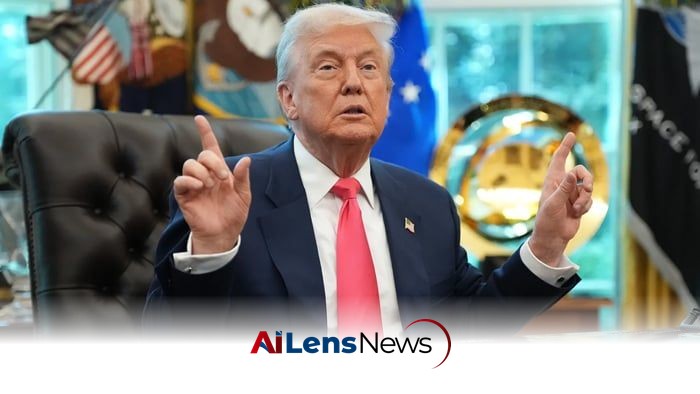


US President Donald Trump has reinstated a naval blockade on Iranian ports, warning of military strikes unless Iran resumes negotiations.
Islamabad, Pakistan Jul 15, 2026 ALN: US President Donald Trump has announced the reinstatement of a naval blockade on Iranian ports and warned that additional military strikes could target Iran’s energy infrastructure unless Tehran returns to negotiations. This decision marks a significant escalation in the ongoing tensions between the United States and Iran, which have been fraught with conflict since the US withdrew from the Joint Comprehensive Plan of Action (JCPOA) in May 2018, a deal aimed at curbing Iran's nuclear ambitions in exchange for sanctions relief.
The reinstatement of the blockade comes on the heels of allegations that Iran has engaged in attacks on commercial shipping in the Strait of Hormuz, a critical maritime corridor that connects the Persian Gulf with the Gulf of Oman. According to US officials, the blockade was deemed necessary to protect international shipping lanes from what they described as Iranian aggression. The Strait of Hormuz is particularly vital as it is the conduit for approximately 20% of the world's oil supply, making its security paramount to global energy stability.
In a recent interview with Fox News, President Trump emphasized the gravity of the situation, stating that the United States could escalate its military response further by targeting Iranian power plants, bridges, and energy facilities if diplomatic efforts do not yield results. He framed the potential military action as a necessary step to ensure the safety of maritime traffic and to deter Iran from further destabilizing activities in the region. Trump underscored that while military action is on the table, there remains an opportunity for negotiations if Iran is willing to engage in dialogue.
In response to these threats, Iran has firmly rejected the notion of negotiating under pressure, with Deputy Foreign Minister Kazem Gharibabadi asserting that increased military action and economic sanctions would not compel Tehran to return to the negotiating table. This stance reflects Iran's broader strategy of resisting what it perceives as US coercion, which has characterized its foreign policy since the US withdrawal from the JCPOA. Iran's leadership has repeatedly emphasized its commitment to its national sovereignty and its right to defend its interests in the face of external pressure.
Adding to the complexity of the situation, Iran has claimed responsibility for launching drone attacks against US positions in Jordan, as well as targeting military-related facilities in Bahrain and Kuwait. However, these claims have not been independently verified, and there has been no immediate response from the Pentagon regarding the reported strike in Jordan. The lack of clarity surrounding these incidents has led to heightened tensions and uncertainty in an already volatile region.
The escalation of hostilities has raised fresh concerns over the security of the Strait of Hormuz. The strategic waterway is not only crucial for oil shipments but also for the broader stability of the global economy. The ongoing tensions have already had a tangible impact on energy markets, with Brent crude oil prices rising to approximately $85 per barrel, reflecting fears of potential supply disruptions. Analysts warn that continued instability in the region could lead to further increases in oil prices, which would have ripple effects on global markets and economies already grappling with the impacts of the COVID-19 pandemic.
US officials have accused Iran of attacking at least seven commercial vessels over the past week, resulting in multiple casualties among crew members. These incidents have heightened fears of a broader conflict, as they signify a dangerous escalation in Iran's maritime tactics. The Islamic Revolutionary Guard Corps (IRGC), Iran's elite military force, has claimed responsibility for disabling two supertankers that allegedly ignored repeated warnings, further complicating the security situation in the region.
The renewed conflict has increased uncertainty over prospects for diplomacy and regional stability. Analysts caution that any further disruption to shipping or energy infrastructure could have significant consequences for global oil supplies and the wider economy. The situation is particularly precarious given the ongoing geopolitical rivalries in the Middle East, including tensions between Iran and its regional adversaries, such as Saudi Arabia and Israel, as well as the complex dynamics involving US interests in the region.
As the situation develops, the international community watches closely. The potential for military confrontation looms large, and the stakes are high not only for the countries directly involved but also for global energy consumers and markets. The implications of this renewed conflict extend beyond immediate military considerations; they encompass broader questions of international diplomacy, economic stability, and the future of US-Iran relations.
The reinstatement of the naval blockade and the threat of military action by the United States represent a significant turning point in US-Iran relations. The blockade is not merely a tactical maneuver; it is a signal of the US's commitment to a hardline stance against Iranian activities that are perceived as destabilizing. This strategy aligns with the broader objectives of the Trump administration, which has sought to counter Iran's influence across the Middle East by supporting regional allies and enhancing US military presence in the area.
The historical context of US-Iran relations is crucial to understanding the current crisis. The JCPOA, established in 2015, was a landmark agreement that aimed to curb Iran's nuclear program in exchange for relief from economic sanctions. However, the US withdrawal from the deal in 2018 under President Trump led to a re-imposition of sanctions that have severely impacted Iran's economy, leading to increased tensions and aggressive posturing from both sides. Iran has since taken steps to enrich uranium beyond the limits set by the JCPOA, further complicating the potential for negotiations.
Moreover, the geopolitical landscape of the Middle East is characterized by a web of alliances and rivalries that complicate the situation. Iran's relationships with proxies and militant groups across the region, including Hezbollah in Lebanon and various factions in Iraq and Yemen, have raised alarms among US allies, particularly Israel and Saudi Arabia. These nations view Iranian expansionism as a direct threat to their security and have called for stronger action from the US to counter Iran's influence.
The potential for military confrontation also raises questions about the role of international organizations and allies. The United Nations and other international bodies have historically sought to mediate conflicts in the Middle East, but the current situation presents a challenge given the polarized views on Iran. While some nations support the US approach, others advocate for diplomatic engagement with Tehran. The lack of a unified international stance could hinder efforts to de-escalate tensions.
As both sides dig in their heels, the prospects for diplomacy appear increasingly dim. The global community must grapple with the consequences of these developments, as the potential for escalation could have far-reaching implications for regional and global stability. The international community’s response in the coming weeks will be critical in determining whether a path toward negotiation can be forged or if the situation will spiral into a broader conflict.
In conclusion, the current crisis underscores the fragility of peace in the region and the complexities of international diplomacy. The reinstatement of the naval blockade and the threats of military action illustrate the high stakes involved in US-Iran relations. As the situation evolves, the need for careful diplomatic engagement becomes increasingly urgent to avert a potentially catastrophic conflict that could impact not only the Middle East but the global economy as well.
To learn more about the latest developments in Political Controversies, stay updated with our exclusive reports and analyses on AiLensNews.

