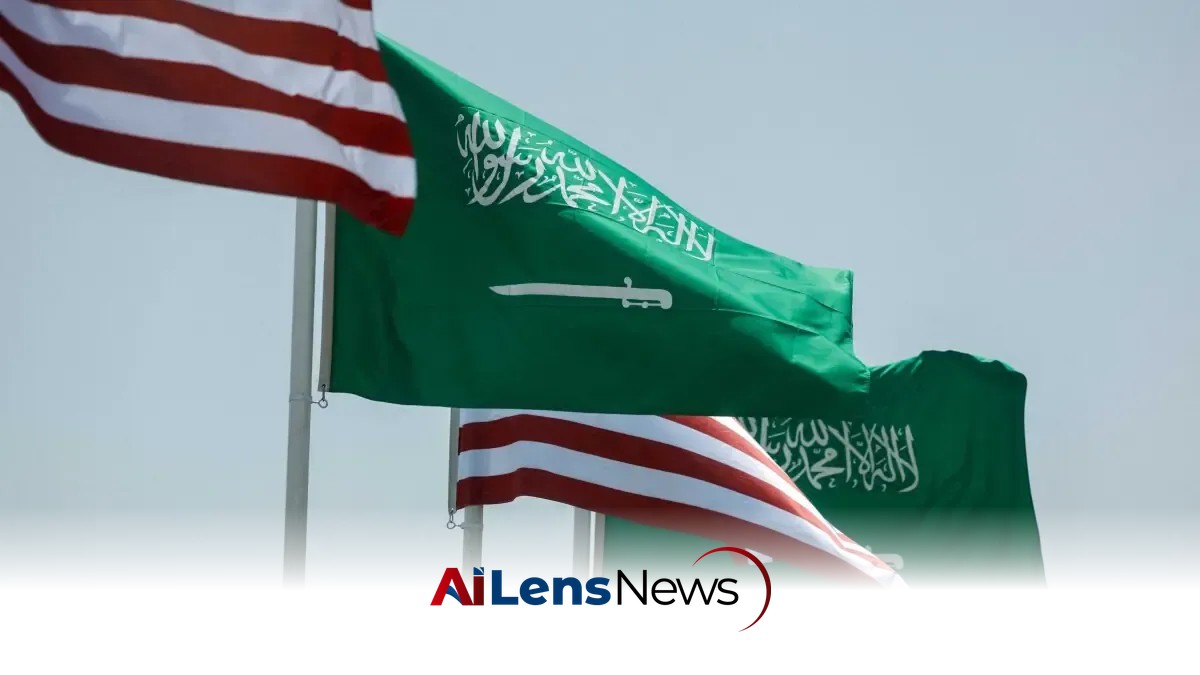


US President Donald Trump announced that a nuclear agreement with Saudi Arabia is contingent on the kingdom joining the Abraham Accords and normalizing relations with Israel.
Islamabad, Pakistan Jul 23, 2026 ALN: US President Donald Trump on Thursday announced that a significant agreement with Saudi Arabia, which aims to establish a civilian nuclear program in the Gulf nation, is contingent upon Riyadh's participation in the Abraham Accords and its normalization of relations with Israel. This statement underscores a broader strategic vision that links nuclear cooperation with geopolitical alliances in the Middle East.
In a post on Truth Social, Trump emphasized that the proposed deal is intended solely for civilian nuclear use, similar to existing programs in Iran and the United Arab Emirates (UAE). He stated, "This deal will be approved, but is totally subject to Saudi Arabia joining the very respected and successful Abraham Accords." This explicit linkage of nuclear cooperation to diplomatic normalization with Israel illustrates the administration's approach to Middle Eastern diplomacy, which seeks to reshape alliances in the region.
The Abraham Accords, brokered under Trump's administration in 2020, represent a series of agreements aimed at normalizing diplomatic relations between Israel and several Arab nations that have historically been adversarial towards it. While the accords have been hailed by some as a breakthrough in Middle Eastern diplomacy, they remain controversial in many parts of the region, particularly because they do not address the longstanding Israeli-Palestinian conflict, which continues to be a source of tension and resentment among Arab populations.
This development occurs against the backdrop of ongoing tensions between the United States and Iran, particularly regarding Tehran's nuclear ambitions. The U.S. has been engaged in a protracted struggle to curtail Iran's nuclear program, which it perceives as a threat not only to regional stability but also to global security. The linkage of the nuclear deal with Saudi Arabia to the Abraham Accords indicates a strategic maneuver by the U.S. to consolidate its influence in the Gulf while countering Iranian power.
Two agreements were signed by U.S. Energy Secretary Chris Wright and Saudi Arabia's Minister of Energy, Prince Abdulaziz bin Salman, which are described as establishing a legal framework for a long-term partnership in nuclear energy. The U.S. Energy Department characterized these agreements as laying the groundwork for a multi-billion-dollar collaboration that aligns with both economic interests and strategic objectives, including nuclear non-proliferation. However, the specifics of these agreements were not immediately disclosed to the public, raising questions about the details and implications of the partnership.
Reports suggest that the deal may include provisions for U.S. companies to construct a uranium enrichment facility in Saudi Arabia, although the Energy Department did not confirm such details when approached for comment. This potential development has sparked concern among U.S. lawmakers and Israeli officials, who fear that Saudi Arabia could eventually transition from a civilian nuclear program to developing nuclear weapons capabilities. The prospect of nuclear proliferation in the region is a significant point of contention, especially in light of Iran's existing nuclear program.
Historically, Saudi Arabia has maintained that it has the right to pursue a civilian nuclear program, mirroring claims made by Iran. The U.S. has sought to integrate any nuclear agreements with Saudi Arabia into a broader strategic framework that includes normalizing relations with Israel and establishing a defense pact between the U.S. and Saudi Arabia. This approach reflects a desire to counterbalance Iranian influence and to promote stability in a region marked by geopolitical rivalries.
The U.S. previously signed a nuclear cooperation agreement with the UAE in 2009, which notably did not include provisions for uranium enrichment. The UAE's Barakah nuclear plant, the first of its kind in the Arab world, was recently the target of a drone attack, highlighting the vulnerabilities associated with nuclear facilities in the region.
Concerns about nuclear proliferation have long been a priority for U.S. policymakers. The apprehension is that if Iran were to successfully develop nuclear weapons, it could trigger an arms race among Gulf states, including Saudi Arabia, which might feel compelled to pursue similar capabilities as a deterrent. U.S. Energy Secretary Wright has sought to alleviate these concerns, asserting that the agreements uphold stringent standards of nuclear safety and non-proliferation, while leveraging advanced U.S. nuclear technology.
The U.S.-Saudi nuclear deal is structured under Section 123 of the U.S. Atomic Energy Act, which governs nuclear cooperation with foreign nations. The U.S. has established similar agreements with over 50 countries, although the nature and extent of cooperation can vary significantly. Experts have indicated that while the groundwork for such a deal has been in development for some time, there are valid concerns regarding the potential for enrichment capabilities on Saudi soil. Matthew Kroenig, a scholar at the Atlantic Council, has warned against granting Saudi Arabia the ability to enrich uranium, arguing that it could undermine global non-proliferation efforts.
On the other hand, some analysts view the agreement positively, framing it as a strategic win for the U.S. in the context of international competition with Russia and China for influence in the Middle East. Jennifer T. Gordon, director of the Atlantic Council’s Nuclear Energy Policy Initiative, pointed out that Saudi Arabia's decision to pursue nuclear energy technologies was inevitable, and the critical question was whether they would collaborate with the U.S. and its allies or turn to other powers like Russia or China for assistance.
In conclusion, the potential U.S.-Saudi nuclear deal is emblematic of the complex interplay between energy policy, national security, and international diplomacy in the Middle East. As the U.S. seeks to navigate these multifaceted challenges, the implications of linking nuclear cooperation with diplomatic normalization with Israel could have lasting effects on regional stability and security dynamics. The debate surrounding nuclear proliferation in the Gulf is likely to continue, with significant implications for U.S. foreign policy and the broader geopolitical landscape.
To learn more about the latest developments in Elections, stay updated with our exclusive reports and analyses on AiLensNews.

