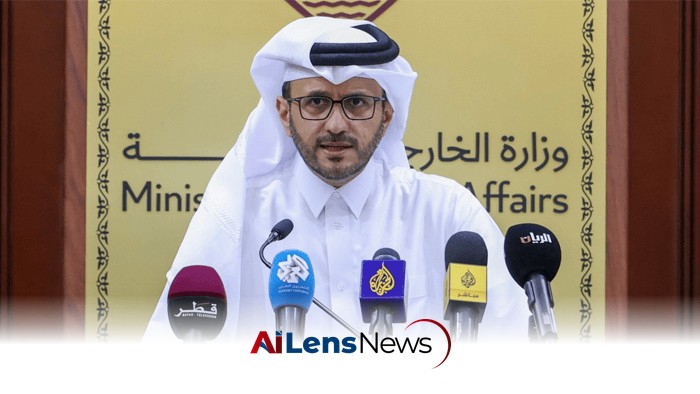


Qatar has firmly rejected claims of its participation in military action against Iran, emphasizing its commitment to diplomacy and regional stability.
Islamabad, Pakistan Jul 17, 2026 ALN: Qatar has firmly denied recent reports suggesting that it has agreed to participate in military action against Iran. This denial follows claims made by various Israeli media outlets, which alleged that Doha had sanctioned involvement in a military operation aimed at targeting Iran. Such assertions have raised concerns about the potential escalation of tensions in an already volatile region.
In an official statement released by Qatar’s International Media Office, the government categorically rejected these reports, labeling them as false and misleading. The office emphasized that these allegations seem to be propagated by individuals or groups with vested interests in drawing Qatar into the ongoing conflict, thereby undermining its established role as a mediator in regional disputes.
Qatar has been recognized for its diplomatic efforts in the Middle East, often acting as a neutral ground for discussions and negotiations among conflicting parties. The country has a history of engaging in dialogue with various groups, including those that are often sidelined in traditional diplomatic discussions. This has positioned Qatar as a crucial player in peace processes, particularly in relation to conflicts in Syria, Libya, and the broader Gulf region.
The Qatari government reiterated that it has consistently maintained a position of non-involvement in military actions against neighboring states. This stance has been communicated clearly since the onset of the current crisis involving Iran, and officials have assured that there are no intentions to alter this policy in the future. Such a commitment to non-aggression is pivotal, especially considering the delicate balance of power in the Gulf region, where military actions can have far-reaching consequences.
Furthermore, Qatar's statement highlighted that it would not permit misleading claims to hinder its ongoing diplomatic initiatives. The country has prioritized fostering dialogue and reducing tensions among regional players, advocating for peaceful resolutions to conflicts that have historically plagued the area. This approach reflects Qatar's broader foreign policy strategy, which emphasizes mediation and diplomacy over military involvement.
In the context of regional dynamics, the relationship between Iran and its neighbors, particularly those aligned with Western interests, remains complex and often fraught with tension. Qatar's denial of military involvement against Iran is significant, as it illustrates the country's desire to maintain its sovereignty and diplomatic integrity while navigating the intricate geopolitical landscape of the Middle East.
In recent years, the Gulf Cooperation Council (GCC), which includes Qatar, has faced internal divisions, particularly regarding relations with Iran and the ongoing conflict in Yemen. Qatar's independent foreign policy, which sometimes diverges from the positions of its GCC partners, has led to both criticism and support from various factions within the region. The country’s refusal to engage in military action against Iran could be seen as an attempt to distance itself from the more aggressive stances taken by some of its neighbors, particularly Saudi Arabia and the United Arab Emirates, who have been vocal critics of Tehran.
Moreover, Qatar's commitment to diplomacy is underscored by its ongoing partnerships with international actors. The Qatari government has sought to work collaboratively with both regional and global partners to facilitate dialogue aimed at resolving conflicts. This includes engagement with major powers such as the United States, as well as with organizations like the United Nations, which play pivotal roles in conflict resolution and peacekeeping efforts.
As the situation evolves, it is crucial for Qatar to maintain its diplomatic posture while addressing external pressures that may arise from its neighbors or from international stakeholders. The implications of military action in the region could be detrimental not only to Qatar but also to the broader stability of the Middle East. The country’s emphasis on dialogue and peaceful solutions serves as a counter-narrative to the militaristic approaches that have characterized much of the region's recent history.
In conclusion, Qatar's denial of any involvement in military actions against Iran reflects its strategic commitment to diplomacy and regional stability. As tensions continue to simmer in the Middle East, Qatar’s role as a mediator will be increasingly important. The country’s focus on fostering dialogue and reducing conflicts remains a vital aspect of its foreign policy, ensuring that it continues to serve as a bridge between opposing factions and a proponent of peace in a tumultuous region.
To understand the implications of Qatar's stance, it is essential to consider the broader geopolitical context. The Middle East has been marked by a series of conflicts, many of which are fueled by sectarian divisions, territorial disputes, and the influence of external powers. Qatar's decision to reject military involvement against Iran can be interpreted as an effort to promote stability in a region that has seen the rise of extremist groups and the proliferation of armed conflict.
Additionally, the relationship between Qatar and Iran has historically been complex. While both countries share a gas field in the Persian Gulf, their geopolitical interests often diverge, particularly regarding their support for different factions in regional conflicts. Qatar has maintained a cautious approach, balancing its economic ties with Iran against the pressures from its Gulf neighbors who view Tehran as a primary threat.
Furthermore, Qatar's diplomatic efforts have been instrumental in mediating various conflicts in the region. For instance, Qatar has played a key role in facilitating negotiations in the Afghan peace process, engaging with the Taliban and other stakeholders to promote dialogue. This experience in diplomacy positions Qatar as a unique actor capable of fostering discussions even with groups that are often considered adversaries by other nations.
In light of these dynamics, Qatar's commitment to non-involvement in military actions against Iran not only serves its national interests but also reflects a broader vision for a peaceful and stable Middle East. As the region continues to grapple with the consequences of past conflicts and the rise of new challenges, Qatar's approach offers a potential pathway towards reconciliation and dialogue.
Ultimately, the denial of military involvement against Iran underscores Qatar's strategic calculations in a highly polarized environment. By reaffirming its commitment to diplomacy, Qatar aims to reinforce its position as a mediator and a stabilizing force in the region. The implications of this stance will likely resonate beyond its borders, influencing the behavior of other regional players and shaping the future of Middle Eastern geopolitics.
To learn more about the latest developments in Political Controversies, stay updated with our exclusive reports and analyses on AiLensNews.

