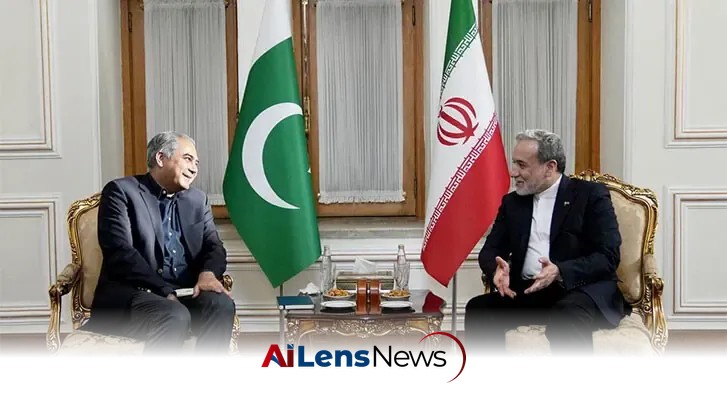


Interior Minister Mohsin Naqvi's Tehran visit aims to rejuvenate the stalled Islamabad MoU, signaling renewed diplomatic efforts between Iran and the US.
Islamabad, Pakistan Aug 12, 2026 ALN: In recent developments, Pakistan has taken steps to revive its role as a mediator in the ongoing tensions between Iran and the United States. This comes in the wake of a meeting held in Tehran, where Interior Minister Mohsin Naqvi engaged in discussions with Iranian officials, including Foreign Minister Abbas Araghchi and President Masoud Pezeshkian. The primary focus of these talks was to advance the stalled Islamabad Memorandum of Understanding (MoU), which had previously aimed to facilitate dialogue and reduce hostilities between the two nations.
Naqvi's visit to Tehran is significant for several reasons. Firstly, it underscores Pakistan's commitment to maintaining its diplomatic channels with Iran, particularly as the geopolitical landscape in the region continues to evolve. The Islamabad MoU, which was reached in June, has faced challenges and has not been fully implemented, leading to a fragile state of affairs in the Persian Gulf, especially concerning the crucial Strait of Hormuz. This strait is a vital waterway through which a significant portion of the world's oil supply is transported, making its security a matter of international concern.
During his visit, Naqvi was received by Iranian Interior Minister Eskandar Momeni before engaging in discussions with Araghchi. The meetings aimed to assess the current status of the MoU and explore potential pathways for renewed dialogue between Iran and the US, which has seen Oman taking a more prominent role in facilitating negotiations. This shift has created an opportunity for Pakistan to reassert its diplomatic influence and revive the mediation process that had been largely dormant.
Defence Minister Khawaja Asif also commented on the situation, indicating that both the US and Iran are approaching a potential arrangement. His remarks suggest that there may be a renewed willingness from both sides to engage in dialogue, which could pave the way for a more stable situation in the region. The optimism expressed by Asif reflects a broader sentiment among some diplomats that the recent developments may lead to a thaw in relations.
Pakistan's diplomatic outreach is not limited to high-level meetings. The country has also invited key Iranian leaders, including Araghchi and parliamentary speaker Bagher Ghalibaf, to visit Islamabad. However, Iranian officials have indicated that such visits will occur at a more appropriate time, highlighting the cautious nature of the ongoing negotiations.
The relationship between Pakistan and Iran is historically rooted, characterized by shared interests and challenges. Naqvi emphasized this during his discussions, describing the ties as "strong, long-standing and unbreakable." He reiterated Pakistan's commitment to fostering comprehensive development in bilateral relations, which is seen as crucial for both nations' national interests and regional stability.
In the broader context, Pakistan has recently signed a trilateral defense agreement with Saudi Arabia and Turkiye, which Islamabad has clarified is defensive and not aimed at any particular country. This agreement reflects Pakistan's strategic positioning in the region and its desire to enhance cooperation on security matters. The trilateral agreement is indicative of Pakistan's balancing act in managing its relationships with various regional powers, including Iran, Saudi Arabia, and Turkiye, amidst the complex geopolitical dynamics of the Middle East.
The Strait of Hormuz has been a focal point of contention, particularly regarding its management and security. The disagreements over the future of this critical waterway have been a significant factor in the stalled implementation of the Islamabad MoU. Iran and Oman have been negotiating arrangements to ensure safe passage through the strait, focusing on establishing new shipping routes and management mechanisms. However, Iran maintains that any agreement with Oman would only be a preliminary step and would not fully address the broader concerns related to US-Iran relations.
Iran has made it clear that it will not fully reopen the Strait of Hormuz until the US addresses what it perceives as violations of the Islamabad MoU. Tehran's stance is that the MoU, which was established at the presidential level, remains the only legitimate framework for resolving the ongoing disputes and should not be subject to selective reinterpretation. The Iranian government is also seeking tangible evidence of the US's political willingness to restore the negotiation process before moving forward with reopening the strait.
In the United States, President Donald Trump has voiced strong criticism of Iranian negotiators, labeling them as "devious" and "dishonest." His remarks reflect a broader skepticism among US officials regarding Iran's commitment to any agreements reached. Trump has suggested that the US could either continue to apply economic pressure on Iran or wait for its internal situation to deteriorate further. He has characterized Iran's economic condition as dire, claiming that the US has significant control over its financial situation, which complicates the prospects for any meaningful dialogue.
The implications of these developments are profound, not only for Iran and the US but also for regional stability in the Middle East. The revival of Pakistan's mediation efforts could potentially lead to a more stable environment in the region, especially if both Iran and the US can find common ground. The successful implementation of the Islamabad MoU could serve as a foundation for broader diplomatic engagement, addressing not only the immediate concerns surrounding the Strait of Hormuz but also the larger geopolitical dynamics at play.
As the situation continues to evolve, the international community will be closely monitoring the outcomes of these diplomatic engagements. The stakes are high, with the potential for both conflict and cooperation depending on the actions taken by key players in the region. Pakistan's role as a mediator could prove crucial in navigating these complexities and fostering a more peaceful and stable environment in the Persian Gulf.
Furthermore, the historical context of Pakistan-Iran relations adds layers to the current diplomatic efforts. Both countries share a long border and have historically engaged in trade, cultural exchanges, and cooperative security initiatives. However, their relationship has also been marked by mutual suspicions and conflicts of interest, particularly regarding Afghanistan and the influence of external powers in the region. Pakistan's strategic partnership with Saudi Arabia, which has at times been at odds with Iran, further complicates the diplomatic landscape.
In addition to the geopolitical implications, the economic dimensions of the situation cannot be overlooked. The Strait of Hormuz is not just a conduit for oil; it is also a lifeline for the economies of several countries reliant on energy exports. Any disruptions to shipping through this strait could have cascading effects on global oil prices and economic stability. Thus, the successful mediation by Pakistan could have far-reaching implications for international trade and energy security.
Moreover, the revival of dialogue between Iran and the US, facilitated by Pakistan, could set a precedent for future negotiations on other contentious issues in the region, such as the nuclear program and regional conflicts. The establishment of a framework for peaceful dialogue could help mitigate tensions and foster a climate of trust, which is essential for long-term stability in the region.
In conclusion, Pakistan's renewed efforts to mediate between Iran and the US could play a pivotal role in shaping the future of diplomatic relations in the Middle East. As the international community watches closely, the outcomes of these negotiations will not only impact the immediate parties involved but could also have lasting effects on regional and global stability.
To learn more about the latest developments in Elections, stay updated with our exclusive reports and analyses on AiLensNews.

