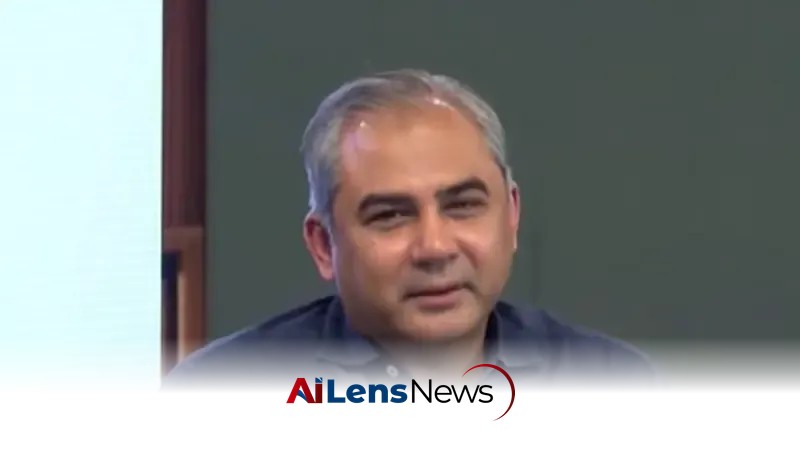


Mohsin Naqvi urges political parties to address the creation of new provinces and improve governance at the Pakistan Economic Summit 2026.
Islamabad, Pakistan Jul 30, 2026 ALN: Interior Minister Mohsin Naqvi's recent call for political unity regarding provincial issues has sparked significant discussion in Pakistan. During his address at the Pakistan Economic Summit 2026 held in Islamabad, Naqvi emphasized the urgent need for political parties to come together to address pressing national issues, particularly the contentious topic of creating new provinces. His remarks reflect a growing sentiment among various political factions and the general populace regarding the administrative structure of the country and its implications for governance and public service delivery.
Naqvi's assertion that there is "only one solution" to improving the overall condition of Pakistan—namely, engaging the public in discussions about administrative units and provinces—highlights a critical aspect of governance: the necessity of public involvement in political decision-making. The interior minister's call for all political parties to convene and deliberate on these matters underscores the complexities involved in governance, particularly in a country with a diverse population and a history of regional disparities.
The issue of creating new provinces is not a novel one in Pakistan. It has been a topic of debate for several decades, with various political parties advocating for the reorganization of administrative boundaries to enhance governance and representation. For instance, the Muttahida Qaumi Movement-Pakistan (MQM-P), which is part of the ruling coalition led by the Pakistan Muslim League-Nawaz (PML-N), has long argued for Karachi to be established as a separate province due to its unique demographic and economic status. However, this proposal has faced staunch opposition from the Pakistan Peoples Party (PPP), which governs Sindh and views such a move as a threat to its political power and influence in the region.
On the other hand, the PPP and the Pakistan Tehreek-e-Insaf have pushed for the creation of a South Punjab province. This demand stems from longstanding grievances regarding the underrepresentation of the southern regions of Punjab in political and economic matters. The calls for new provinces reflect a broader desire for more localized governance, which proponents argue would allow for better allocation of resources and more responsive administration to the needs of diverse communities.
Naqvi's comments regarding the collapse of the existing system resonate with many who feel that the current political framework is inadequate to address the multifaceted challenges facing the country. He noted that the existing governance model has led to negative budgetary outcomes and an increasing reliance on debt, which raises concerns about the sustainability of Pakistan's economic future. The interior minister's critique of the status quo suggests that without significant reform and collaboration among political stakeholders, the country may continue to face stagnation and decline.
Furthermore, Naqvi's emphasis on the need for a "corrected system" that prioritizes the needs of ordinary citizens reflects a growing frustration among the populace regarding the disconnect between government actions and public expectations. He articulated the desire of citizens for affordable necessities and meaningful interactions with government representatives, highlighting a fundamental aspect of democracy: accountability and responsiveness to the electorate.
In his speech, Naqvi also addressed the youth of Pakistan, acknowledging their aspirations for merit-based job opportunities. He pointed out that simply providing stipends or technological tools would not suffice to meet the expectations of younger generations. This recognition of the youth's role in shaping the future of the country is crucial, as they represent a significant demographic that can influence political and social change.
The interior minister's remarks about the need for new leadership and ownership of administrative units further underscore the importance of local governance. He suggested that until new political frameworks are established that engage citizens and empower local leaders, the status quo will persist. This perspective aligns with global trends in governance, where decentralization and local empowerment are increasingly viewed as effective strategies for enhancing democratic participation and improving public service delivery.
Naqvi's comments about the role of business chambers and associations in the political landscape also raise important questions about the intersection of economics and politics in Pakistan. By suggesting that these entities are instrumental in funding political campaigns and influencing policy decisions, he highlights the need for transparency and accountability in political financing. This issue is particularly pertinent in a country where corruption and nepotism have historically undermined public trust in government institutions.
As Pakistan grapples with economic challenges, political instability, and social unrest, the call for unity among political parties is more crucial than ever. Naqvi's appeal for dialogue and collaboration may serve as a catalyst for broader discussions about governance, representation, and the future of provincial structures in the country. The implications of such discussions could be far-reaching, potentially leading to a reconfiguration of political power dynamics and a reassessment of how best to serve the diverse needs of Pakistan's population.
In conclusion, the interior minister's address at the Pakistan Economic Summit serves as a reminder of the complexities and challenges that lie ahead for Pakistan. The call for political unity on provincial issues is not merely a plea for cooperation among political parties; it is a recognition that the future of the country hinges on the ability of its leaders to engage in meaningful dialogue, prioritize the needs of their constituents, and work collaboratively towards a more equitable and effective governance model. As the nation moves forward, the stakes are high, and the path to progress will require both courage and commitment from all political actors involved.
To learn more about the latest developments in Elections, stay updated with our exclusive reports and analyses on AiLensNews.

