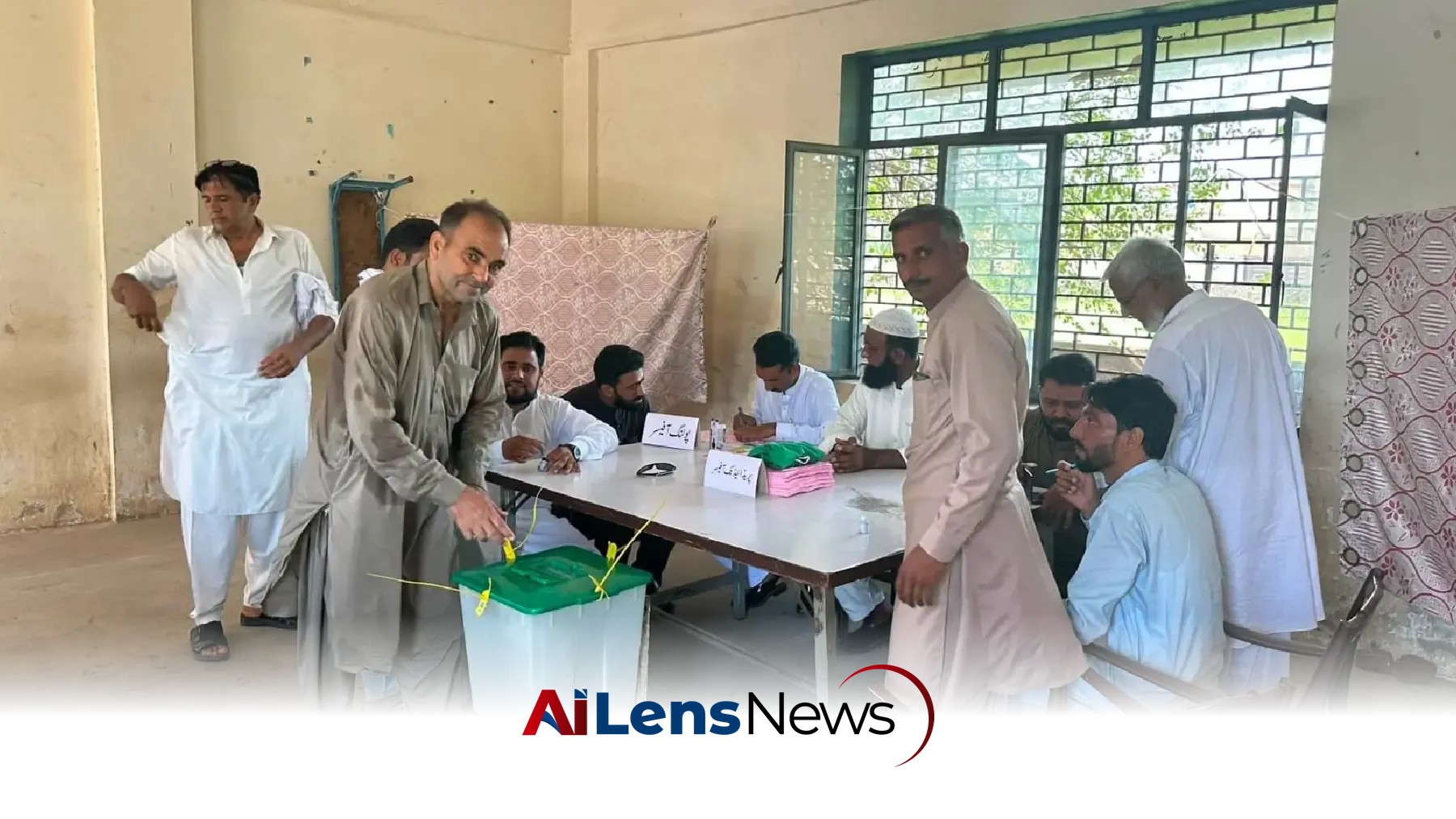


The first phase of the Azad Jammu and Kashmir elections has begun in Mirpur division, with polling taking place across 13 constituencies. Security measures are in place to ensure a smooth voting process.
Islamabad, Pakistan Jul 27, 2026 ALN: The first phase of the Azad Jammu and Kashmir (AJK) elections has officially commenced in the Mirpur division, marking a significant event in the region's political landscape. This election is particularly noteworthy as it involves a total of 13 constituencies within the division, where a diverse array of candidates are vying for positions that will influence local governance and development.
Polling began promptly at 8 AM and is set to continue until 5 PM, with today designated as a public holiday across the three districts of Bhimber, Mirpur, and Kotli. This measure was taken to facilitate voter participation, underscoring the importance of the electoral process in the region. The decision to declare a public holiday reflects the commitment of the local authorities to ensure that all eligible voters have the opportunity to cast their ballots without any hindrances.
In total, 288 candidates are competing in the elections, as reported by the Election Commission. These candidates represent a variety of political parties and independent groups, reflecting the diverse political sentiments among the electorate. Polling is being conducted at 2,316 polling stations throughout the division, with a significant emphasis on security. Of these stations, 1,241 have been classified as ‘highly sensitive’ and 724 as ‘sensitive,’ indicating a heightened level of vigilance due to potential security concerns.
The security arrangements for the elections are extensive, involving a well-organized monitoring system that encompasses 13 zones and 205 sectors across the Mirpur division. A total of 18,560 personnel from law enforcement agencies, including the police and other security forces, have been deployed under a comprehensive three-tier security plan. This layered approach to security includes the first layer provided by local police, with the second layer consisting of personnel from the Pakistan Rangers (Punjab), Pakistan Rangers (Sindh), and the Federal Constabulary. The final layer of security is provided by the Pakistan Army, with approximately 2,100 army personnel stationed to ensure a peaceful electoral process. Additionally, Quick Response Force teams are on standby, ready to address any emergencies that may arise during the polling.
The decision to conduct the polls in three phases stems from ongoing security concerns in the region. The second and third phases of the elections are scheduled for August 2 and August 10, respectively, which will cover nine constituencies in the Muzaffarabad division, all 12 refugee constituencies, and 11 constituencies in the Poonch division. This staggered approach aims to mitigate risks and ensure that the electoral process is conducted smoothly and safely.
In the lead-up to the elections, AJK Chief Election Commissioner (CEC) Justice (retd) Ghulam Mustafa Mughal made a public appeal to the more than 1.4 million registered voters in the region. He urged them to participate actively in the electoral process, emphasizing the importance of voting in order to elect representatives who will advocate for their interests and address their concerns. In a video message, the CEC highlighted the elaborate security arrangements that had been put in place, assuring voters that their safety was a top priority.
Furthermore, the CEC issued a stern warning to anyone considering disrupting the polling process, stating that such actions would result in strict legal consequences. This warning was particularly pertinent in light of recent announcements by the proscribed Joint Awami Action Committee (JAAC), which had called for a long march from Mirpur division to Muzaffarabad on the eve of the elections. A core member of the JAAC, Umar Nazir Kashmiri, had claimed that groups would gather at a sit-in in Rawalakot before proceeding to Muzaffarabad after Zuhr prayers on election day. However, local law enforcement officials reported that there was no significant turnout for the protest, suggesting that the call for disruption did not resonate with the public.
In addition to the CEC's comments, AJK Chief Secretary Khushal Khan reiterated the commitment to maintaining order during the electoral process, warning that any attempts to disturb public order would be met with legal action. This dual emphasis on security and voter participation reflects the authorities' recognition of the delicate balance required to ensure a successful election.
The political climate leading up to the elections has been characterized by intense competition, particularly between prominent political figures such as Pakistan Peoples Party (PPP) Chairman Bilawal Bhutto-Zardari and former Prime Minister Nawaz Sharif. Observers have noted that this election is shaping up to be a significant contest between the two leaders, with both parties actively mobilizing their supporters and resources in the region.
During a public rally in Mirpur, Nawaz Sharif made pointed remarks directed at Bilawal, asserting that the political dynamics in AJK should not be conflated with those in Sindh, where the PPP has historically held power. His comments highlighted the distinct political identity of AJK and aimed to reinforce the notion that local voters should prioritize their unique needs and aspirations over external influences.
In response, Bilawal Bhutto-Zardari addressed the criticisms leveled against him and his party, emphasizing that the people of Kashmir, regardless of their geographic location, deserve to have their rights recognized and upheld. He contested Nawaz's characterization of development initiatives, arguing that public services and infrastructure funded by taxpayer money should not be framed as political gifts. Instead, he asserted that these resources are the rightful entitlements of the populace.
The PPP has also accused the Pakistan Muslim League-Nawaz (PML-N) of violating the electoral code by distributing e-buses and announcing development schemes in the lead-up to the elections. Such allegations highlight the contentious nature of the electoral campaign and the ongoing rivalry between the two parties. Bilawal's emphasis on governance rights, ownership, and employment for the people of AJK underscores the broader themes of accountability and representation that are central to this election cycle.
As the day progresses and polling continues, the implications of this election extend beyond the immediate outcomes in terms of constituency representation. The results will likely influence the political landscape of AJK, shaping future governance and development strategies. The heightened security measures and the active engagement of voters reflect the significance of this electoral process in a region that has experienced its share of political and social challenges.
In conclusion, the first phase of the AJK elections in Mirpur division represents a critical moment for the region's democratic processes. With substantial voter turnout encouraged by the CEC, a robust security framework in place, and the ongoing rivalry between major political figures, the outcome of this election will be closely monitored by observers both within and beyond AJK. The developments in the coming days will not only determine the immediate political representation but also set the tone for future governance and political engagement in the region.
To learn more about the latest developments in Elections, stay updated with our exclusive reports and analyses on AiLensNews.

