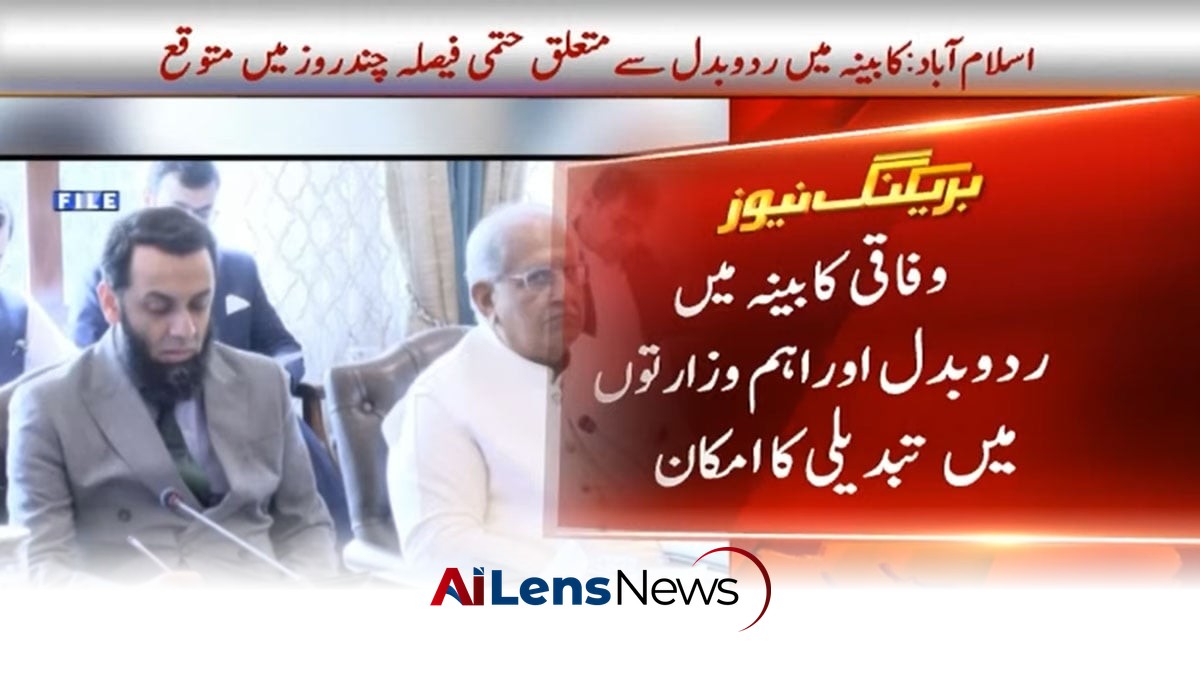


A federal cabinet reshuffle is anticipated, with new ministers from Balochistan and Khyber Pakhtunkhwa, focusing on increased representation from BAP and MQM-P.
Islamabad, Pakistan Jul 13, 2026 ALN: A reshuffle of the federal cabinet is highly likely, with changes expected across several key ministries, ARY News reported citing sources on Monday.
According to sources, some ministers are expected to be replaced, while the portfolios of several others will be reassigned. The inclusion of new members into the cabinet is also under active consideration. This reshuffle is viewed as a crucial step for the government, especially at a time when it is facing numerous challenges on multiple fronts, including economic instability and political unrest.
Sources added that new ministers from Balochistan and Khyber Pakhtunkhwa will be inducted into the cabinet. This move comes as part of a broader strategy to enhance representation from various regions and political parties within the government, ensuring a more inclusive approach to governance. The inclusion of representatives from these provinces is particularly significant given their unique socio-economic challenges and the historical underrepresentation of their interests at the federal level.
To facilitate this, Prime Minister Shehbaz Sharif has consulted the political leadership regarding an increase in the number of cabinet ministers from coalition parties. This consultation is crucial in a political landscape where coalition dynamics often dictate the stability and functionality of the government. The current coalition government, which includes various parties with differing agendas and priorities, must navigate these complexities to maintain its majority and effectively govern.
Sources hinted at the likely inclusion of more ministers from the Balochistan Awami Party (BAP) and the Muttahida Qaumi Movement-Pakistan (MQM-P). The BAP, which primarily represents the interests of the Baloch people in Pakistan, has been a significant player in the coalition government, particularly in the context of addressing regional issues and development needs. Meanwhile, the MQM-P, a party that largely represents the urban middle-class and working-class populations of Karachi and Hyderabad, has historically been influential in shaping policies that affect urban governance and resource allocation. Their inclusion could signal a shift towards policies that prioritize regional and urban development, which are critical for the socio-economic upliftment of these areas.
The potential reshuffle comes at a time when the government faces various challenges, including economic difficulties, rising inflation, and political unrest. These issues have prompted calls for a more effective and responsive cabinet that can address the pressing needs of the populace. By increasing representation from key parties like BAP and MQM-P, the government may be attempting to bolster its support base and enhance its ability to implement policies that resonate with diverse constituencies. The economic landscape in Pakistan has been particularly turbulent, with inflation rates reaching alarming levels and public dissatisfaction growing. A reshuffle that introduces capable leaders from these regions could be a strategic move to mitigate public discontent.
The decision to reshuffle the cabinet is not merely an administrative change; it reflects the ongoing negotiations and power dynamics within the ruling coalition. In recent months, there have been growing tensions among coalition partners, with some parties voicing concerns over their representation and influence in decision-making processes. This reshuffle could be seen as an opportunity to appease dissenting voices within the coalition and to reaffirm commitments to collaborative governance. The balance of power within the coalition is delicate, and ensuring that all voices are heard could be critical for maintaining unity and stability.
Furthermore, the inclusion of new ministers from Balochistan and Khyber Pakhtunkhwa highlights the government's recognition of the importance of provincial representation in federal decision-making. Both provinces have unique socio-economic challenges that require tailored policy responses. By bringing in ministers from these regions, the government may aim to better address local issues and promote equitable development across the country. This approach aligns with the broader goal of ensuring that governance is responsive to the needs of all citizens, regardless of their geographic location.
As discussions around the cabinet reshuffle progress, it remains to be seen how the changes will impact the government's overall effectiveness and public perception. A well-executed reshuffle could lead to renewed public confidence in the government, particularly if the new ministers are perceived as capable and committed to addressing the urgent issues facing the nation. Conversely, a poorly managed reshuffle could exacerbate existing tensions and lead to further dissatisfaction among the public and coalition partners alike.
Once approved by the Prime Minister, the formal changes to the federal cabinet will be officially announced, sources said. The announcement will likely be accompanied by a detailed explanation of the rationale behind the reshuffle, including the specific roles and responsibilities of the newly appointed ministers. This transparency will be essential in maintaining public trust and ensuring that the government is held accountable for its decisions and actions. Public announcements of this nature are critical to fostering a sense of inclusion and participation among citizens, who may feel disconnected from the political process.
In conclusion, the anticipated cabinet reshuffle represents a critical juncture for the current administration. It underscores the complexities of coalition politics in Pakistan and the need for a responsive and inclusive governance model. As the political landscape continues to evolve, the effectiveness of the cabinet in addressing the myriad challenges facing the country will be closely scrutinized by both political analysts and the general public. The coming days will be pivotal in shaping the future direction of the government and its ability to navigate the turbulent waters of Pakistani politics. The reshuffle may not only redefine internal dynamics within the government but could also influence public trust and engagement in the political process, which is vital for the health of democracy in Pakistan.
To learn more about the latest developments in Political Controversies, stay updated with our exclusive reports and analyses on AiLensNews.

