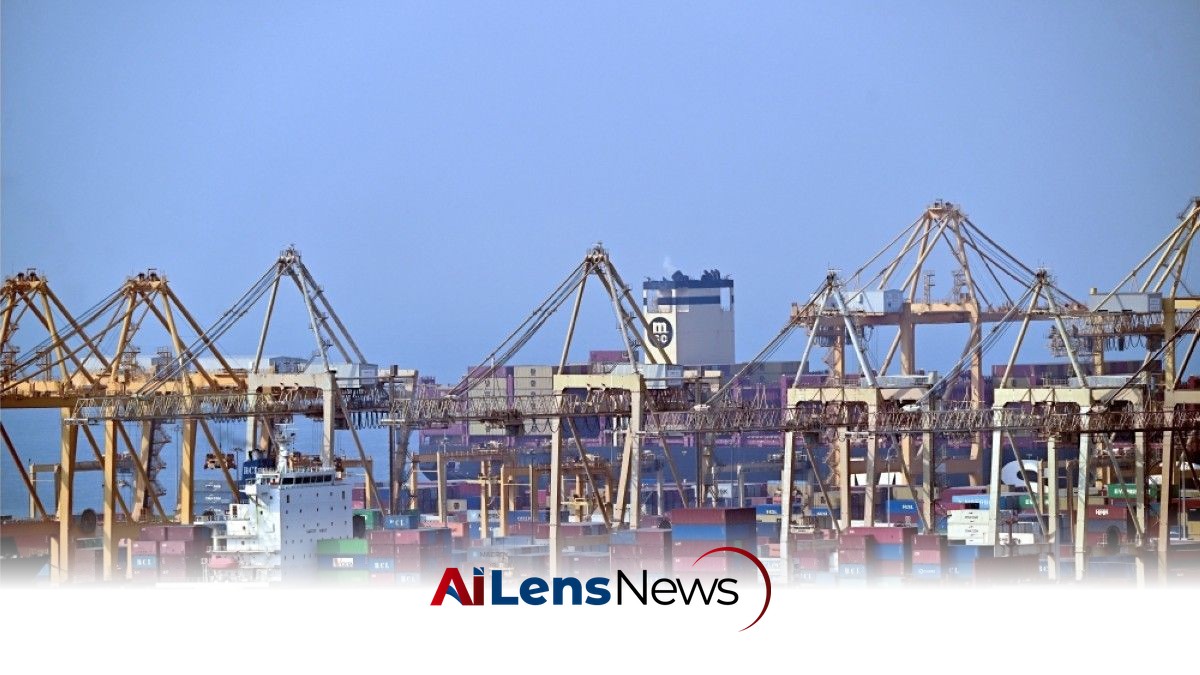


US President Donald Trump has withdrawn a plan to impose a 20% transit fee on shipping through the Strait of Hormuz, opting instead for investment deals with Gulf states.
Kuwait City, Kuwait Jul 15, 2026 ALN: WASHINGTON/TEHRAN: US President Donald Trump has stepped back from a controversial proposal to charge a 20 percent transit fee for the protection of the vital Strait of Hormuz waterway. This decision comes amid escalating tensions with Iran, as Trump announced on Tuesday that he would instead pursue investment deals with Gulf states.
In a significant shift, Trump stated that the strait would remain open to all shipping traffic except for Iranian vessels. This announcement was made just hours before the fee was set to take effect at 2000 GMT. "Based on highly productive conversations with Middle East leadership, I have decided to replace the 20% United States Reimbursement Fee with Trade and Investment Deals that the various Gulf States will be making into the United States," he posted on Truth Social.
Earlier, during an appearance on the "Hugh Hewitt Show," Trump warned that Iran would face severe repercussions, stating, "Iran will be hit very hard tonight, and we’re going to hit them hard tomorrow. And there’s not a damn thing they can do about it." Reports from Iranian state media indicated that a US projectile struck Qeshm Island in Iran around 7 p.m. on Tuesday.
Additionally, a US projectile reportedly exploded near a water and electricity facility on Iran’s Kish Island, with further explosions reported in Andimeshk, located in southern Khuzestan province. In retaliation, Iran had previously targeted a US Army base in Jordan with ballistic missiles, while Bahrain claimed to have thwarted an Iranian aerial attack.
Jordan's military confirmed that it had intercepted four ballistic missiles, and explosions were also reported in Manama, Bahrain’s capital. Kuwait's armed forces engaged with “hostile” aerial targets, with sirens sounding across the country. The intensifying conflict has raised concerns about the potential for a wider war, jeopardizing global energy supplies and increasing inflation fears.
The Strait of Hormuz is a crucial maritime chokepoint through which approximately 20 percent of the world's oil and liquefied natural gas traffic passes daily. The waterway's significance cannot be overstated, as it serves as a vital artery for energy supplies to various countries, particularly those in Asia and Europe. Any disruption in this region can have far-reaching implications not only for energy prices but also for global economic stability.
The proposal to impose fees on shipping through the strait faced immediate backlash. The UN shipping agency expressed opposition, stating there was no legal basis for mandatory tolls on strait transits. Germany’s Hapag-Lloyd, one of the world’s largest container shipping companies, criticized the idea as "fundamentally wrong." Shipping experts and industry leaders argued that such fees could deter shipping traffic through the strait, potentially leading to higher shipping costs that would ultimately be passed on to consumers.
Later on Tuesday, Trump indicated that he was not in favor of the fee concept, citing calls from other countries expressing interest in investing in the US instead. He did not specify any commitments from these nations but claimed, "Investments will be MASSIVE but, at the same time, extraordinarily good for them, and their future." This pivot towards investment deals rather than fees reflects a broader strategy to strengthen economic ties with Gulf states amid rising tensions with Iran.
Following the reimposition of the naval blockade on Iran and the renewed hostilities, oil prices surged approximately 2 percent, reaching a one-month high. Analysts noted that the market's reaction was driven by fears of supply disruptions in the Strait of Hormuz, which could exacerbate the already volatile global oil market. If the fee had been implemented, it could have generated an estimated $240 million daily, a significant sum that underscores the economic stakes involved in this geopolitical conflict.
Despite the ongoing attacks, analysts believe that the conflict remains within controlled limits for now, with both parties seeking leverage for a potential peace agreement. However, there is still a risk of the situation escalating. Yezid Sayigh, a senior fellow at the Carnegie Middle East Center, remarked, "I doubt the two sides will resume a full war, especially as Trump will suffer — though there is also a distinct possibility that the Iranians will overplay their hand. That is true of Trump too, of course." This observation highlights the precarious balance of power in the region, where miscalculations could lead to unintended consequences.
The conflict has garnered disapproval in the US, where rising gasoline prices and impending congressional elections have fueled public dissent. A recent Reuters poll revealed that half of respondents believed the war had not justified its costs. This sentiment reflects growing frustration among the American public regarding military engagements abroad, particularly as economic pressures mount at home. The political implications of this discontent could influence upcoming elections, as candidates may be compelled to address voters' concerns about foreign policy and its impact on domestic issues.
In summary, Trump's decision to abandon the transit fee proposal for the Strait of Hormuz amid rising tensions with Iran represents a significant shift in US foreign policy. The focus on investment deals rather than fees indicates an attempt to strengthen alliances with Gulf states while navigating the complexities of the ongoing conflict with Iran. As the situation continues to evolve, the potential for escalation remains a concern, with implications for global energy markets and geopolitical stability. The coming weeks will be critical in determining the trajectory of US-Iran relations and the broader dynamics of the Middle East.
The Strait of Hormuz, as mentioned, is a narrow body of water that connects the Persian Gulf with the Gulf of Oman and the Arabian Sea. It is bordered by Iran to the north and the United Arab Emirates and Oman to the south. The strategic importance of this waterway has made it a focal point of geopolitical tensions, particularly between Iran and the United States, along with its allies in the region. Historically, the strait has been the site of numerous naval confrontations and has often been cited as a potential flashpoint for conflict.
The recent escalation in hostilities can be traced back to a series of events, including the US withdrawal from the Iran nuclear deal in 2018 and the subsequent re-imposition of sanctions against Iran. These actions have strained relations between the two nations and heightened tensions in the region, with both sides engaging in provocative military maneuvers. The situation has been further complicated by the involvement of regional actors, including Saudi Arabia and Israel, who view Iran's influence as a direct threat to their national security.
In light of these developments, the abandonment of the transit fee proposal may reflect a recognition by the Trump administration of the complex realities on the ground. The decision to focus on investment deals could be seen as an attempt to stabilize relationships with Gulf allies who are increasingly wary of Iranian aggression. By fostering economic ties, the US may be seeking to create a buffer against potential disruptions in the Strait of Hormuz, thereby enhancing its own strategic interests in the region.
Moreover, the implications of this decision extend beyond immediate military concerns. The global economy is intricately linked to the stability of energy supplies, and any disruptions in the Strait of Hormuz could have cascading effects on oil prices, inflation, and overall economic growth. As such, the US approach to this region will likely continue to evolve in response to both domestic pressures and international dynamics.
As the situation unfolds, the international community will be closely monitoring developments in the Strait of Hormuz and the broader Middle East. The potential for miscalculation remains high, and the stakes are significant not only for the countries directly involved but also for global economic stability. The coming weeks and months will be critical in shaping the future of US-Iran relations, the security of maritime trade routes, and the geopolitical landscape of the region.
To learn more about the latest developments in Political Controversies, stay updated with our exclusive reports and analyses on AiLensNews.

