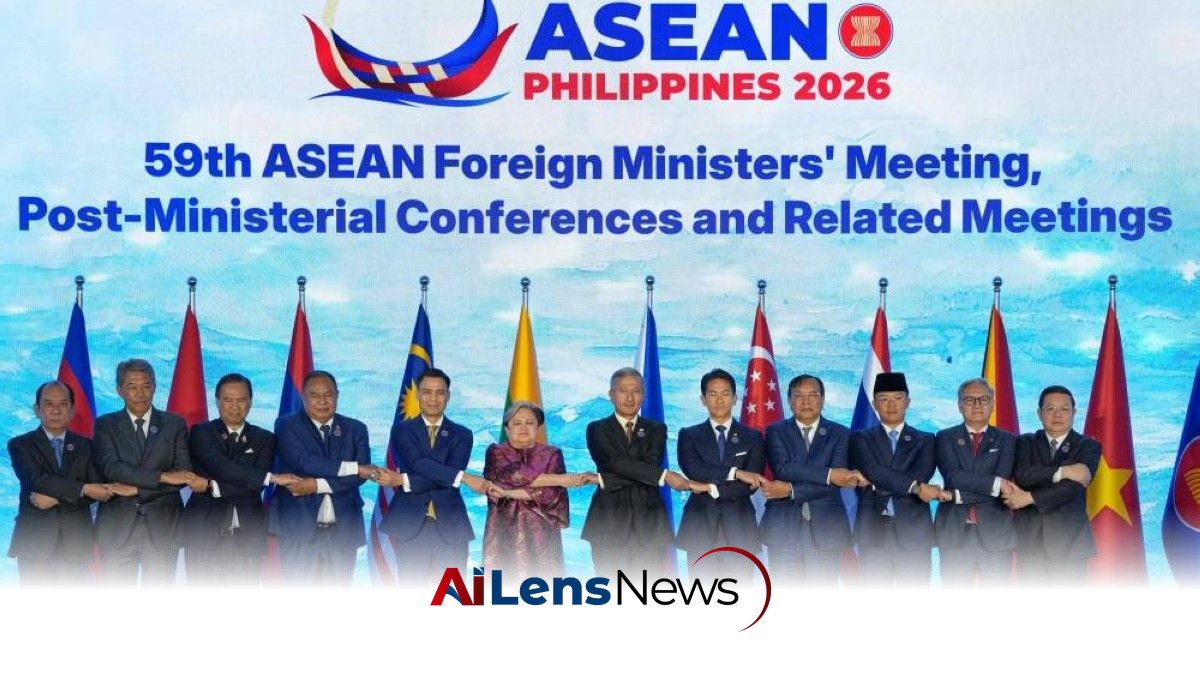


In a diplomatic meeting in Manila, ASEAN foreign ministers expressed concerns over the escalating Middle East conflict, emphasizing the need for dialogue and restraint.
Kuwait City, Kuwait Jul 22, 2026 ALN: The Middle East crisis overshadowed a diplomatic gathering in Southeast Asia on Tuesday, where foreign ministers voiced concerns over renewed hostilities that add to uncertainty in a region grappling to manage tensions and conflicts of its own.
Foreign ministers from the 11-member Association of Southeast Asian Nations (ASEAN) and major partners convened in Manila this week against a backdrop of instability since the United States and Iran resumed open conflict, raising fears about energy supplies through the Strait of Hormuz, as well as inflation and global growth. The Strait of Hormuz is a critical chokepoint through which a significant percentage of the world’s oil supply is transported, making it a focal point for international economic stability.
Risks have increased in recent days, particularly with Yemen's Iran-aligned Houthis announcing a naval blockade on Saudi Arabia. This development opens a potential new front in the conflict and raises the threat to global energy supplies and trade beyond the Gulf. The Houthis, who have been engaged in a prolonged conflict with a Saudi-led coalition, have demonstrated their capability to impact regional shipping lanes, which could have far-reaching consequences for global markets.
"We are deeply concerned that these developments severely undermine the ongoing efforts of key mediators and diminish the prospects for a peaceful resolution through dialogue and diplomacy," the ministers stated after a closed-door meeting. The emphasis on diplomatic solutions highlights ASEAN's commitment to regional stability, even as it faces external pressures from conflicts in other parts of the world.
Southeast Asia, a major oil importer with a combined gross domestic product of $3.8 trillion, is highly exposed to the supply crunch resulting from these conflicts. In response, ASEAN has sought to fast-track an oil-sharing mechanism to mitigate the impact of potential energy shortages. This initiative is crucial for member states that rely heavily on oil imports, as disruptions in supply can lead to increased prices and economic instability.
ASEAN has no shortage of challenges closer to home, and on Tuesday, it held a consultation on the conflict in Myanmar. The bloc's peace initiative has faltered significantly over the past five years following a military coup that plunged the country into a civil war, resulting in an estimated 100,000 deaths. The ongoing humanitarian crisis in Myanmar has prompted calls for increased engagement from ASEAN members, as the situation continues to deteriorate.
Rubio Takes Aim at Beijing
In addition to addressing the Middle East crisis, officials are also likely to discuss tensions in the South China Sea. ASEAN and China have been in negotiations for nearly a decade to conclude a code of conduct aimed at preventing disputes from escalating. Tensions between Manila and Beijing have intensified recently, particularly ahead of an expected meeting between Philippine Foreign Affairs Secretary Maria Theresa Lazaro and Chinese Foreign Minister Wang Yi on the sidelines of Wednesday's ASEAN meetings.
A fresh war of words erupted after the Philippine military accused China's Coast Guard personnel of aggressively striking one of its navy personnel on the head with a baton near the disputed Second Thomas Shoal in the South China Sea. This incident has prompted accusations of provocation and dangerous maneuvers from both governments, further complicating the already fraught relationship between the Philippines and China.
In response to the escalating tensions, Philippine President Ferdinand Marcos Jr. summoned China's ambassador in Manila on Tuesday, a move that underscores the seriousness with which the Philippine government views the incident. Hours later, Manila's envoy in Beijing was similarly summoned, indicating a reciprocal diplomatic response from China. In talks with ASEAN's Secretary-General Kao Kim Hourn in Manila, Wang Yi stated that "certain forces within the Philippine military and police deliberately engaged in provocations and created maritime incidents." This statement reflects China's perspective on the ongoing tensions and highlights the complexities of diplomatic communication in the region.
Wang further asserted that these provocations serve the interests of "external forces" and undermine China-Philippines relations. He emphasized that the South China Sea issue should not be an obstacle in China-ASEAN relations, suggesting a willingness from Beijing to engage with ASEAN on broader issues despite ongoing maritime disputes.
The U.S. State Department condemned what it described as China's "dangerous and aggressive" actions, characterizing them as part of a troubling pattern of provocation against lawful Philippine maritime operations. This condemnation aligns with the U.S. commitment to supporting its allies in the region, particularly in the face of increasing assertiveness from China.
U.S. Secretary of State Marco Rubio is expected to join the ASEAN-led meeting in the coming days, with the possibility of meeting Wang Yi on the sidelines. The presence of major powers such as India, Japan, Australia, South Korea, Russia, Britain, and the European Union at these meetings underscores the geopolitical significance of the region and the complex interplay of international relations at play.
Without naming China directly, Rubio took a swipe at Beijing in an opinion piece published in Philippine newspapers upon his arrival in Manila. He reaffirmed U.S. commitment to freedom of navigation, stating that such freedom was "by no means guaranteed." This assertion highlights concerns regarding the potential for increased maritime conflicts in the South China Sea and the implications for regional security.
Rubio warned that if those waters were to fall under the control of a power willing to use commerce as a geopolitical weapon, both the United States and ASEAN states would face dire new threats to their sovereignty, security, and economic futures. This statement reflects a growing apprehension among U.S. policymakers regarding China's ambitions in the region and the potential for conflict over critical maritime routes.
Furthermore, Rubio reiterated that a 2016 arbitral ruling, which invalidated China's sweeping sovereignty claims in the South China Sea, is final and binding. He affirmed that the U.S. would honor its obligations to the Philippines and other allies as they confront new and coercive threats to shared interests. This commitment to uphold international law and support allies in the region is a cornerstone of U.S. foreign policy in Southeast Asia.
China, however, does not recognize the arbitration ruling, which favored the Philippines, and continues to assert its claims over the majority of the South China Sea. This ongoing dispute poses significant challenges for regional stability and highlights the need for continued dialogue and negotiation among affected parties. As ASEAN navigates these complex issues, the implications of external conflicts and regional disputes will undoubtedly shape the future of diplomatic relations in Southeast Asia.
To learn more about the latest developments in Elections, stay updated with our exclusive reports and analyses on AiLensNews.

