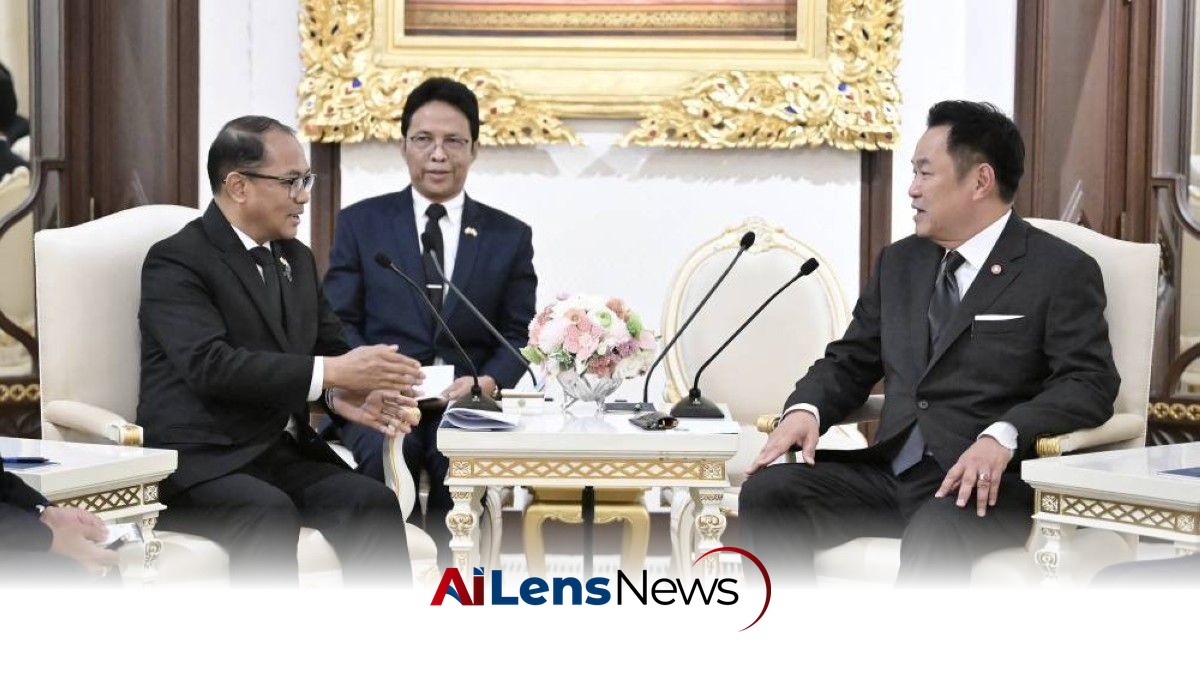


Myanmar's leader Min Aung Hlaing is set to make an official visit to Thailand in August as part of efforts to normalize diplomatic relations following a coup.
Kuwait City, Kuwait Jul 16, 2026 ALN: Myanmar’s leader Min Aung Hlaing is scheduled to make an official visit to Thailand next month, as the Thai government pursues a strategy to reintegrate Myanmar into the diplomatic community following years of isolation. This initiative is particularly significant given the historical context of Myanmar’s political landscape and the dynamics of Southeast Asian diplomacy.
Min Aung Hlaing, who previously served as the chief of the military junta, orchestrated a coup in February 2021 that ousted the democratically elected leader Aung San Suu Kyi. This coup not only disrupted Myanmar’s fragile democratic transition but also ignited widespread civil unrest and armed conflict throughout the country, leading to a humanitarian crisis and a deteriorating security situation. In April 2023, amid ongoing turmoil, he transitioned from military to civilian leadership through a highly criticized election process, which many observers deemed neither free nor fair.
Thailand, as Myanmar’s immediate neighbor, has a vested interest in the stability of the country. The Thai government has been advocating for a normalization of relations with Myanmar, both on a bilateral level and within the context of the Association of Southeast Asian Nations (ASEAN), of which both countries are members. Thai Foreign Minister Sihasak Phuangketkeow emphasized the importance of dialogue, stating, "It’s best to bring Myanmar back into the fold. We believe that after five years we need to talk, we need to listen, and they need to explain." This sentiment reflects a broader regional desire to stabilize Myanmar and mitigate the spillover effects of its internal conflict.
The upcoming visit marks Min Aung Hlaing's first trip to Thailand since his ascension to the presidency, following recent visits to India, China, and Laos. These trips may indicate a strategic effort by Myanmar to strengthen ties with its neighbors and seek support amid ongoing international isolation. However, details regarding his itinerary in Thailand remain unclear, with Sihasak noting that an official program is still being developed.
The backdrop to this visit includes a recent informal gathering of ASEAN foreign ministers, which was the first of its kind since the military coup. Following the coup, ASEAN had barred Myanmar’s military leadership from participating in high-level summits, reflecting the bloc's disapproval of the coup and its aftermath. Despite this, the informal meeting indicates a potential thaw in relations, albeit with significant reservations from various member states regarding the pace and nature of engagement with Myanmar.
ASEAN has struggled to implement its five-point consensus aimed at resolving the crisis in Myanmar, which includes calls for an immediate cessation of violence and national dialogue involving all parties. The bloc has faced internal divisions, with some members advocating for engagement with Myanmar’s leadership and others insisting on more substantial progress in addressing the humanitarian and political crises before restoring full diplomatic relations. This discord highlights the complexities of ASEAN's collective decision-making process and the varying national interests of its member states.
There is speculation that Myanmar’s Foreign Minister Tin Maung Swe may soon attend a formal ASEAN meeting, although reports suggest he will not participate in upcoming discussions in Manila. This uncertainty reflects the ongoing challenges in ASEAN’s approach to Myanmar, as member states navigate their diplomatic strategies amidst a backdrop of evolving geopolitical dynamics.
Experts, such as Morgan Michaels from the International Institute for Strategic Studies, suggest that normalization of relations with Myanmar is inevitable, stating, "It’s not a matter of if, but when." This perspective underscores a broader trend in international relations where pragmatic considerations often take precedence over ideological stances, particularly in the context of regional stability.
Thailand's position is further complicated by the direct consequences of Myanmar's civil war, which has led to an influx of refugees fleeing violence across the border. The Thai government has been faced with the challenge of managing this humanitarian crisis while also addressing its own national security concerns. Observers note that Thailand's desire for de-escalation and stabilization in Myanmar is both a humanitarian and strategic imperative.
Sihasak acknowledged the complexities of the situation, stating, "We have to be realistic—progress won’t be achieved overnight." One of the most pressing issues remains the continued detention of Aung San Suu Kyi, who, at 81 years old, has not been seen publicly since her imprisonment. The international community, including ASEAN, has expressed concern over her welfare, with calls for Myanmar’s military government to allow access for humanitarian organizations and international observers.
In late April, Min Aung Hlaing announced that Suu Kyi would be transferred from prison to house arrest, a move that was met with skepticism by many observers due to the lack of transparency surrounding her condition and treatment. ASEAN has been advocating for its special envoy to meet with Suu Kyi, but Myanmar’s military leadership has thus far rebuffed these efforts, further complicating the diplomatic landscape.
Following the informal ASEAN meeting in Bangkok, Sihasak reported that Myanmar’s foreign minister assured his counterparts that Suu Kyi was "in good health." However, the Thai foreign minister added a note of caution, stating, "We have been told she has been taken care of well but it needs to be proved." This statement reflects the ongoing mistrust and skepticism surrounding the military regime’s claims regarding the treatment of political prisoners and the overall human rights situation in Myanmar.
As Min Aung Hlaing prepares for his visit to Thailand, the implications of this diplomatic engagement will be closely monitored by both regional and international observers. The outcomes of this visit could set the tone for future interactions between Myanmar and its neighbors, as well as influence the broader trajectory of ASEAN’s approach to the ongoing crisis in Myanmar. The international community will be watching to see if this visit leads to tangible steps towards dialogue and resolution or if it merely serves as a façade for continued repression within Myanmar.
To learn more about the latest developments in Political History & Legacy, stay updated with our exclusive reports and analyses on AiLensNews.

