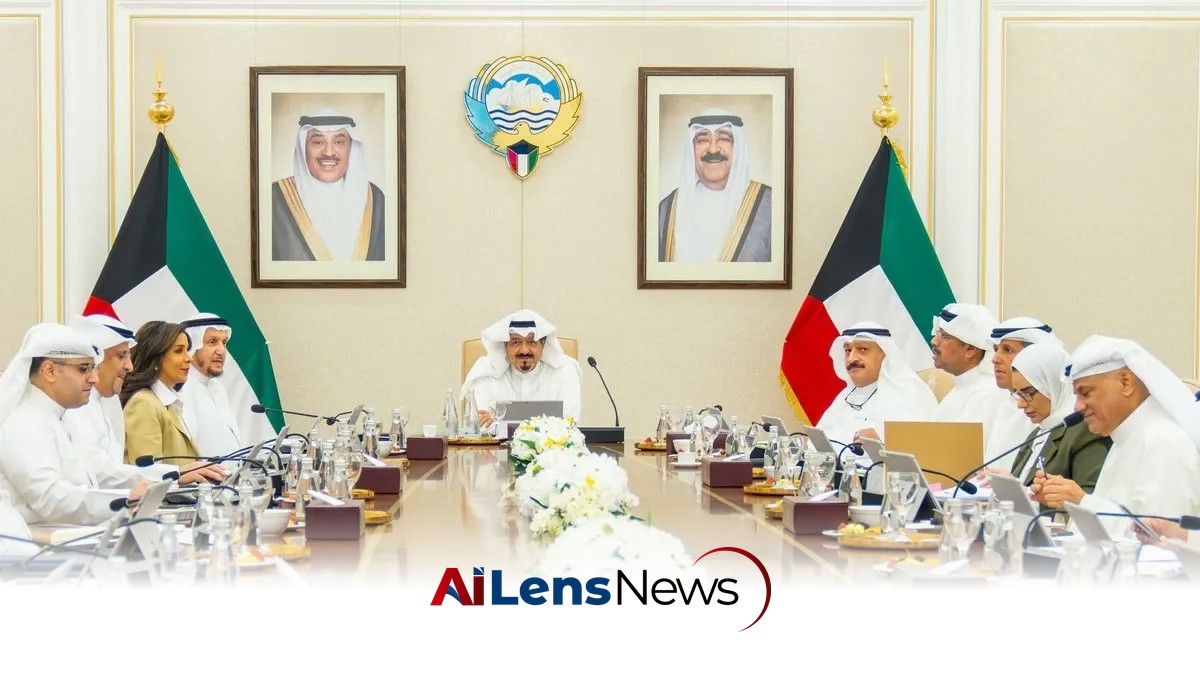


In a recent meeting, the Kuwaiti Cabinet condemned Iranian attacks and approved a draft law to transform Kuwait Airways into a fully state-owned entity.
Kuwait City, Kuwait Jul 16, 2026 ALN: The Kuwaiti Cabinet, chaired by His Highness the Prime Minister Sheikh Ahmad Abdullah Al-Ahmad Al-Sabah, convened on Tuesday to deliberate on several significant issues impacting the nation. Among the key decisions made during this session was the approval of a draft decree-law aimed at transforming the Kuwait Airways Corporation into a fully state-owned shareholding company. This move, which signals a shift in the operational and ownership structure of the national airline, is expected to enhance its efficiency and competitiveness in the aviation sector. Following the Cabinet meeting, Deputy Prime Minister and Minister of State for Cabinet Affairs Sharida Al-Maousherji announced that the draft decree has been referred to His Highness the Amir, Sheikh Meshal Al-Ahmad Al-Jaber Al-Sabah, for final endorsement, a crucial step in the legislative process.
In a further demonstration of the government's commitment to financial transparency and stability, Minister of Finance Dr. Yaqoub Al-Rifai presented the sovereign credit rating report for the first half of 2026. This report reaffirmed Kuwait’s strong position in the global financial markets, highlighting its high investment-grade ratings from major credit rating agencies: Standard & Poor’s and Fitch both rated Kuwait at AA-, while Moody’s assigned an A1 rating. These ratings, maintained with a stable outlook, reflect Kuwait's robust economic fundamentals and strong fiscal management, which are critical for attracting foreign investment and fostering economic growth.
Kuwait's stable financial position has been bolstered by key structural reforms, particularly the implementation of Law No. (60) of 2025 concerning financing and liquidity. This legislation has significantly enhanced the government's financing flexibility and expanded the range of public debt instruments available, allowing for more strategic financial planning and execution. Such reforms are essential as Kuwait seeks to navigate the complexities of a changing global economy while ensuring the sustainability of its public finances.
On the diplomatic front, the Cabinet was briefed on recent high-level talks between His Highness the Amir and UAE President Sheikh Mohammad bin Zayed Al Nahyan during the latter's state visit to Kuwait. These discussions are indicative of the strong bilateral relations between Kuwait and the United Arab Emirates, two nations that share strategic interests in regional stability and economic cooperation. The Cabinet also noted an Amiri order declaring a four-day official mourning period, with national flags to be lowered to half-mast, following the passing of the late Father Amir of Qatar, Sheikh Hamad bin Khalifa Al Thani. This gesture underscores Kuwait's commitment to maintaining strong ties with its Gulf neighbors and honoring their leaders.
Additionally, Foreign Minister Sheikh Jarrah Jaber Al-Ahmad Al-Sabah provided the Cabinet with an update on Kuwait’s participation in the Istanbul Cooperation Initiative and NATO ministerial meetings held in conjunction with the NATO Summit in Ankara. Kuwait's involvement in these international forums highlights its active role in regional security discussions and its commitment to collaborative efforts aimed at addressing common challenges faced by member states.
Shifting focus to security matters, the Cabinet strongly condemned the hostile aggression launched by Iran and its affiliated militias in Iraq, which targeted Kuwaiti border posts and an offshore drilling platform owned by the Kuwait Oil Company. These attacks have resulted in casualties and material losses, prompting the Cabinet to declare these continuous operations a flagrant violation of Kuwait’s sovereignty and a direct challenge to UN Security Council Resolution 2817 (2026). In light of these developments, the Cabinet affirmed Kuwait’s inherent right, under international law, to take all necessary measures to protect its borders and ensure the safety of its citizens and residents. This situation underscores the heightened tensions in the region and the potential for conflict, which could have broader implications for security and stability in the Gulf.
Furthermore, the Cabinet expressed its strong denunciation of the ongoing attacks targeting the Consulate General of Kuwait in Basra, Iraq. The Cabinet emphasized the urgent need for the Iraqi government to fulfill its obligations under the 1963 Vienna Convention on Consular Relations and take decisive action to hold the perpetrators accountable. This call for accountability reflects Kuwait's commitment to protecting its diplomatic missions abroad and ensuring the safety of its diplomats in increasingly volatile environments.
In a related matter, Minister of Defense Sheikh Abdullah Ali Abdullah Al-Salem Al-Sabah briefed the Cabinet on military readiness. He assured ministers that the Kuwait Armed Forces maintain maximum preparedness to counter any threats to the country’s territorial integrity. This assurance is particularly significant given the recent escalations in regional tensions, which necessitate a vigilant and responsive military posture.
The Cabinet also expressed solid support for regional allies, condemning Iranian-linked attacks targeting Saudi Arabia, the United Arab Emirates, Bahrain, Oman, Qatar, and Jordan. These included missile strikes against Saudi territory and hostile actions against Saudi and Emirati tankers in the Strait of Hormuz, which the Cabinet warned pose a direct threat to global energy supplies and maritime navigation. The security of the Strait of Hormuz is of paramount importance, as it is a critical chokepoint for oil transportation, and any disruption could have far-reaching economic consequences not only for the Gulf states but for the global economy as a whole.
In local developments, the Cabinet reviewed and approved a series of “Green Urban Development Initiatives” submitted by public oil firms, private enterprises, and civic groups. These initiatives are part of a broader effort to enhance environmental sustainability and improve urban living conditions across Kuwait. The Cabinet commended Ahmadi Governor Sheikh Humoud Jaber Al-Ahmad Al-Sabah and his committee for their efforts in spearheading these nationwide greening and beautification projects, which are expected to contribute positively to the quality of life for residents and the overall aesthetic of urban areas.
The session concluded with the review and approval of various ministerial committee reports and minutes, with several outstanding files referred to specialized committees for further regulatory vetting and recommendations. This systematic approach to governance highlights the Cabinet's commitment to thorough oversight and the careful consideration of policies that impact the nation. As Kuwait navigates both internal reforms and external challenges, the decisions made during this Cabinet session reflect a proactive stance aimed at ensuring the country's stability and prosperity in a complex and changing world.
To learn more about the latest developments in Political Controversies, stay updated with our exclusive reports and analyses on AiLensNews.

