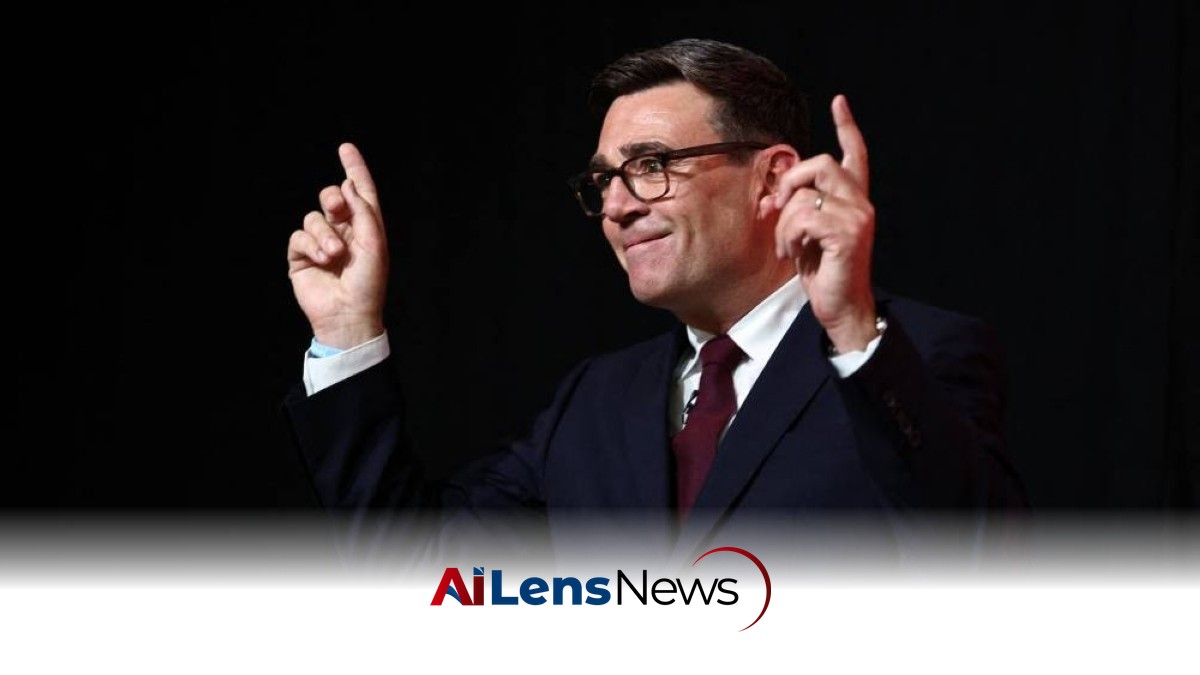


Andy Burnham has officially taken over as the Labour Party leader, vowing to restore hope and improve living standards across the UK.
Kuwait City, Kuwait Jul 19, 2026 ALN: Andy Burnham vowed Friday to restore “hope” to the British people as he officially became the ruling Labour party’s new leader and incoming UK prime minister. Nicknamed the “King of the North” for a nine-year spell as Manchester mayor, Burnham pledged to work to improve living standards in every region of the United Kingdom.
“People and places ... have been waiting too long for politics to let them hope again ... We’re going to give them hope back,” he promised at a special party conference. “I am for us, for all of us,” Burnham told cheering delegates. The 56-year-old takes over from Keir Starmer, who resigned last month after months of political turmoil, scandal, and domestic policy missteps.
Centre-left Labour retains an overwhelming majority in parliament after the 2024 general election. As the leader of the largest party, he becomes the country’s prime minister without having to call new polls. This transition marks a significant moment in British politics, as it reflects the ongoing shifts within the Labour party and its strategy to regain public trust after years of opposition.
Burnham will enter Downing Street on Monday after meeting King Charles III, becoming the UK’s seventh prime minister in a decade. This frequency of leadership changes underscores the instability that has characterized British politics in recent years, particularly following the 2016 Brexit referendum, which has had profound implications for the country’s governance and policy direction.
It is only four weeks since Burnham sensationally returned as a member of parliament following a nine-year absence, determined to replace Starmer. His return to the Commons is seen as a strategic move to reinvigorate the party and address pressing national issues that have resonated with voters across the UK.
Labour MPs reckon he is their best chance of reining in Nigel Farage’s anti-immigrant Reform UK party, tipped in the polls to win the next general election, expected in 2029. The rise of Reform UK reflects broader concerns among the electorate regarding immigration, national identity, and the effectiveness of government policies in managing these issues. Burnham’s flagship idea is devolving powers to cities and regions, including by setting up a “Number 10 North” office, which aims to enhance local governance and ensure that regional voices are heard in the national discourse.
Hailing from the party’s so-called soft left, he favours more public control of services, such as water, and reindustrialisation. “If we want an economy and a country that works for all people and places ... then it requires a new path to the one we’ve been on for the last 40 years,” he said. This statement reflects a growing sentiment among many in the Labour party that the traditional economic models have failed to deliver equitable growth and that a more interventionist approach may be necessary to address the disparities faced by different regions.
Burnham has pledged to boost the construction of public housing to try to resolve the homelessness crisis and pump resources into social care. The housing crisis is a pressing issue in many urban areas, where skyrocketing property prices and a lack of affordable housing have left many individuals and families vulnerable. By committing to address this, Burnham aims to tackle one of the most visible signs of inequality in the UK today.
After facing no challengers, he becomes leader at his third attempt, following failed bids in 2010 and 2015. His perseverance in the face of previous setbacks is seen as a testament to his determination and commitment to the Labour cause, as well as his ability to connect with grassroots supporters.
Burnham was an MP between 2001 and 2017, serving as a minister in Tony Blair and Gordon Brown’s governments. He has since reinvented himself as a man of the people, melding a relaxed folksy style with slick social media videos. This approach has helped him to cultivate a strong public persona, which is crucial in an era where social media plays a significant role in political communication and engagement.
Labour MPs see him as a better communicator than Starmer and hope he will take a more radical approach to reforming Britain’s battered public services. “It feels like a fresh start. There’s reason to be hopeful,” Labour MP Richard Baker told AFP after Burnham’s speech. This sentiment reflects a broader desire within the party to reconnect with the electorate and to present a clear and compelling vision for the future.
New leader, old problems
Starmer returned Labour to power after 14 years in opposition in July 2024 with a landslide victory over the Conservatives, who had churned through five prime ministers in the tumult unleashed by the 2016 Brexit referendum. However, his premiership quickly became characterised by domestic policy missteps and controversies, including his appointment of ex-Jeffrey Epstein associate Peter Mandelson as ambassador to Washington. These controversies not only undermined his leadership but also contributed to a perception of disarray within the party.
Disastrous local and regional election results in May heaped further pressure on Starmer, which became impossible to withstand after Burnham won a parliamentary by-election on June 18, allowing him to run for leader. This sequence of events highlights the volatility of political fortunes and the importance of effective leadership in navigating challenges.
Burnham, regularly seen in his trademark dark T-shirt and casual jacket, secured the backing of 379 of Labour’s 403 MPs, with no one mustering the 81 nominations required to challenge him. This overwhelming support within the party indicates a strong desire for change and a collective belief in Burnham’s potential to lead effectively.
He will face the same unenviable challenges that beset Starmer: a tepid economy, high government borrowing costs, a ballooning welfare bill, and irregular migrants arriving in small boats that have fuelled support for Reform. The economic challenges are particularly daunting, as they require not only immediate responses but also long-term strategies to ensure sustainable growth and stability.
Unpredictable energy prices due to the US-Iran war and a volatile American president in Donald Trump also threaten to buffet his premiership. The intersection of international relations and domestic policy presents a complex landscape for any leader, as decisions made abroad can have significant repercussions at home. Burnham has vowed not to raise the country’s main taxes but will need to fill a £4.7-billion ($6.3-billion) gap over four years in the country’s defence investment plan. This commitment reflects a balancing act between maintaining fiscal responsibility and addressing the pressing needs of the nation.
“Most of what’s been said by Burnham and his supporters so far has been pretty vague,” politics professor Tony Travers told AFP. “He’s going to have to come out with a visible plan and policies people understand ... pretty quickly,” or he risks “losing momentum,” Travers added. This underscores the importance of not only articulating a vision but also providing concrete steps to achieve it. As Burnham embarks on this new chapter of leadership, the eyes of the nation will be watching closely to see how he navigates the complexities of governance and whether he can indeed restore hope to the British people.
To learn more about the latest developments in Elections, stay updated with our exclusive reports and analyses on AiLensNews.

