

More
Checking your session
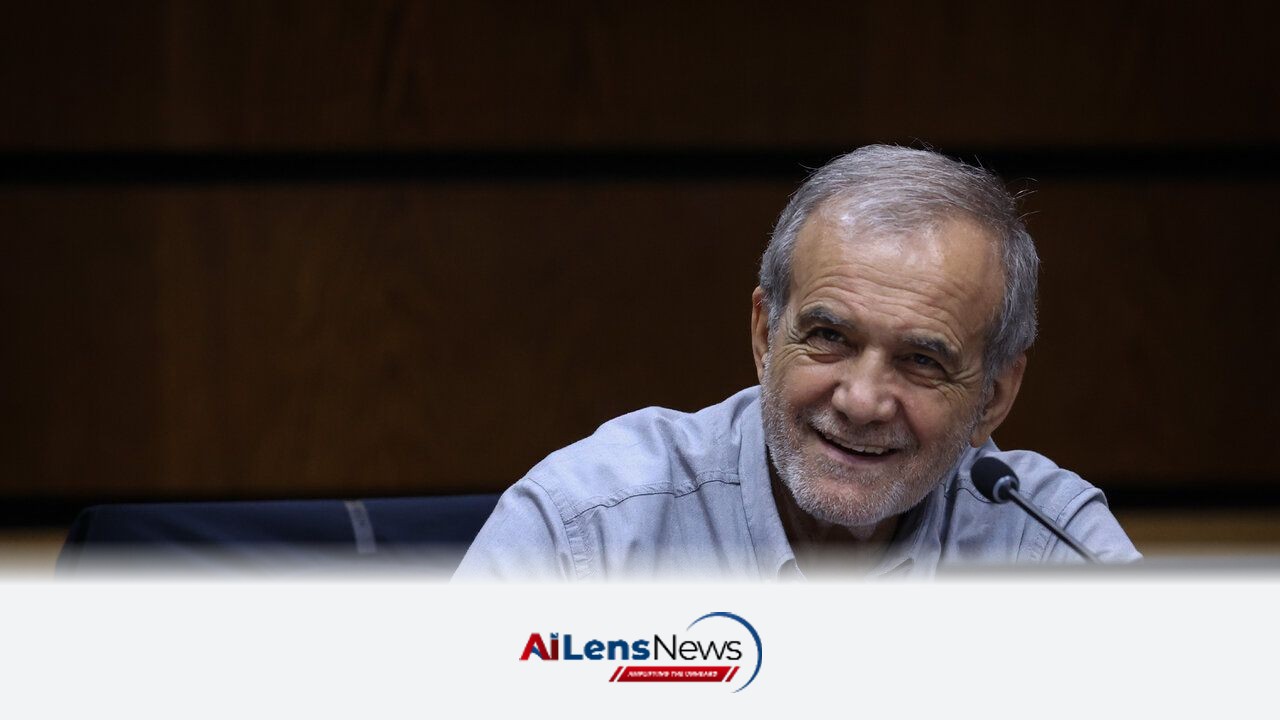



Iranian President Masoud Pezeshkian emphasizes the vigilance of the Iranian people against adversaries, highlighting unity as key to overcoming challenges.
Tehran, Iran Aug 25, 2026 ALN: TEHRAN- Iranian President Masoud Pezeshkian has asserted that the Iranian people are more vigilant than ever and cannot be deceived by their criminal and duplicitous adversaries. His remarks come at a time of heightened tensions both domestically and internationally, reflecting a broader narrative that has been prevalent in Iranian political discourse for decades.
Speaking on Monday at a ceremony held in Tehran, Pezeshkian noted that the martyrdom of ministers, commanders, and ordinary citizens represented a profound loss inflicted upon the nation by those who falsely claim to champion human rights and democracy. This reference to martyrdom is significant in Iranian culture and politics, where the concept is often invoked to honor those who have died in defense of the nation or its values, particularly during the Iran-Iraq War and various conflicts since the Islamic Revolution of 1979.
Criticizing the hypocritical conduct of self-proclaimed human rights advocates, President Pezeshkian stated: "For years, they have labeled the Islamic Republic of Iran a terrorist state and a sponsor of terrorism. Yet, since the beginning of the Islamic Revolution, they have systematically assassinated our officials, commanders, and scientists across every era." This statement highlights a longstanding grievance among Iranian leaders regarding what they perceive as a double standard in international human rights discourse. The Iranian government has frequently accused Western nations, particularly the United States, of undermining its sovereignty and stability while simultaneously claiming to promote democracy and human rights.
In the context of these accusations, the Iranian leadership often points to the assassination of key figures within the country, suggesting that these actions are part of a broader strategy to destabilize Iran. This narrative serves to rally domestic support against perceived external threats and reinforces the government's position that it is under siege from hostile foreign powers. It also reflects a historical context where Iran has faced numerous assassination plots and covert operations, particularly during the tumultuous years following the revolution.
Elsewhere in his address, the president acknowledged the economic hardships the country is facing, emphasizing, "We will overcome these difficulties through unity and solidarity between the people and government officials." The economic situation in Iran has been challenging, exacerbated by international sanctions, particularly those imposed by the United States following its withdrawal from the Joint Comprehensive Plan of Action (JCPOA) in 2018. These sanctions have significantly impacted Iran's economy, leading to high inflation, currency devaluation, and widespread discontent among the populace.
The call for unity and solidarity is a common refrain among Iranian leaders, especially in times of crisis. It reflects an understanding that internal cohesion is crucial for navigating external pressures and overcoming economic difficulties. However, the effectiveness of such appeals can be tested by public sentiment, particularly as economic grievances continue to mount.
Pezeshkian further warned that the "criminal US government and the Israeli regime" would never succeed in exploiting divisions within the country if Iranians remained united. "The enemies are leaving no stone unturned to sow discord among us," he said, urging vigilance in thwarting their malicious objectives. This rhetoric is indicative of the Iranian leadership's approach to foreign policy, where the United States and Israel are often portrayed as primary adversaries seeking to undermine Iran's sovereignty and influence in the region.
This adversarial narrative serves multiple purposes: it consolidates power within the ruling establishment, justifies repressive measures against dissent, and fosters a sense of national identity among Iranians. The emphasis on vigilance against external threats is also a call to action for citizens to remain aware of potential propaganda or misinformation that could lead to societal fragmentation.
Pezeshkian concluded by reaffirming that patience, solidarity, and hope remain the cornerstones of the Islamic Republic's unyielding resilience in the face of mounting external pressures and threats. These themes resonate deeply within Iranian society, where historical experiences of conflict and foreign intervention have shaped a collective consciousness that values resilience and perseverance.
In conclusion, President Pezeshkian's remarks encapsulate a complex interplay of domestic and international challenges facing Iran. As the country navigates through economic difficulties and geopolitical tensions, the call for unity and vigilance remains a central theme in Iranian political rhetoric. The implications of these statements extend beyond immediate political discourse, as they reflect a broader strategy aimed at reinforcing national identity and resilience against perceived threats, both internal and external. As Iran continues to grapple with its place in the world, such messages will likely play a critical role in shaping public sentiment and policy responses in the years to come.
To learn more about the latest developments in Political Controversies, stay updated with our exclusive reports and analyses on AILensNews.