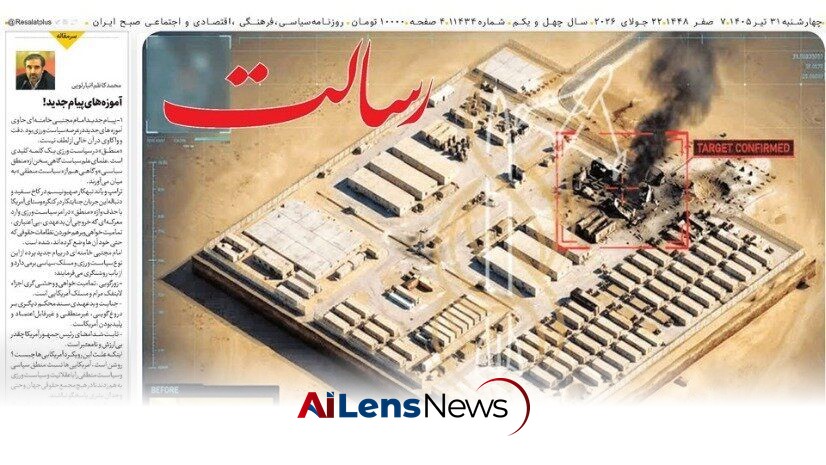


Resalat highlights the failures of the US and Israel in achieving their strategic objectives in the Middle East, emphasizing the geopolitical ramifications.
Tehran, Iran Jul 22, 2026 ALN: The ongoing conflict in the Middle East has led to significant strategic setbacks for the United States, as highlighted by various analyses from regional sources. In recent assessments, the failure of the US and Israel to achieve their strategic objectives before the onset of the current hostilities has been underscored. The publication Resalat has pointed out that the military actions taken by these nations have not succeeded in undermining Iran's missile and nuclear capabilities, nor have they disrupted its regional influence or destabilized its political framework. Instead, the conflict has seemingly entrenched Iran's position and created new geopolitical challenges for the US and its allies.
The Strait of Hormuz, a critical chokepoint for global oil shipments, has emerged as a focal point in this geopolitical landscape. Its closure poses a direct threat to global energy security and highlights vulnerabilities in the Western economy. The implications of a blockage in this vital waterway are profound, as it could lead to skyrocketing oil prices and exacerbate existing economic tensions worldwide. The current deadlock on the battlefield serves as a stark reminder of the complexities involved when a dominant power attempts to suppress a rising independent state through aggressive means. The unintended consequences of such actions often lead to a quagmire that is difficult to navigate, with the costs of disengagement potentially outweighing those of initial involvement.
In light of these developments, the publication Siasat-e-Rooz has commented on the futility of renewed military actions against Iran. The analysis suggests that any attempts by the US, particularly under the Trump administration, to escalate military pressure may not yield the desired changes in Tehran's stance. The power dynamics in the region have shifted, with Iran's military capabilities now posing a significant challenge to US interests and installations. Reports from intelligence officials indicate that new military strikes are unlikely to alter Iran's position, reinforcing the notion that economic pressure, particularly through sanctions targeting oil exports, is the preferred strategy for the US in its efforts to influence Iran's political system. However, this approach carries its own risks, as it could lead to a broader international crisis, particularly if military hostilities escalate.
The historical context of US-Iran relations plays a crucial role in understanding the current dynamics. Since the 1979 Iranian Revolution, which led to the overthrow of the US-backed Shah, relations between the two countries have been fraught with tension. The US has implemented various sanctions and military strategies aimed at curbing Iran's nuclear ambitions and regional influence. These measures have often resulted in retaliatory actions from Iran, including the development of its missile program and increased support for proxy groups across the region, further complicating the geopolitical landscape.
As the geopolitical landscape evolves, the prospect of diplomatic engagement remains a critical consideration. Donya-e-Eqtesad has examined the potential for reviving the Islamabad understanding, a framework aimed at managing disputes and fostering dialogue among regional powers. The recent proposal for a 10-day ceasefire, coupled with various diplomatic initiatives—including Qatar's mediation efforts and Iranian officials' visits to Pakistan—suggests that there is a renewed focus on diplomacy. However, the path forward is fraught with uncertainty. The possibility of a ceasefire could serve as a stepping stone toward reestablishing diplomatic channels, yet the historical patterns of conflict in the region caution against over-optimism. Past experiences with ceasefires have often been marred by deception and a lack of commitment from involved parties, raising questions about the durability of any agreements reached.
In assessing the future of the crisis, Ettelaat has outlined three potential scenarios: the gradual escalation of conflict, the establishment of a new ceasefire, or a continuation of the status quo characterized by intermittent violence and political maneuvering. The likelihood of a full-scale war appears diminished, especially given the high costs associated with ground invasions, which military analysts suggest could lead to significant casualties and destabilization. Instead, the more probable short-term outcome may involve ongoing air and naval operations, along with proxy engagements and sporadic ceasefire attempts. This precarious balance of power will likely see US-Iran relations oscillating between confrontation and attempts at crisis management, with substantial hurdles remaining in the pursuit of a lasting diplomatic resolution.
The implications of these developments are profound, not only for the immediate parties involved but also for the broader international community. As the US navigates its strategic objectives in a region marked by volatility, the potential for miscalculation remains high. Any incident, whether it be a military engagement or a diplomatic failure, could trigger a larger conflict, drawing in regional and global powers. The stakes are particularly high given the interconnectedness of global energy markets and the potential for economic repercussions that could reverberate far beyond the Middle East.
Moreover, the involvement of other regional players adds another layer of complexity to the situation. Countries such as Saudi Arabia, Israel, and Turkey have their own strategic interests that often conflict with those of Iran. This multi-faceted rivalry can lead to proxy conflicts in places like Syria and Yemen, where Iranian influence is countered by US-supported groups and alliances. The interplay of these regional dynamics complicates any efforts for a unified approach to conflict resolution and can lead to further entrenchment of positions.
In conclusion, the current state of affairs in the Middle East presents a complex web of challenges for the US and its allies. The failure to achieve strategic objectives, the potential for renewed military conflict, and the uncertain prospects for diplomatic engagement all contribute to an increasingly precarious situation. As the US grapples with its role in the region, the need for a nuanced understanding of the dynamics at play becomes ever more critical. The coming months will likely be pivotal in shaping the trajectory of US-Iran relations and the broader geopolitical landscape of the Middle East. The US must weigh its options carefully, balancing military readiness with diplomatic overtures, to navigate this intricate and often volatile environment.
To learn more about the latest developments in Elections, stay updated with our exclusive reports and analyses on AiLensNews.

