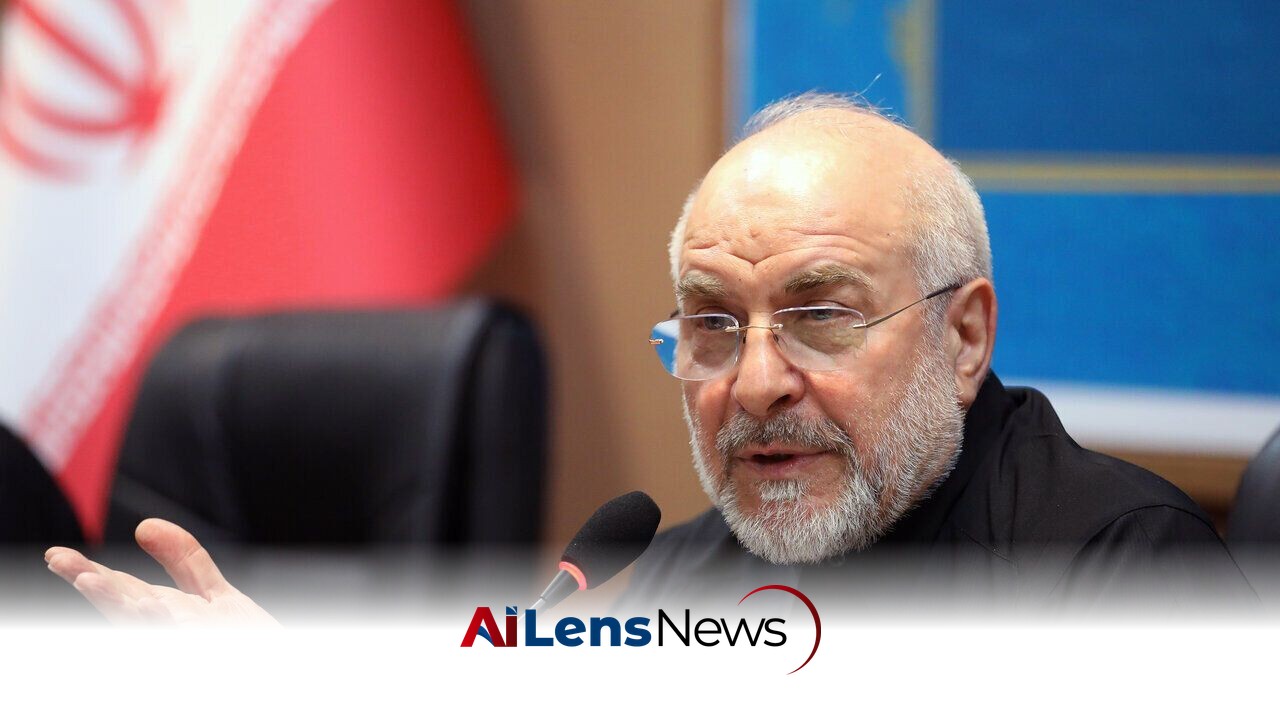


Iranian Parliament Speaker Mohammad Baqer Qalibaf emphasizes the need to transform military victories into political and legal achievements, highlighting national unity as crucial for strengthening the nation.
Tehran, Iran Aug 2, 2026 ALN: Iranian Parliament Speaker Mohammad Baqer Qalibaf said Iran emerged victorious from the recent war and called for transforming its military achievements into lasting political and legal gains, stressing that national unity is essential to strengthening the country.
Qalibaf's remarks come in the wake of a period of heightened military engagement for Iran, which has been involved in various conflicts and confrontations in the region. The recent war, which Qalibaf refers to, is likely a culmination of ongoing tensions that have characterized Iran's foreign policy and military strategy, particularly in relation to its neighbors and in the context of its broader geopolitical ambitions.
Speaking at a meeting of the parliament's Coordination Council, Qalibaf stated that building a 'strong Iran' should remain the country's foremost priority during the second phase of the Islamic Revolution. The Islamic Revolution, which took place in 1979, marked a significant shift in Iran's political landscape, establishing a theocratic regime that has since emphasized resistance against perceived Western imperialism and regional adversaries. The second phase of this revolution, as articulated by Iranian leadership, is often interpreted as a call for deeper socio-economic reforms and a more assertive international posture.
Qalibaf emphasized that unity under the guidance of the Leader of the Islamic Revolution is a key prerequisite for achieving that goal. This statement underscores the importance of the Supreme Leader's authority in Iran's political structure, where power is concentrated in the hands of a few, and dissent is often met with resistance. The concept of unity is frequently invoked in Iranian political discourse, especially in times of crisis, as a means to rally public support and consolidate power among the ruling elite.
Referring to the recent conflict, Qalibaf noted that Iran had secured victory but stressed that the achievement must now be consolidated by fostering public confidence, preserving national cohesion, and ensuring that the country's military accomplishments are recognized politically and legally by the international community. This recognition is crucial for Iran, as it seeks to assert its influence and legitimacy on the global stage. The Iranian government has often faced challenges in garnering international support, particularly due to its controversial nuclear program and its involvement in regional conflicts.
In this context, Qalibaf's call for transforming military success into political gains reflects a broader strategy aimed at leveraging military achievements to enhance diplomatic standing. Historically, Iran has employed its military capabilities as a means of deterrence, but Qalibaf's comments suggest a desire to transition from mere military success to a more comprehensive political strategy that could involve negotiations, alliances, and regional influence.
He also called for closer coordination among four key arenas—military, diplomacy, public service, and nightly street gatherings—saying they must operate in a balanced and complementary manner. This holistic approach highlights the interconnectedness of various facets of governance and public life in Iran, where military actions can have profound implications for diplomatic relations and domestic stability. Qalibaf's emphasis on public service indicates an awareness of the need to address socio-economic issues that may arise as a consequence of military engagements, ensuring that the populace remains supportive of the government's actions.
Moreover, the mention of 'nightly street gatherings' is particularly noteworthy. These gatherings could refer to public demonstrations or rallies that are often used by the Iranian government to showcase popular support for its policies or to mobilize public sentiment in favor of national unity. Such events can serve as both a barometer of public opinion and a tool for the government to reinforce its legitimacy.
He warned that separating these arenas would weaken Iran rather than strengthen it. This warning implies that the Iranian leadership recognizes the potential risks associated with disjointed policies or actions that do not align with the overarching goals of national strength and unity. In a country where public sentiment can shift rapidly, maintaining a cohesive strategy across different sectors is crucial for the ruling establishment.
In the broader context, Qalibaf's comments reflect the ongoing challenges Iran faces both domestically and internationally. The Iranian economy has been affected by sanctions, internal dissent, and the need for reform, which complicates the government’s ability to project strength abroad while managing domestic expectations. The call for unity and coordinated efforts may be seen as an attempt to preemptively address potential unrest or dissatisfaction that could arise from economic hardships or political disagreements.
Furthermore, the implications of Qalibaf's statements extend beyond Iran's borders. As the country navigates its relationships with regional powers and the West, the ability to translate military victories into diplomatic leverage will be critical. The Iranian leadership is likely aware that military might alone is insufficient for long-term stability and influence; thus, cultivating a favorable political environment, both domestically and internationally, is essential.
As Iran continues to engage in regional conflicts and assert its influence, the need for a cohesive strategy that integrates military success with political and diplomatic efforts will be paramount. Qalibaf's emphasis on unity and coordinated action reflects a recognition of these complexities and the necessity of a multi-faceted approach to governance and international relations.
In conclusion, Qalibaf's advocacy for leveraging military success into political gains underscores a strategic pivot that aims to strengthen Iran's position both at home and abroad. The focus on national unity, public confidence, and coordinated efforts across various sectors illustrates the Iranian leadership's understanding of the interconnected nature of military, diplomatic, and domestic affairs. As Iran moves forward, the effectiveness of this approach will be tested against the backdrop of ongoing regional tensions and the challenges of internal governance.
To learn more about the latest developments in Political Controversies, stay updated with our exclusive reports and analyses on AiLensNews.

