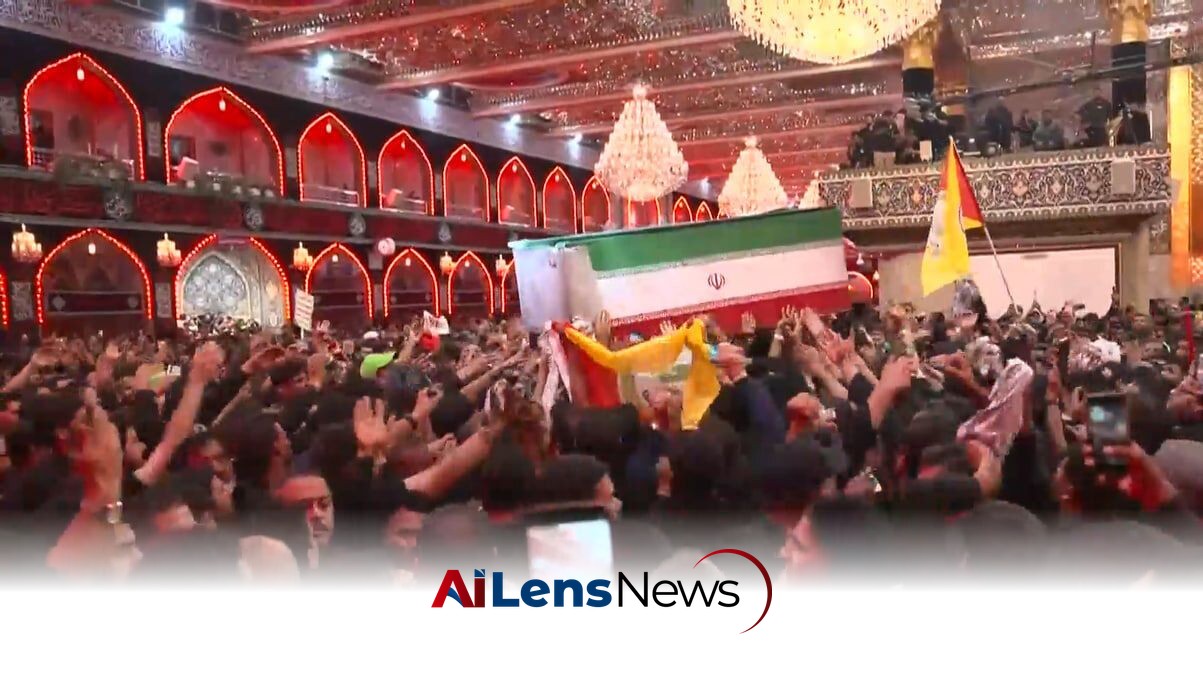


Ayatollah Seyyed Mojtaba Khamenei expressed gratitude to the Iraqi people for their significant participation in honoring the late Ayatollah Seyyed Ali Khamenei, highlighting unity between Iran and Iraq.
Tehran, Iran Jul 19, 2026 ALN: Leader of the Islamic Revolution Ayatollah Seyyed Mojtaba Khamenei has expressed gratitude to the Iraqi people for their 'magnificent and deeply meaningful epic' during the funeral procession of the martyred Leader Ayatollah Seyyed Ali Khamenei. He praised the massive public participation as a 'symbol of unity, faith, and solidarity' between the Iranian and Iraqi nations.
In a message issued on Saturday, Ayatollah Khamenei thanked Iraq's senior religious authorities, scholars, tribal leaders, intellectuals, university professors, commanders, and people from all walks of life for their role in honoring the late Leader during his funeral ceremonies in Iraq. This acknowledgment highlights the significant influence of religious and cultural figures in shaping public sentiment and mobilizing community support during such pivotal events.
The funeral procession, which saw an unprecedented turnout, was not merely a ceremonial observance but a powerful demonstration of the intricate ties that bind Iran and Iraq. These ties are rooted in shared religious beliefs, historical experiences, and cultural affinities that have evolved over centuries. The Iraqi people, drawing on their deep religious heritage, close ties to the holy shrines, and longstanding commitment to the Resistance Front, had created an unforgettable and spiritually significant scene by welcoming the martyred Leader with profound grief and heartfelt devotion.
The Leader emphasized that Iraq's enduring attachment to the Ahl al-Bayt (peace be upon them) and the Islamic seminary of Najaf had preserved the country's religious identity despite decades of oppression under former regimes. This historical context is crucial in understanding the resilience of Iraqi society, which has managed to maintain its cultural and religious identity amid external pressures and internal strife. The Ahl al-Bayt, revered figures in Islam, symbolize a lineage of spiritual and moral leadership, fostering a sense of unity among Shiite Muslims, particularly in Iraq.
Ayatollah Khamenei remarked that this devotion later found renewed expression in the annual Arbaeen pilgrimage, which has grown into one of the world's largest religious gatherings. The Arbaeen pilgrimage commemorates the martyrdom of Imam Hussein, the grandson of the Prophet Muhammad, and serves as a focal point for Shiite identity and solidarity. Over the years, the pilgrimage has transformed into a significant event that attracts millions of participants from around the globe, reinforcing the connections between the Iranian and Iraqi peoples.
Referring to the funeral procession, Ayatollah Khamenei stated that the unprecedented turnout of millions demonstrated the depth of solidarity, brotherhood, and shared purpose between the Iranian and Iraqi peoples. Such gatherings serve as a powerful counter-narrative to the geopolitical tensions that often characterize relations in the region. He argued that the gathering had undermined efforts by the 'Global Arrogance,' led by the United States, to weaken relations between the two neighboring nations. This statement reflects a broader regional sentiment that views external intervention as a destabilizing force, often exacerbating divisions rather than fostering unity.
He further noted that the mass funeral ceremonies held in both Iran and Iraq had opened 'a new chapter of awakening and active engagement' capable of reshaping regional dynamics and challenging policies pursued by external powers in West Asia. This assertion suggests a potential shift in the geopolitical landscape, where local populations are increasingly asserting their agency in defining their political and cultural futures, often in opposition to perceived foreign hegemony.
Looking ahead to the upcoming Arbaeen pilgrimage, the Leader expressed hope that Iraq would once again welcome millions of visitors, including pilgrims intending to perform the pilgrimage on behalf of the martyred leader. This anticipation underscores the significance of the Arbaeen pilgrimage not only as a religious observance but also as a platform for expressing collective grief, solidarity, and resistance against oppression. The pilgrimage serves as a reminder of the shared values and aspirations that unite the Iranian and Iraqi peoples.
He expressed optimism that the event would further strengthen the message that 'love for Hussein unites us' and would bring greater security, blessings, and prosperity to the Iraqi people. This sentiment resonates deeply within the context of contemporary Iraq, where the quest for stability and prosperity is often challenged by sectarian divisions, economic hardships, and external influences. By framing the pilgrimage as a unifying force, Ayatollah Khamenei positions it as a critical element in fostering national cohesion and resilience against adversity.
The implications of these events extend beyond the immediate context of the funeral and the Arbaeen pilgrimage. They reflect a broader narrative of resistance and solidarity that has emerged in the region, particularly among Shiite communities. The shared experiences of mourning and commemoration serve to strengthen communal bonds, reinforcing a collective identity that transcends national borders. As both Iran and Iraq navigate the complexities of regional politics, the ability to mobilize large-scale public support around shared religious and cultural themes may play a pivotal role in shaping future interactions between the two nations.
In conclusion, Ayatollah Khamenei's message of gratitude not only acknowledges the profound participation of the Iraqi people in the funeral of a revered leader but also encapsulates the intricate web of historical, religious, and cultural connections that define the relationship between Iran and Iraq. As both nations continue to confront external pressures and internal challenges, the solidarity demonstrated during such significant events may serve as a foundation for future cooperation and mutual support in the face of adversity.
To learn more about the latest developments in Political History & Legacy, stay updated with our exclusive reports and analyses on AiLensNews.

