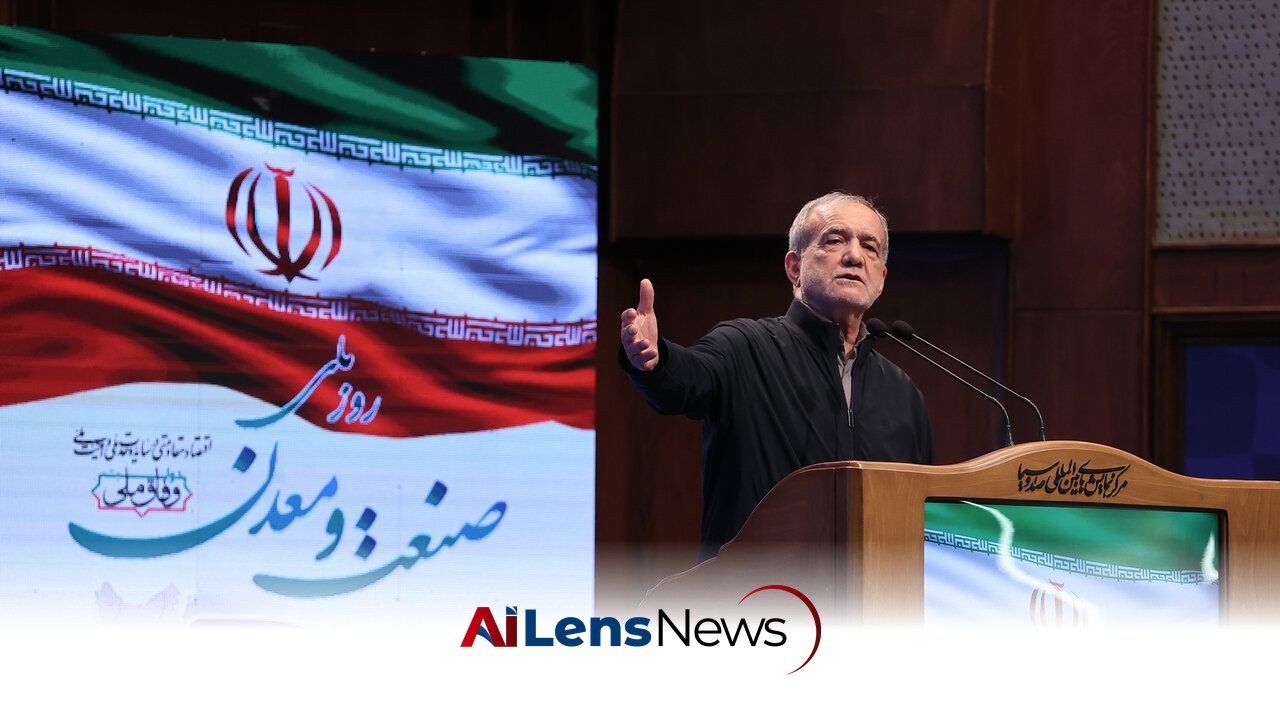


Iranian President Masoud Pezeshkian emphasized that Tehran will not compromise on its national rights during diplomatic negotiations, advocating for unity and resilience amid external pressures.
Tehran, Iran Jul 21, 2026 ALN: Iranian President Masoud Pezeshkian stated on Tuesday that Tehran will not compromise on the nation's rights in ongoing diplomatic efforts. His comments come at a time of heightened tensions in the region and amidst ongoing negotiations with Western powers, particularly the United States, regarding Iran's nuclear program and its broader geopolitical ambitions.
“The diplomatic apparatus will never back down from the nation’s rights,” Pezeshkian insisted, emphasizing the importance of a strong and unified front in the face of external pressures. This assertion underscores Iran's long-standing position that its sovereignty and national interests must be respected in any diplomatic engagement. The Iranian leadership has often framed negotiations as a matter of national pride, asserting that concessions could undermine the country’s standing both domestically and internationally.
During his remarks at a ceremony marking National Industry and Mining Day, Pezeshkian praised the country's manufacturers and industrialists for their resilience in maintaining production levels and supporting the economy despite the pressures of war and sanctions. This acknowledgment highlights the significant role that domestic industries play in Iran's economy, particularly in a context where international sanctions have severely restricted access to foreign markets and investment.
He stated that Iran's foes had sought to trigger domestic instability by placing the country under severe economic and military pressure. This narrative reflects the Iranian government's position that external adversaries, particularly the U.S. and its allies, are actively working to destabilize the nation. Pezeshkian noted that the resilience of producers and the private sector has prevented these adversarial objectives from being realized, ultimately pushing the opposing side toward negotiations. This perspective is often used by Iranian officials to rally public support and foster a sense of national unity against perceived external threats.
Pezeshkian credited domestic cohesion as the key factor behind Iran's success, asserting that his administration remains committed to addressing the concerns of businesses by removing barriers to production and improving the economic environment. The emphasis on domestic cohesion is critical, especially as Iran faces multifaceted challenges, including economic sanctions, regional conflicts, and internal dissent. By promoting a narrative of unity, the government aims to strengthen its legitimacy and consolidate support among various sectors of society.
In his address, Pezeshkian also acknowledged manufacturers for ensuring the steady supply of essential goods during the U.S.-Israeli war on Iran, which he described as a conflict that has exacerbated existing economic difficulties. He noted that coordinated efforts by the government, private sector, and the public helped prevent major shortages despite attacks on energy infrastructure that disrupted electricity supplies. This collaboration is presented as a model for how Iran can navigate external pressures while maintaining essential services and goods for its population.
Pointing to diplomatic negotiations aimed at resolving disputes with the U.S., the president said Iran entered talks based on the principles of dignity, wisdom, and national interest. This framing of the negotiations is significant; it reflects a broader strategy by Iranian leaders to position themselves as rational actors in international relations while simultaneously defending their national rights. Pezeshkian emphasized that the country's negotiating team “will never retreat from the rights of the Iranian nation,” reinforcing a narrative of strength and resilience in the face of adversity.
Highlighting one of Tehran's principal objectives in the negotiations, Pezeshkian mentioned the reopening of the Strait of Hormuz, a vital waterway for global oil transportation. This goal underscores the strategic importance of the Strait, which is critical not only for Iran's economy but also for the global energy market. The ability to export oil through this route is essential for Iran, especially in light of sanctions that have severely limited its oil revenues.
Although he accused the opposing side of failing to honor its commitments, Pezeshkian claimed that Iran had achieved results that exceeded expectations and successfully managed a range of complex challenges within a short period. This assertion reflects a common theme in Iranian rhetoric, where success in negotiations is often framed in terms of resilience and the ability to withstand external pressures.
The president cautioned against 'uninformed and politically motivated criticism of the negotiations,' arguing that such statements diminish national achievements and risk weakening domestic cohesion. This warning serves as a reminder of the sensitive political climate in Iran, where dissenting voices can be viewed as undermining national unity. By framing criticism as politically motivated, Pezeshkian seeks to delegitimize opposition viewpoints while reinforcing the government's narrative of strength and solidarity.
'Unity and solidarity are the foundations of national strength,' Pezeshkian stated, adding that preserving internal consensus remains essential as Iran pursues both its economic priorities and diplomatic objectives. This call for unity is particularly relevant in a country where diverse political factions and economic disparities can lead to public discontent. The Iranian leadership often emphasizes the need for a united front to effectively counter external threats and navigate the complexities of international diplomacy.
In summary, President Pezeshkian's remarks reflect a broader strategy by the Iranian government to assert its national rights and maintain a strong, unified front in the face of external pressures. As Iran continues to engage in diplomatic negotiations, the emphasis on national pride, resilience, and internal cohesion will likely remain central to its approach. The implications of these negotiations extend beyond the immediate diplomatic context, influencing domestic politics, economic stability, and Iran's position in the regional and global landscape.
To learn more about the latest developments in Elections, stay updated with our exclusive reports and analyses on AiLensNews.

