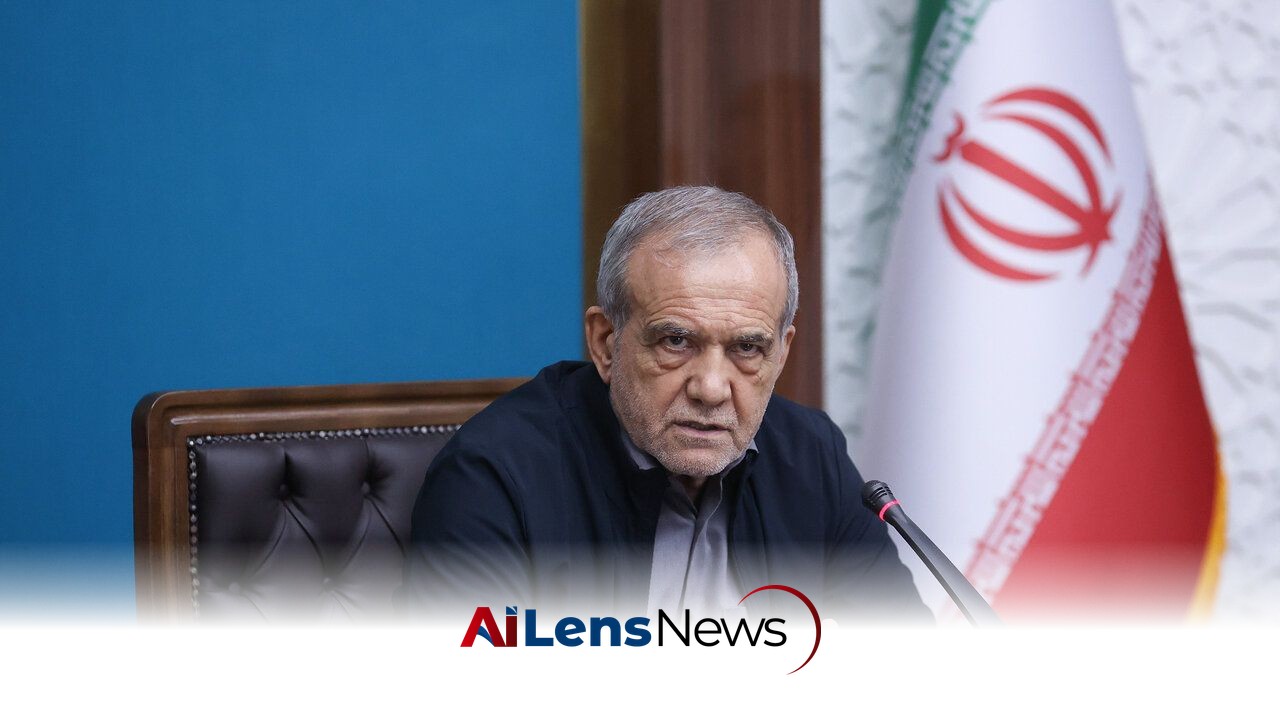


In a cabinet meeting, President Masoud Pezeshkian highlighted national unity as Iran's key asset to counter threats, urging collective responsibility to maintain solidarity.
Tehran, Iran Jul 16, 2026 ALN: Iran’s President Masoud Pezeshkian has described national unity as the country's key asset to navigate challenges and thwart enemy plots. Pezeshkian made the comments during a cabinet session on Wednesday morning, where he called for avoiding divisive rhetoric and emphasized that safeguarding national solidarity is a collective responsibility.
National unity has been a recurring theme in Iranian politics, especially in times of crisis. The emphasis on cohesion is rooted in the nation’s historical experiences, including the Iran-Iraq War in the 1980s, which saw the country rally around a common cause against external aggression. This historical context makes the current calls for unity particularly poignant, as Iran faces a variety of internal and external pressures that could threaten its stability.
In his speech, President Pezeshkian highlighted the importance of unity in the face of adversities that the nation is currently experiencing. These adversities include economic difficulties exacerbated by international sanctions, social unrest, and geopolitical tensions in the region. The Iranian government has often framed these challenges as part of a broader struggle against foreign interference, particularly from the United States and its allies. Thus, Pezeshkian's call for unity can be seen as a strategic move to consolidate support among the populace and strengthen the government’s position.
Speaking during the same cabinet session, Iran's Minister of Cultural Heritage, Tourism, and Handicrafts, Seyyed Reza Salehi-Amiri, announced that the farewell, tribute, and funeral processions held for the late Leader, Ayatollah Seyyed Ali Khamenei, have been officially registered on Iran's National Intangible Cultural Heritage list. Describing the historic ceremonies as a profound symbol of the rich mourning traditions and social solidarity of the Iranian people, the minister noted that this spiritual heritage was formally registered on June 29, 2026, under registration number 3365. This registration is significant as it not only preserves the memory of a key figure in Iranian history but also reinforces the cultural identity that has been shaped by the leadership of Ayatollah Khamenei.
The calls for solidarity come at a highly sensitive time for the Islamic Republic following the martyrdom of Ayatollah Khamenei on the first day of the US-Israeli aggression on February 28. He guided the nation's domestic and foreign policy for over three decades. Ayatollah Khamenei was laid to rest in his birthplace of Mashhad last Thursday, home to the Imam Reza Shrine, one of the most sacred sites in Shia Islam. The massive funeral processions spanning multiple cities culminated in Mashhad, drawing millions of mourners and prompting the Ministry of Cultural Heritage to permanently enshrine the event on the national registry to emphasize social cohesion.
The significance of Khamenei’s leadership cannot be understated; he was a central figure in shaping Iran's post-revolutionary identity and its stance against perceived Western imperialism. His death has left a notable vacuum in leadership, which the current administration is keen to fill with a message of continuity and stability. The transition of authority to Ayatollah Seyyed Mojtaba Khamenei represents a pivotal moment in Iran's modern history. Historically, periods of leadership succession are met with intense international scrutiny and domestic political sensitivity.
In his statements, Ayatollah Mojtaba Khamenei has strongly echoed these sentiments, repeatedly calling on all political factions, security forces, and citizens to preserve national unity. He has warned that maintaining a unified front is essential to preserve state stability and deter external adversaries during this period of monumental change. The new leader’s emphasis on unity reflects a broader strategy to mitigate potential dissent and consolidate power within the regime at a time when the nation is vulnerable to both internal divisions and external threats.
Moreover, the implications of this leadership transition extend beyond domestic politics. Internationally, the new leadership will likely influence Iran's foreign policy, particularly in relation to its contentious relationships with the United States and other Western nations. The new Ayatollah may adopt a more aggressive or conciliatory approach based on the prevailing sentiments within the country and the strategic calculations of the Iranian government. Observers are keenly watching how these dynamics will unfold, particularly in light of ongoing negotiations regarding Iran's nuclear program and its role in regional conflicts.
In addition to the political ramifications, the emphasis on national unity also intersects with cultural narratives in Iran. The registration of the mourning ceremonies as part of the national heritage reflects a broader effort to cultivate a sense of national pride and identity. Cultural heritage plays a critical role in shaping public sentiment and fostering unity among diverse ethnic and religious groups within Iran, which is home to a multitude of cultures and traditions.
As the country navigates this transitional phase, the government's focus on unity serves multiple purposes: it aims to quell dissent, reinforce loyalty to the new leadership, and present a united front to the world. However, it remains to be seen how effectively this call for unity will resonate with the Iranian populace, especially in light of the economic hardships and social grievances that many citizens are facing.
In conclusion, President Pezeshkian's remarks on national unity underscore the Iranian government's recognition of the challenges it faces during this critical juncture in its history. The combination of political transition, cultural heritage, and the need for social cohesion highlights the complexities of governance in Iran. As the nation moves forward, the emphasis on unity will be tested against the backdrop of both internal dynamics and external pressures, shaping the future trajectory of the Islamic Republic.
To learn more about the latest developments in Political Controversies, stay updated with our exclusive reports and analyses on AiLensNews.

