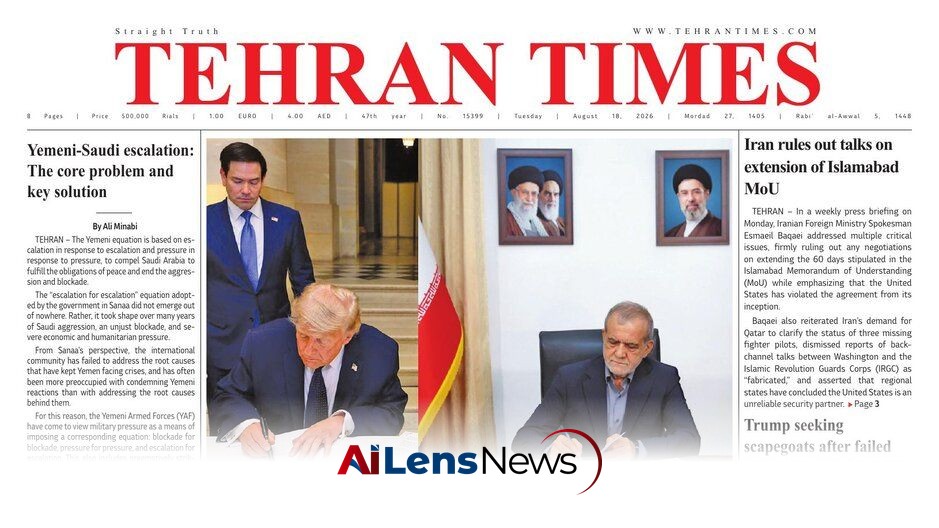


A look into the diplomatic landscape of Iran as it navigates complex issues following the recent MoU, highlighting the challenges and prospects for peace.
Tehran, Iran Aug 18, 2026 ALN: In the wake of a recent Memorandum of Understanding (MoU), Iran finds itself at a critical juncture in its diplomatic efforts. As the 60-day mark approaches, questions arise regarding the effectiveness of these agreements and the path forward for peace in the region. The MoU, which outlines various cooperative measures, represents a significant step for Iran, particularly as it seeks to bolster its international standing amidst ongoing geopolitical challenges.
Iran's diplomatic relations have been under scrutiny, particularly in light of ongoing tensions with neighboring countries. The recent MoU aimed to address several pressing issues, including economic cooperation and regional security. However, the effectiveness of these agreements remains uncertain. Iran's foreign policy is shaped not only by its ambitions but also by the reactions of external powers, particularly the United States, European Union, and regional rivals such as Saudi Arabia and Israel.
The landscape of Iranian diplomacy is further complicated by its nuclear program, which has been a focal point of international negotiations and sanctions. The Joint Comprehensive Plan of Action (JCPOA), established in 2015, was intended to limit Iran's nuclear capabilities in exchange for the lifting of economic sanctions. However, the U.S. withdrawal from the agreement in 2018 and the subsequent re-imposition of sanctions have severely impacted Iran's economy and its diplomatic relations.
Despite the challenges, there are glimmers of hope for a more stable diplomatic environment. Engaging in dialogue with regional partners and addressing mutual concerns could pave the way for improved relations. The MoU signifies a willingness on Iran's part to explore cooperative measures, and if successfully implemented, it could serve as a foundation for more comprehensive agreements in the future.
Moreover, the geopolitical landscape is shifting, with some regional players expressing a desire for de-escalation and dialogue. Countries like Saudi Arabia, which have historically been adversarial towards Iran, have indicated a potential openness to discussions. This shift could create an opportunity for Iran to re-establish ties and foster a more stable regional environment.
Furthermore, the role of external actors, including the United States and European powers, will be critical in shaping Iran's diplomatic future. A renewed commitment to negotiations regarding the nuclear issue, as well as broader security arrangements, could significantly alter the current trajectory of Iran's foreign relations. The international community's engagement will be essential in supporting Iran's efforts to reintegrate into the global economy and diplomatic sphere.
As Iran navigates these complex issues, the coming weeks will be crucial in determining the success of its diplomatic initiatives. The international community watches closely, hoping for a resolution that could lead to lasting peace in the region. The effectiveness of the recent MoU will be measured not only by immediate outcomes but also by its potential to foster long-term stability and cooperation in a historically volatile area. The challenges remain formidable, but with strategic engagement and a commitment to dialogue, there is a possibility for a more peaceful and cooperative regional landscape.
To learn more about the latest developments in Political Controversies, stay updated with our exclusive reports and analyses on AiLensNews.

