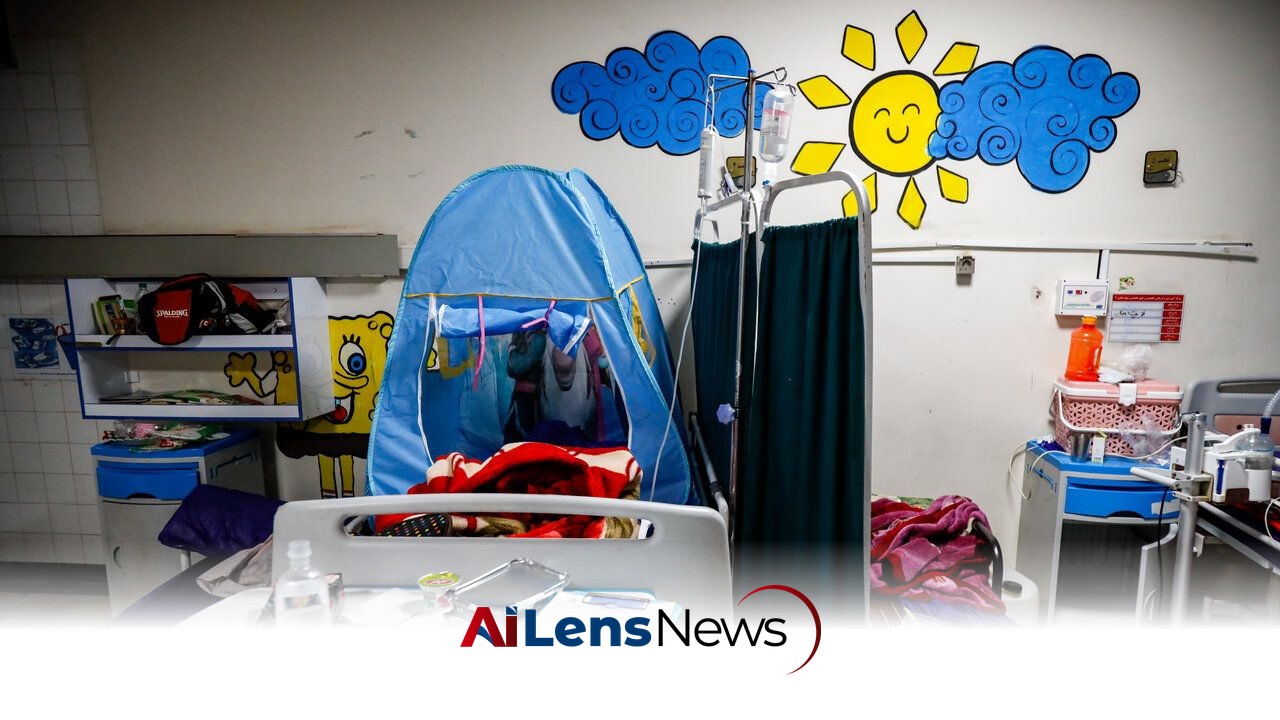


Iran has condemned a US airstrike near a children's cancer hospital in Ahvaz, leading to the evacuation of over 200 patients, escalating humanitarian concerns.
Tehran, Iran Jul 18, 2026 ALN: Iran has accused the United States of committing a 'cowardly war crime' after a US strike near a children's cancer hospital in the southwestern city of Ahvaz forced the emergency evacuation of more than 200 pediatric patients, intensifying international concern over the humanitarian impact of the escalating conflict.
Iranian Foreign Ministry spokesman Esmaeil Baqaei stated that the overnight strike targeted an area close to Shahid Baqaei Specialized Hospital, a major pediatric oncology center, compelling medical staff to evacuate 211 children receiving cancer treatment, including chemotherapy patients. The hospital, known for its specialized care for young cancer patients, has been a critical facility in the region, serving not only the local population but also families from surrounding areas who seek advanced medical treatment for their children.
In a statement posted on X, Baqaei described the attack as "barbaric," drawing comparisons with Israeli strikes on healthcare facilities in the Gaza Strip. This comparison highlights Iran's broader narrative regarding military actions in the region, where they often emphasize the plight of civilians and the sanctity of medical facilities. The use of the term "barbaric" underscores the emotional and political weight such incidents carry, especially in the context of ongoing conflicts in the Middle East.
"This barbaric attack, reminiscent of Israel's atrocities against healthcare facilities, caused severe suffering and anxiety among hospitalized children and forced the emergency evacuation of 211 patients undergoing chemotherapy," Baqaei said. "This constitutes a cowardly war crime against the most innocent of human beings—children who are bravely fighting for their lives." The rhetoric employed by Iranian officials serves to galvanize public opinion domestically while also appealing to international audiences concerned with humanitarian issues.
Hospital officials reported that the explosion occurred only a short distance from the medical complex, indicating a serious breach of the protections typically afforded to healthcare facilities under international law. Dr. Majid Bou'azar, the hospital's manager, confirmed that all 211 patients had to be relocated under emergency conditions following the strike. The urgency of the evacuation was compounded by the critical conditions of many of the patients, who rely on continuous medical support.
"These are highly vulnerable patients, including children undergoing cancer treatment," he told Al Jazeera. The implications of such an evacuation are profound, as interruptions in treatment can have immediate and lasting effects on the health outcomes of pediatric cancer patients. Medical staff described scenes of panic as doctors and nurses rushed critically ill children to safety.
"Some of the patients were on oxygen support and ventilators," one hospital employee recounted. "Parents were carrying children in their arms. Others were moved with intravenous lines still attached or transported in wheelchairs." Such chaotic scenes are unfortunately not uncommon in conflict zones, where the line between military and civilian targets often becomes blurred, leading to tragic consequences for those who are most vulnerable.
Hospital director Reza Bazar stated that the nearby explosions disrupted the facility's operations and temporarily rendered parts of the hospital unusable, according to Iran's Fars News Agency. This disruption not only affects immediate care but also has long-term implications for the hospital's ability to provide ongoing treatment to its patients.
The incident comes amid an expanding US military campaign that has increasingly targeted civilian infrastructure alongside military facilities. This escalation raises significant ethical questions regarding the conduct of warfare and the responsibilities of nations under international humanitarian law. Iran's Foreign Ministry urged the international community, the United Nations, and humanitarian organizations to condemn the attack, arguing that strikes endangering medical facilities violate international humanitarian law, including the Geneva Conventions, which provide special protection for hospitals and medical personnel during armed conflicts.
Iranian officials argued that attacks placing healthcare institutions at risk represent serious violations of international law regardless of whether hospitals themselves are directly struck. This argument is grounded in the principle that the protection of civilian life and health is paramount in any military operation. The government has repeatedly accused Washington of widening the conflict by targeting civilian infrastructure and warned that such operations threaten prospects for a negotiated end to the war.
The latest incident has renewed broader international concern over the protection of medical facilities in armed conflict. The World Health Organization (WHO) has repeatedly warned that attacks affecting hospitals, ambulances, and healthcare workers have devastating humanitarian consequences, stressing that medical facilities enjoy special protection under international humanitarian law and must never become targets of military operations. The WHO's emphasis on the sanctity of healthcare facilities is crucial, particularly in regions where conflict is prevalent and humanitarian needs are acute.
The International Committee of the Red Cross (ICRC) has likewise consistently emphasized that parties to armed conflicts are obligated to distinguish between military objectives and civilian infrastructure and to ensure the safety of hospitals and patients. The ICRC's role in monitoring compliance with international humanitarian law is critical, especially in light of recent events that challenge the notion of safe zones for civilians in conflict areas.
While neither organization had issued a specific public statement on the Ahvaz incident at the time of reporting, both have repeatedly called for strict compliance with international humanitarian law and the protection of healthcare services in conflict zones. The absence of immediate condemnation from these organizations may reflect the complexities of international politics, where responses can be delayed by diplomatic considerations.
The reported evacuation of pediatric cancer patients has also drawn renewed attention from humanitarian observers, who warn that interruptions to specialized treatment can place vulnerable children at immediate medical risk and have lasting consequences for their recovery. The psychological impact on both the children and their families cannot be understated, as the stress of evacuation and uncertainty about continued care can exacerbate existing health issues.
The incident adds to mounting fears that continued attacks affecting civilian infrastructure and healthcare services could further escalate the conflict and complicate diplomatic efforts to secure a lasting ceasefire. As the situation evolves, it remains critical for the international community to advocate for the protection of civilians and to hold accountable those who violate established norms of warfare. The humanitarian implications of such military actions extend far beyond immediate casualties, affecting entire communities and future generations.
To learn more about the latest developments in Political Controversies, stay updated with our exclusive reports and analyses on AiLensNews.

