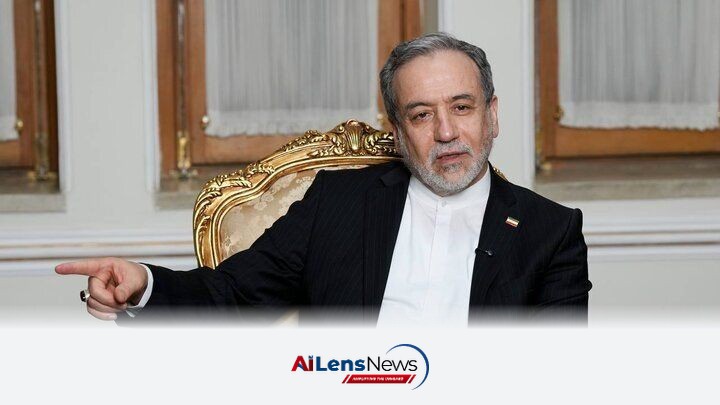



Iranian Foreign Minister Abbas Araghchi criticizes US economic pressure tactics while emphasizing Iran's diplomatic efforts to strengthen ties with regional nations.
Tehran, Iran Aug 24, 2026 ALN: TEHRAN - Iranian Foreign Minister Abbas Araghchi has accused the United States of reverting to failed economic and military pressure tactics against Tehran, while highlighting Iran’s parallel diplomatic efforts with regional countries to reduce tensions and strengthen bilateral ties.
Speaking on Sunday at a ceremony at the mausoleum of Imam Khomeini, the founder of the Islamic Republic, Araghchi stated that Washington’s latest economic campaign was merely a repetition of previous pressure strategies that had failed to force Iran to change course. This assertion reflects a long-standing narrative within Iranian political discourse, which often frames U.S. foreign policy as aggressive and imperialistic, particularly in relation to the Islamic Republic.
He noted that successive U.S. administrations had used different labels for essentially the same policy, citing the 'crippling sanctions' imposed during the Obama administration, President Donald Trump’s 'maximum pressure' campaign during his first term, and the current campaign, so-called 'crushing sanctions.' The terminology employed by U.S. officials often serves to signal shifts in strategy or emphasis, but Araghchi’s comments underscore a perception within Iran that these strategies are fundamentally flawed and lack the efficacy that U.S. leaders claim.
“It is a repetitive film that they are showing again, and we know it by heart and know how to confront and deal with it,” Araghchi remarked. This metaphorical framing suggests a sense of familiarity and resilience among Iranian officials, who argue that they have developed strategies to mitigate the impact of sanctions and military threats over decades of confrontation with the U.S.
The foreign minister argued that Washington’s return to economic pressure after threats and military action reflected frustration over its inability to achieve its objectives through other means. This perspective is not uncommon in Iranian political rhetoric, which often posits that U.S. actions are driven by desperation rather than strategic foresight. Araghchi’s comments highlight a broader narrative that portrays Iran as a steadfast nation unwilling to capitulate to external pressures.
“The fact that they have once again resorted to their old plans after military operations and threats to strike and do this and that shows that they are desperate,” he added. This statement not only critiques U.S. policy but also serves to bolster domestic support for the Iranian government by framing the struggle against external pressures as a matter of national pride and resilience.
Araghchi dismissed concerns that Iran could be intimidated by the prospect of an economic blockade, asserting that Tehran had faced similar measures in the past and would withstand the latest campaign as well. The Iranian economy has indeed withstood various sanctions over the years, although the impact has been significant, leading to inflation, currency devaluation, and economic hardship for many citizens. Nevertheless, Iranian officials frequently emphasize their ability to adapt and endure in the face of such challenges.
He maintained that the United States should instead pursue engagement based on respect, justice, and dignity. “The Iranian nation responds to the language of dignity with respect,” he stated. This call for respectful engagement reflects a broader diplomatic strategy that Iran has employed, advocating for dialogue and cooperation rather than confrontation, particularly with neighboring countries.
At the same time, Tehran has continued diplomatic contacts with regional powers as tensions persist across West Asia. Araghchi held separate telephone talks with Egyptian Foreign Minister Badr Abdelatty and Pakistan’s Army Chief, Field Marshal Asim Munir, on the latest regional developments and efforts to contain further escalation. Such diplomatic outreach underscores Iran's desire to maintain and strengthen ties with neighboring countries, which it views as essential for regional stability and security.
During his call with Abdelatty on Saturday, the two foreign ministers discussed developments in the region, with particular attention to the Persian Gulf and the Red Sea. They also exchanged views on diplomatic initiatives aimed at reducing tensions and preventing further escalation. The Persian Gulf has long been a flashpoint for geopolitical tensions, with various countries vying for influence and security. Iran’s engagement with Egypt, a historically significant regional player, signals its intent to foster alliances amid a complex geopolitical landscape.
In his conversation with Asim Munir, Araghchi discussed regional developments and ways to promote peace, stability, and security in West Asia, underscoring the role of regional diplomacy amid continuing tensions. Pakistan, sharing a border with Iran, plays a critical role in regional dynamics, and discussions with its military leadership reflect Iran’s recognition of the importance of security cooperation in addressing mutual concerns.
The combination of Araghchi’s remarks and his diplomatic contacts reflects Tehran’s dual approach of resisting 'renewed U.S. pressure' while maintaining engagement with regional governments. Iran asserts it favors diplomacy based on mutual respect and regional cooperation, while rejecting economic or military pressure as a means of influencing its policies. This duality illustrates Iran's strategy of navigating external pressures while seeking to solidify its standing within the region through constructive dialogue and partnerships.
As the geopolitical landscape in West Asia continues to evolve, the implications of these developments are significant. Iran's insistence on a dignified approach to diplomacy may resonate with other nations facing similar pressures from the U.S., potentially fostering a coalition of states that advocate for a multipolar world order where U.S. influence is counterbalanced by regional alliances. The ongoing tensions, particularly regarding nuclear negotiations and military posturing, will likely shape the trajectory of Iran's foreign relations and its domestic policies in the years to come.
To learn more about the latest developments in Political Controversies, stay updated with our exclusive reports and analyses on AILensNews.

