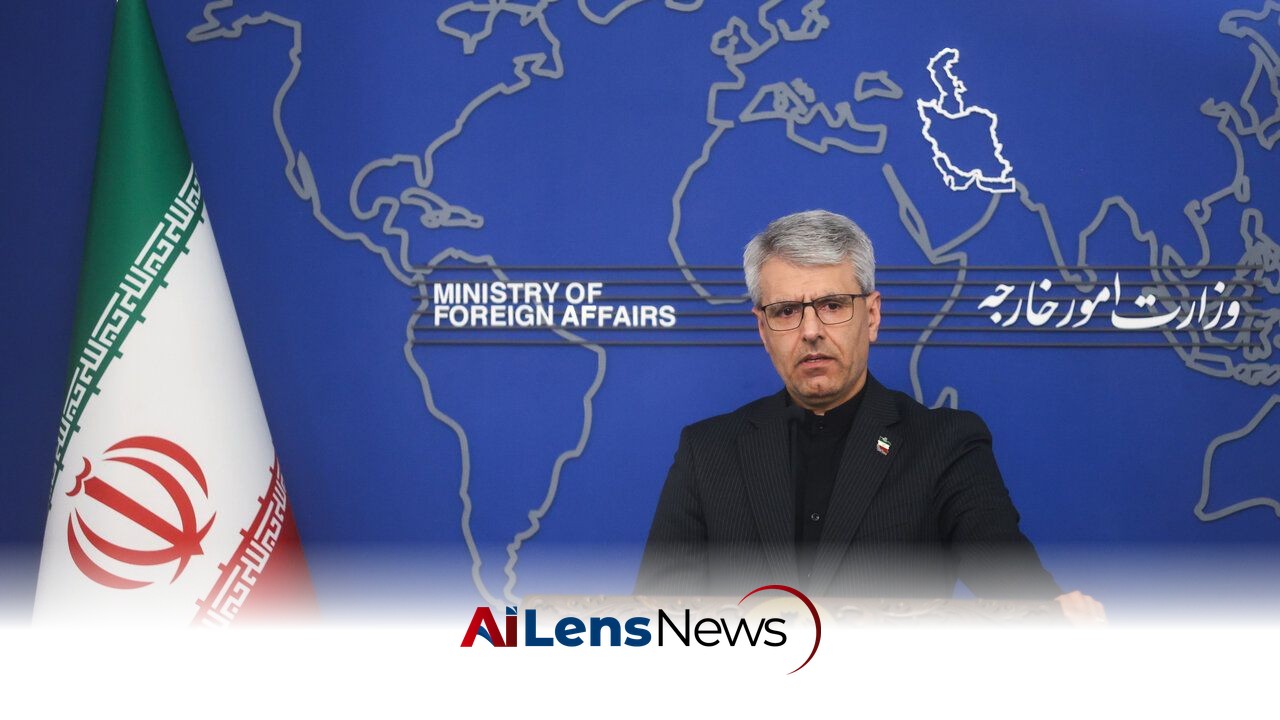


Iran's Foreign Ministry spokesman claims the US is deliberately attacking civilian facilities, questioning its commitment to international law and anti-terrorism efforts.
Tehran, Iran Aug 1, 2026 ALN: Iranian Foreign Ministry spokesman Esmaeil Baqaei has accused the United States of deliberately targeting civilian infrastructure during its ongoing military campaign against Iran, saying Washington's actions have undermined its claims of defending international law and combating terrorism.
In a post published on the social media platform X, Baqaei said the United States deliberately struck the Chabahar Maritime Surveillance Tower, a civilian facility used for maritime safety and navigation, on June 16. He alleged that the attack was part of 'Washington's continuing aggression against Iran,' which began on February 28.
According to Baqaei, the US Secretary of War publicly released footage showing the destruction of the surveillance tower, describing the move as evidence of Washington's pride in attacking civilian infrastructure. This statement comes amidst heightened tensions between Iran and the United States, which have a long history of conflict that has often manifested in military engagements and economic sanctions.
The Chabahar Maritime Surveillance Tower is critical for ensuring the safety of maritime operations in the region, which is strategically important due to its proximity to key shipping lanes. The attack on such a facility raises significant concerns about the implications for civilian safety and international maritime law. The United States has long positioned itself as a proponent of free navigation and has criticized other nations for actions that threaten these principles.
The Iranian spokesman also accused the United States of carrying out missile strikes on a school in Minab and civilian targets in Lamerd, stating that Washington would have publicized those attacks with similar pride if it had been able to do so. The targeting of educational institutions in conflict zones is particularly controversial, as it violates international humanitarian laws that protect civilians and civilian infrastructure during armed conflicts.
In addition to these accusations, Baqaei further alleged that US forces attacked electricity facilities and desalination pumps at the Bunji village pier in the southern city of Jask on the previous night, leaving more than 10,000 residents without access to drinking water. Access to clean water is a fundamental human right, and attacks that disrupt this access can have severe humanitarian consequences, particularly in regions already facing challenges related to water scarcity and infrastructure development.
The Iranian government has consistently framed its narrative around these incidents as part of a broader pattern of US aggression in the Middle East. Baqaei's statements reflect a strategic effort to rally domestic and international support against what Iran perceives as unjustified military actions by the US. This rhetoric not only aims to bolster national unity but also seeks to challenge the moral legitimacy of US foreign policy in the region.
He said the attacks reflected a sharp contrast with the image the United States has long sought to project as a defender of the international order, liberal values, and the fight against terrorism. The dichotomy between the US's self-portrayal and its actions on the ground has been a recurring theme in international relations, particularly in the context of military interventions that have resulted in civilian casualties and infrastructure damage.
"With the destruction of every bridge, tower and civilian facility, it is not only steel and concrete that is collapsing, but also America's moral standing and the credibility of the international legal order and the West's civilizational claims," Baqaei said. His comments underscore a growing sentiment in Iran that the US's military strategies are not only ineffective but also counterproductive to its stated goals of promoting stability and security in the region.
The Iranian diplomat concluded by questioning the difference between the US actions in Chabahar, Minab, Lamerd, and Jask and the acts of terrorism that Washington has historically cited to justify its military interventions and overseas operations. This line of questioning serves to highlight the perceived hypocrisy in US foreign policy, particularly regarding the principles of sovereignty and the protection of civilian lives.
The implications of these accusations are significant, as they not only exacerbate existing tensions between the US and Iran but also contribute to the broader discourse on international humanitarian law and the responsibilities of states engaged in military conflict. The targeting of civilian infrastructure has been a contentious issue in various conflicts around the world, and the Iranian claims may resonate with other nations and organizations advocating for the protection of civilians in warfare.
Furthermore, these developments occur against the backdrop of ongoing negotiations surrounding Iran's nuclear program and its regional influence. The US has maintained a policy of sanctions and military readiness aimed at curbing Iran's nuclear ambitions and its support for proxy groups across the Middle East. As such, the allegations of targeting civilian infrastructure could be interpreted as a tactical maneuver by Iran to shift the narrative and gain sympathy from the international community.
As the situation continues to evolve, it remains to be seen how these accusations will impact diplomatic relations and the broader geopolitical landscape. The international community, particularly organizations dedicated to human rights and humanitarian law, may find themselves drawn into this discourse, as the implications of military actions on civilian populations become increasingly scrutinized.
In conclusion, the accusations made by the Iranian Foreign Ministry highlight the complexities and challenges of modern warfare, where the lines between combatants and civilians often blur. The international community must grapple with these realities as it seeks to uphold the principles of international law and protect the rights of individuals affected by armed conflict.
To learn more about the latest developments in Political Controversies, stay updated with our exclusive reports and analyses on AiLensNews.

