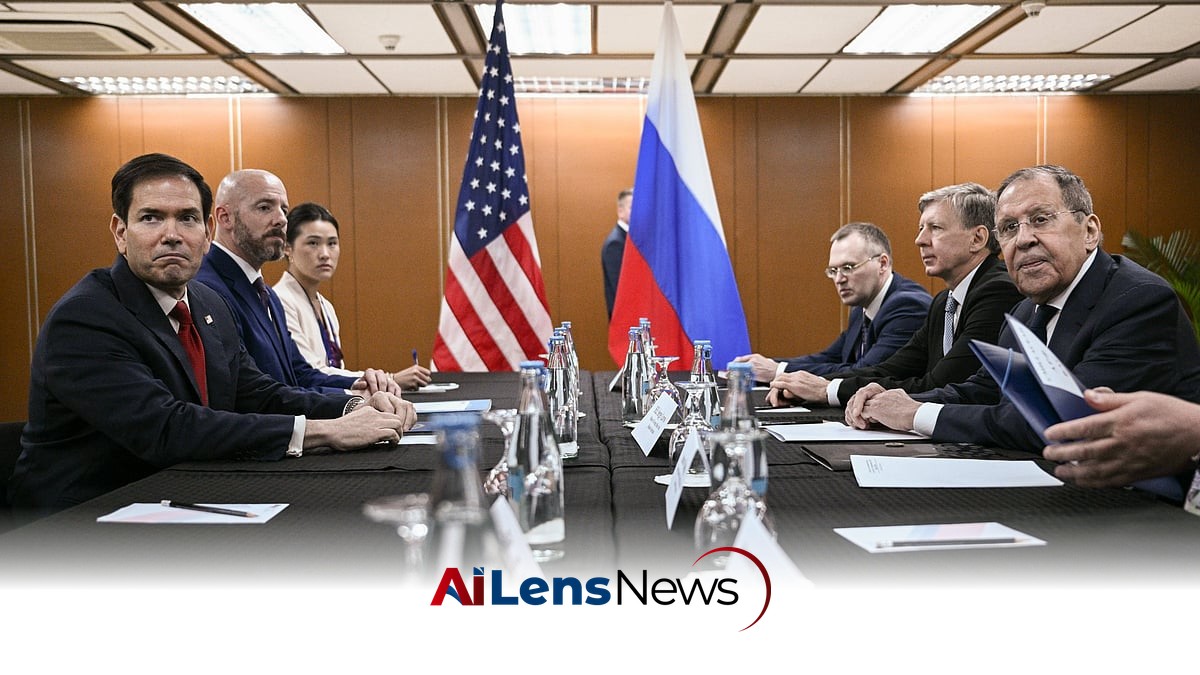


In Manila, U.S. Secretary of State Marco Rubio emphasizes the need for sustained diplomatic efforts to resolve the ongoing war in Ukraine, acknowledging past unsuccessful talks.
New Delhi, India Jul 24, 2026 ALN: U.S. Secretary of State Marco Rubio said Thursday that the Trump administration is poised to help end the "senseless war" in Ukraine but acknowledged there is no quick path to a deal, saying diplomacy will require sustained effort and new ideas.
Rubio, who held talks with his Russian counterpart Sergey Lavrov in the Philippine capital, alluded to how U.S.-mediated talks have stalled. He called them "unsuccessful or at least unfruitful" in the past but insisted that President Donald Trump was committed to the work "if conditions and factors have changed to make that possible." This statement underscores the complexity of the diplomatic landscape surrounding the Ukraine conflict, which has been ongoing since 2014 following Russia's annexation of Crimea and the subsequent conflict in Eastern Ukraine.
"That's been the challenge — an end that both sides can accept," Rubio told reporters. "We've tried and we'll continue to try to see if we can, you know, find a middle ground that brings this about. And we're prepared to play that role if the opportunity presents itself." The reference to finding a middle ground highlights the difficulties faced by negotiators, as both Ukraine and Russia have entrenched positions that make compromise challenging.
Rubio met Lavrov and several other leaders, including China's foreign minister, on the sidelines of an annual gathering by foreign ministers of the Association of Southeast Asian Nations in Manila. This gathering is significant as it reflects the increasing importance of Southeast Asia in global geopolitics, particularly in the context of U.S.-China rivalry and the ongoing conflicts in the region.
America's top diplomat said the U.S. is focused on Asia even as it steps up fighting with Iran, seeks a pathway to end Russia's war in Ukraine, and pressures the Cuban government to make changes. The mention of multiple international issues illustrates the breadth of U.S. foreign policy challenges, where resources and attention are often stretched thin across various conflicts and diplomatic efforts.
Three days of closed-door talks that started Tuesday have centered on the escalating fighting in the Middle East and tensions in the South China Sea, where a new clash flared Thursday. The situation in the South China Sea is particularly volatile, with multiple nations, including China, the Philippines, Vietnam, and others, asserting claims over various islands and maritime territories. This has led to confrontations and a heightened military presence in the region.
After meeting with Rubio, Lavrov largely ignored questions from reporters. The Russian Foreign Ministry in Moscow said he emphasized to Rubio "the unacceptability of further arming" Ukraine and accused European countries of pursuing Russia's "strategic defeat." This statement reflects Russia's ongoing concerns about NATO's military support for Ukraine, which it views as a direct threat to its national security and regional influence.
Lavrov reiterated Russia's readiness for "a political and diplomatic resolution of the conflict" and commitment to agreements reached at a summit between Russian President Vladimir Putin and Trump in Alaska last year, the Russian ministry said. The reference to past agreements suggests that Russia may be looking for a way to de-escalate tensions while preserving its strategic interests in Ukraine and the broader region.
But Rubio said "we'll have to find new suggestions and new ideas" that are acceptable to both sides. This call for innovation in diplomatic efforts highlights the need for creative solutions to a conflict that has become entrenched over nearly a decade. There has been no change to Washington's military support for Ukraine, with weapons being purchased by NATO allies and transferred to the war-ravaged country, he said. This ongoing military support underscores the U.S. commitment to Ukraine's sovereignty, but it also complicates the diplomatic landscape by making it difficult for Russia to engage in negotiations from a position of strength.
Separately on Thursday, Ukrainian President Volodymyr Zelenskyy reiterated that his priority is finding a way to get back to negotiations. Zelenskyy's emphasis on negotiations indicates a desire for a peaceful resolution, but it also reflects the pressures faced by Ukraine, which has suffered significant losses in terms of both human lives and economic stability due to the ongoing conflict.
U.S. efforts to broker an end to the Russia-Ukraine war have been overshadowed by the outbreak of the Iran war earlier this year. Renewed strikes by Washington and Tehran have been intensifying after an interim ceasefire deal collapsed. The situation with Iran has drawn attention away from Ukraine, illustrating the challenges of maintaining focus on multiple international crises simultaneously. Trump's warning to Iran that the U.S. will destroy one Iranian bridge or power plant each time Iran shoots at a ship in the Strait of Hormuz signifies the high stakes involved in U.S.-Iran relations, which could have broader implications for regional stability.
Iranian Foreign Minister Abbas Araghchi responded by saying the country's defense doctrine was an "eye for an eye." This exchange further escalates tensions between the two nations, complicating the U.S.'s ability to manage its foreign policy objectives effectively.
Rubio met Wednesday with Chinese Foreign Minister Wang Yi and said they discussed a new altercation this week between Chinese and Filipino forces in a disputed shoal in the South China Sea, which Beijing claims virtually in its entirety. Rubio called the incident "escalatory." This characterization reflects the U.S. stance on China's assertive territorial claims, which have drawn criticism from multiple Southeast Asian nations and have implications for regional security and international trade.
He also said they talked a lot about Chinese leader Xi Jinping's planned trip in September, noting he believes Xi will have a "very positive visit when he comes to Washington." This upcoming visit is significant as it may provide an opportunity for dialogue between the two superpowers, which have been at odds over trade, technology, and military issues.
In Beijing, the Chinese coast guard said it took necessary measures, including monitoring and blocking, to drive away two Philippine ships that disregarded repeated warnings from the Chinese side in a fresh confrontation Thursday. China said its operations were professional and lawful and urged the Philippines to stop its provocative actions infringing on Chinese territory. This incident highlights ongoing tensions in the South China Sea, where incidents of harassment and confrontation are common as nations assert their claims over maritime resources.
The Philippine coast guard, however, said the two fishing vessels were harassed while bringing fuel aid to Filipino fishermen in the Scarborough shoal. It said a Chinese coast guard ship tried to spray one vessel with a powerful water cannon but missed, calling these "illegal, coercive and aggressive actions." This situation illustrates the complexities of maritime disputes in the region, where both sides have differing narratives about the legitimacy of their actions.
The Trump administration has repeatedly criticized China's assertive actions in the South China Sea to the disadvantage of smaller claimant countries like the Philippines, Washington's oldest treaty ally in Asia. Taiwan and ASEAN members Vietnam, Malaysia, and Brunei have also been involved in the often-tense territorial standoffs. The U.S. has positioned itself as a supporter of smaller nations facing pressure from larger powers, which is part of its broader strategy to maintain influence in Asia.
ASEAN aims to conclude years-long negotiations with China on a proposed non-aggression pact by this year, according to a draft of a joint communiqué seen by The Associated Press. The code of conduct aims to prevent a major conflict in the disputed waters, a key global trade route, that could draw in the United States. This proposed agreement underscores the importance of multilateral diplomacy in addressing regional tensions and the need for cooperative mechanisms to manage disputes effectively.
To learn more about the latest developments in Elections, stay updated with our exclusive reports and analyses on AiLensNews.

