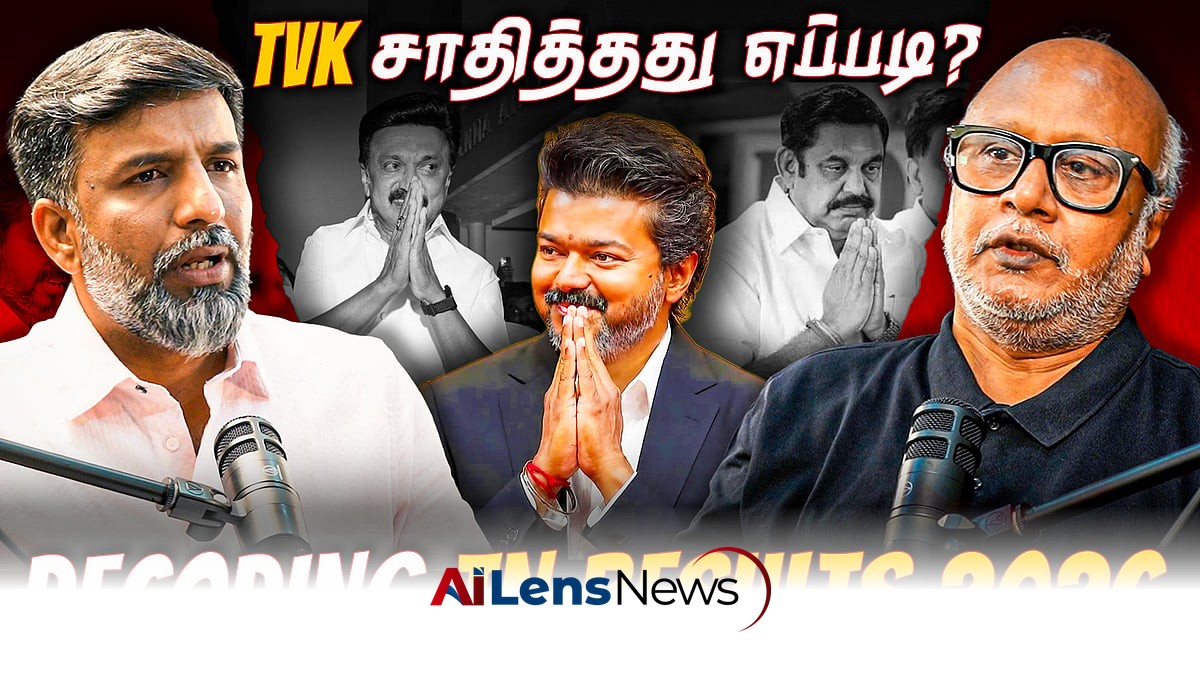


Actor-turned-politician Vijay's Tamilaga Vettri Kazhagam (TVK) wins its first Assembly election, ending decades of DMK and AIADMK dominance.
New Delhi, India Jul 16, 2026 ALN: After six decades of electoral dominance by the Dravida Munnetra Kazhagam (DMK) and the All India Anna Dravida Munnetra Kazhagam (AIADMK), the political landscape of Tamil Nadu has witnessed a historic transformation. The emergence of actor-turned-politician Vijay's Tamilaga Vettri Kazhagam (TVK) as a significant force in the state’s Assembly elections marks a pivotal moment in the region's political narrative. This victory not only signifies a shift in voter sentiment but also poses critical questions about the future of traditional political parties in Tamil Nadu.
The rise of TVK can be attributed to a confluence of factors that have culminated in a growing discontent with the established political order. For decades, Tamil Nadu's political scene has been dominated by the DMK and AIADMK, two parties that have historically represented the interests of the Dravidian movement. The DMK, founded by E.V. Ramasamy, popularly known as Periyar, has long championed social justice and equality, while the AIADMK, established by M.G. Ramachandran, has focused on populism and welfare schemes. However, the recent electoral results suggest a significant shift in public sentiment, raising questions about the resilience of these entrenched political entities.
One of the primary factors contributing to TVK's rise is the phenomenon of anti-incumbency. After years of governance, both the DMK and AIADMK have faced criticism for their handling of various issues, including governance, economic challenges, and public welfare schemes. The DMK government, in particular, has been scrutinized for its responses to key issues such as unemployment, inflation, and the management of public services. Discontent among the electorate regarding the effectiveness of these long-standing parties has created an opening for new political players like TVK.
Moreover, the weakening of traditional Dravidian parties has been exacerbated by internal conflicts and leadership crises. The DMK, despite its historical significance and strong grassroots support, has faced challenges in maintaining unity within its ranks. Similarly, the AIADMK has dealt with factionalism and leadership struggles following the death of its iconic leader Jayalalithaa. This fragmentation has left a void in the political landscape, which TVK has successfully capitalized on.
TVK's victory can also be attributed to its ability to resonate with the aspirations of the younger electorate. Vijay, a popular film actor with a massive fan base, has managed to leverage his stardom to connect with voters, particularly the youth. His campaign focused on themes of hope, change, and empowerment, which have struck a chord with a generation that is increasingly disillusioned with traditional politics. The use of social media and innovative campaigning strategies has further amplified his reach, allowing TVK to engage with voters in ways that were previously unexplored by traditional parties.
In addition to appealing to younger voters, TVK has also attracted a diverse coalition of support across various demographics. By addressing issues such as corruption, unemployment, and social justice, TVK has presented itself as a viable alternative to the established parties. This broad-based appeal has been instrumental in galvanizing support, allowing TVK to build a formidable electoral presence in its inaugural campaign.
The implications of TVK's victory extend beyond the immediate electoral outcomes. The rise of a new political force in Tamil Nadu could signal a shift towards a more multipolar political landscape, challenging the binary dominance of the DMK and AIADMK. This shift may encourage other emerging parties to contest elections more vigorously, fostering a more competitive political environment in the state.
Furthermore, the success of TVK raises important questions about the future strategies of the DMK and AIADMK. Both parties will need to reassess their approaches to governance, outreach, and engagement with the electorate. The traditional strategies that have served them well in the past may no longer be sufficient to maintain their relevance in a rapidly changing political context. This may lead to a reconfiguration of alliances, policy priorities, and campaign strategies as they seek to reclaim voter trust and support.
As Tamil Nadu moves forward from this historic electoral outcome, the political dynamics in the state are likely to evolve significantly. The emergence of TVK not only reflects changing voter preferences but also underscores the importance of adaptability and responsiveness in contemporary politics. The upcoming years will be crucial for all parties involved as they navigate this new political terrain, and the decisions made in the wake of this election will likely shape the future of Tamil Nadu's governance and political landscape.
In the first episode of 'Decoding TN Results 2026', a special podcast series, senior journalist Mani discusses these developments with Shabbir Ahmed, unpacking the verdict and examining the factors behind TVK's breakthrough. The podcast aims to provide insights into the electoral mandate and the implications for Tamil Nadu's political future, offering listeners a comprehensive analysis of this significant moment in the state's history.
The political significance of TVK's rise cannot be overstated. Historically, Tamil Nadu's political scene has been characterized by strong party loyalty, especially towards the DMK and AIADMK. These parties have cultivated a deep-rooted connection with their supporters through decades of social welfare initiatives, cultural outreach, and political mobilization. However, the emergence of TVK suggests that voters are increasingly willing to challenge the status quo and explore alternatives, particularly if those alternatives resonate with their immediate concerns and aspirations.
Moreover, the generational shift in the electorate, with younger voters becoming a more prominent demographic, means that traditional parties must adapt their messaging and strategies to engage this group effectively. The youth of Tamil Nadu is not only looking for leaders who understand their issues but also those who can inspire and mobilize them towards collective action. TVK's ability to harness this sentiment demonstrates the potential for significant political upheaval in the state.
As the political environment becomes more fluid, the traditional parties may find themselves needing to innovate in their approaches to governance. This could mean a greater emphasis on transparency, accountability, and responsiveness to public grievances. The electorate's increasing demand for good governance and effective public service delivery may compel the DMK and AIADMK to rethink their operational frameworks and engage in genuine dialogue with their constituents.
Additionally, the rise of TVK could lead to a realignment of political alliances in Tamil Nadu. The established parties may seek to forge new coalitions or partnerships with smaller parties to consolidate their power and counteract the challenge posed by TVK. This could result in a more fragmented political landscape where multiple parties vie for influence, making governance more complex and necessitating greater negotiation and compromise.
As the political narrative in Tamil Nadu unfolds, the implications of TVK's victory will likely be felt across various sectors, including governance, economic policy, and social justice initiatives. The new party's approach to these critical issues will be closely watched, and its ability to deliver on its promises will play a crucial role in determining its longevity and influence.
In conclusion, the emergence of Tamilaga Vettri Kazhagam marks a significant turning point in Tamil Nadu's political history. The combination of changing voter demographics, disillusionment with established parties, and the ability to connect with the electorate on pressing issues has created a fertile ground for new political entities. As Tamil Nadu enters this new chapter, the evolving dynamics will not only reshape the state's political landscape but also have broader implications for governance and democratic engagement in India as a whole.
To learn more about the latest developments in Elections, stay updated with our exclusive reports and analyses on AiLensNews.

