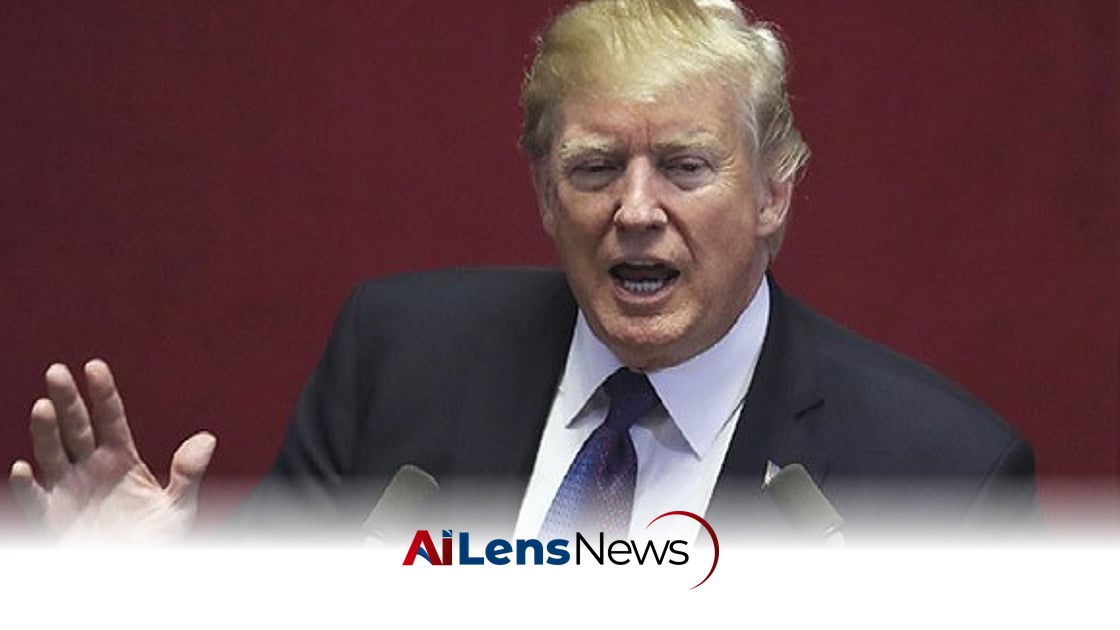


In a recent primetime address, Trump reiterated doubts about past elections, raising concerns among Democrats about the integrity of upcoming midterms.
New Delhi, India Jul 17, 2026 ALN: President Donald Trump used a primetime address to the nation Thursday to once again raise doubts about the results of past elections, reviving a subject he's long used to make unproven claims and deny his loss in the 2020 election. This address comes at a time when election integrity is a hot topic in American politics, and Trump's repeated assertions about election fraud have sparked significant debate across the political spectrum.
Trump's fixation on his loss to Democrat Joe Biden six years ago and the long-debunked theories he's circulated about it are things he still brings up regularly when discussing other subjects. His tendency to dwell on past grievances has become a hallmark of his political style, often overshadowing current issues that require attention. By elevating the deeply political and conspiratorial topics to a presidential primetime address, Trump underscores the lengths to which he has used his second term to both blow past norms and fixate on old grievances, a strategy that resonates with his base but alienates many others.
In his speech, Trump presented allegations of interference and influence in ways that lacked key context, and he did not produce evidence that votes had been manipulated or that the election outcome had been altered. His approach reflects a broader trend in American politics where unsubstantiated claims can gain traction among certain groups, often leading to a polarized electorate.
Trump began Thursday night with a stark warning about what he described as flaws in the voting system. He announced that he was releasing previously classified documents related to the 2020 and 2018 elections, the latter of which saw his party suffer significant losses. This move to disclose documents has been interpreted as an attempt to validate his claims of electoral malfeasance, although the documents themselves were presented without sufficient context to substantiate his allegations.
He did not raise doubts about his election wins in 2016 or 2024, which further emphasizes his selective narrative surrounding election integrity. “America is back and doing really well, but we still have a major challenge that must be urgently addressed, because no country can be great without fair and honest elections,” he stated, framing the issue of election integrity as a national priority. This rhetoric is particularly significant as it seeks to mobilize support for his proposed policies aimed at tightening voter identification requirements.
Trump's remarks were strategically used to justify his push for a strict voter ID bill in Congress, which he described as “urgently needed to stop the vulnerabilities that I've mentioned.” This proposal aligns with a broader Republican effort to implement stricter voting laws across various states, often justified by claims of widespread voter fraud, despite a lack of evidence supporting such claims. Critics argue that these laws disproportionately affect minority voters and undermine the democratic process.
As Trump spoke, the White House unveiled a website containing documents that were presented without context and included selectively released pieces of investigation files, intelligence analysis, and correspondence. This tactic of releasing information without appropriate context or comprehensive analysis has raised concerns among experts about the potential for misinformation and its impact on public perception.
Notably, Trump focused on China but glossed over Russia, a country that intelligence officials have said favored Trump in 2016 and 2020 and engaged in wide-ranging influence campaigns aimed at boosting him over Biden in the latter campaign. This selective emphasis on foreign interference raises questions about the narrative Trump is attempting to construct regarding election security and foreign influence.
Primetime presidential addresses are typically reserved for major milestones or nationally significant events. Trump's decision to address the nation in this manner indicates his desire to elevate the topic of election integrity to a level of national concern, despite the controversies surrounding his claims. The last time he delivered a similar address was in April, where he spoke on the Iran war amid escalating tensions. His remarks then suggested a quick resolution, contrasting sharply with the ongoing complexities of international conflict.
Trump also delivered a politically charged primetime speech in December, where he sought to blame the challenging economic climate on Democrats. This pattern of using primetime addresses to further political agendas rather than focusing solely on policy or national issues has drawn criticism from various quarters.
At least some TV networks said Thursday they would not carry the speech live but would air it on their streaming services. ABC, NBC, and CNN decided not to air the remarks live but to carry them in full on their streaming services and break into network coverage as needed. This decision reflects the contentious relationship between Trump and many mainstream media outlets, which have often been criticized by the former president for their coverage of his administration.
CBS and MS NOW both cut away from Trump's speech before he finished, while Fox News continued to carry his address. Trump's call-out of the media outlets for not carrying it live and his accusations of being “part of a plot” highlight the ongoing narrative he has constructed around media bias and its alleged role in shaping public perception of his presidency.
Networks typically but don't always choose to carry presidential addresses to the nation live. In 2022, when then-President Joe Biden delivered a primetime address full of warnings about Donald Trump and his adherents' “extreme ideology,” the networks did not carry it live. This inconsistency in coverage raises questions about how media outlets decide which presidential addresses warrant live broadcasting and how that impacts public discourse.
In 2014, the major networks chose to stick with their primetime programming instead of airing an address by then-President Barack Obama on his plans for immigration reform. Such decisions reflect the delicate balance networks must strike between fulfilling their role as news providers and maintaining viewer engagement with their regular programming.
White House press secretary Karoline Leavitt on Thursday afternoon seemed to be still trying to persuade networks to carry the remarks live, stating, “I think that the mainstream media should air the president's speech and allow the American people to draw their own conclusions from it.” This sentiment underscores the administration's desire to control the narrative surrounding Trump's address and ensure that his message reaches as wide an audience as possible.
Democrats warned that Trump was trying to revive false claims of past stolen elections in order to delegitimize the 2026 midterm elections, in which Trump's Republican Party is facing headwinds. The implications of Trump's address extend beyond mere rhetoric; they touch on the very foundation of American democracy and the public's trust in electoral processes.
“Trump is going to use a primetime address to stoke misleading claims about our elections in order to justify interfering in our midterms. It's on all of us to follow the facts and not accept his constant stream of misdirections and lies,” Virginia Democratic Sen. Mark Warner said in a statement on X. This statement highlights the concern among Democrats that Trump's narrative could influence voter perceptions and potentially impact election outcomes.
“Trump is again trying to drum up baseless election conspiracies ahead of the November elections,” New Jersey Democratic Sen. Andy Kim said in a post on X. The timing of Trump's address, coming as the midterm elections approach, suggests a deliberate strategy to galvanize support among his base while sowing doubt among the general electorate about the legitimacy of the upcoming elections.
"Americans are tired of endless war, skyrocketing gas prices, and a president that isn't looking out for them. Voters will make their voices heard, whether Trump wants them to or not,” he added, reflecting a sentiment shared by many Americans who are frustrated with the current political climate and the focus on divisive issues.
Before he began speaking about elections, Trump started his speech by ticking through a long list of what he said were his administration's accomplishments, including cutting drug prices. This tactic of emphasizing achievements serves to bolster his image as a successful leader while simultaneously framing the narrative around the perceived failures of the current administration. The juxtaposition of his past accomplishments with his current grievances creates a complex narrative that resonates with some voters but raises questions about accountability and the ability to move forward from past controversies.
To learn more about the latest developments in Political Controversies, stay updated with our exclusive reports and analyses on AiLensNews.

