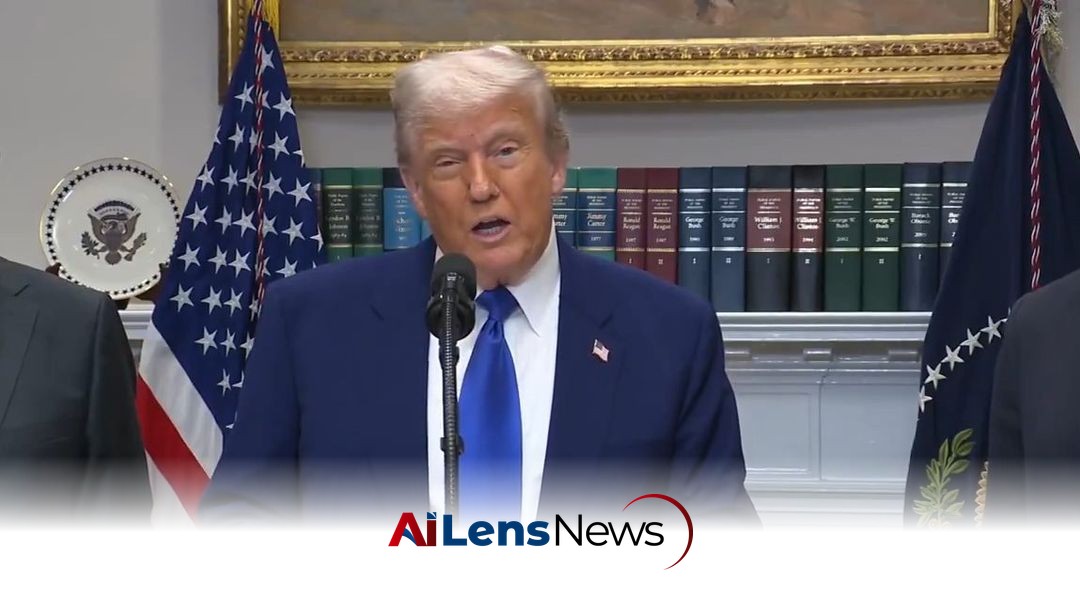


US President Donald Trump announced the cancellation of a military strike against Iran following requests for more time to finalize a diplomatic deal, which includes reopening the Strait of Hormuz.
New Delhi, India Aug 2, 2026 ALN: US President Donald Trump announced the cancellation of a planned military strike against Iran following diplomatic overtures from Tehran and several West Asian nations seeking additional time to negotiate a comprehensive deal. This deal aims to facilitate the immediate reopening of the strategically vital Strait of Hormuz and to address concerns regarding Iran's nuclear ambitions.
In a post on Truth Social, Trump expressed a readiness for military action, stating, "The U.S.A. is locked and loaded and ready to go against the Islamic Republic of Iran, at levels of Military Terror, Strength, and Power not seen since World War II." However, he indicated that, based on requests from Iran and other Middle Eastern countries, he would hold off on any military action, contingent upon the successful negotiation of a deal. The agreement would encompass the immediate and total reopening of the Hormuz Strait, along with measures to mitigate Iran’s nuclear threat. Trump emphasized the importance of this diplomatic effort for global stability and the future prosperity of Iran, mentioning that Israel shares this commitment to de-escalation.
Trump's announcement comes in the context of escalating tensions in West Asia, where he had previously warned of severe consequences for Iran. Reports from US media outlets indicated that Washington was preparing for potential military strikes against Iran, which could have commenced as soon as the upcoming weekend. This precarious situation reflects the delicate balance of power and the ongoing geopolitical challenges facing the region.
The diplomatic landscape has been notably active, with regional mediators such as Qatar and Pakistan playing crucial roles in preventing further military escalation. Officials from these nations engaged in urgent discussions with both Iranian and US representatives, including Trump's special envoy, Steve Witkoff. The dialogues also centered on restoring commercial shipping activities through the Strait of Hormuz, a vital passageway for global oil supplies, underscoring the economic implications of military action in the region.
Saudi Crown Prince Mohammed bin Salman reportedly communicated with Trump, advocating for de-escalation and expressing concerns regarding the potential for US military strikes on Iran. Saudi Arabia has consistently emphasized the necessity of avoiding a broader regional conflict, reflecting the kingdom's strategic interests in maintaining stability in the Gulf region.
In contrast, Iran has issued stern warnings against any military aggression. Iranian Foreign Minister Abbas Araghchi conveyed Tehran's position during discussions with counterparts from Turkey, Pakistan, and Saudi Arabia, asserting that Iran would respond "decisively and proportionally" to any acts of aggression by the United States, Israel, or allied nations. This statement underscores the heightened tensions and the potential for conflict, should diplomatic efforts fail to yield a satisfactory resolution.
Despite Trump's announcement, the situation remains fraught with uncertainty. The US State Department has issued a travel advisory, recommending that American citizens in the Middle East consider leaving the region due to the risk of "unforeseen escalation." This advisory reflects the US government's recognition of the volatile environment and the potential for sudden shifts in the geopolitical landscape.
Tehran has also cautioned nations hosting US military bases against facilitating any attacks, further complicating the regional dynamics. Reports of Iranian drone activity in Kuwaiti airspace have heightened concerns about military confrontations, illustrating the fragile nature of security in the Gulf region.
Trump's decision to cancel the planned military strike, if followed by a successful negotiated agreement, could provide a temporary respite from the looming threat of a wider regional conflict. However, it is important to note that no formal confirmation of such a deal has been announced by Iran or other involved parties. The implications of this situation extend beyond immediate military concerns, touching upon broader issues of international diplomacy, regional security, and the global economy.
The Strait of Hormuz is a critical chokepoint for global oil transportation, with a significant percentage of the world's oil supply passing through this narrow waterway. Any disruption in this area could have far-reaching consequences for global markets and energy prices. The ongoing tensions between the United States and Iran, rooted in a complex history of conflict and mistrust, have the potential to escalate rapidly, necessitating careful navigation by all parties involved.
As diplomatic efforts continue, the international community remains watchful, hoping for a resolution that can avert further conflict and promote stability in a region that has long been a focal point of geopolitical strife. The interplay between military readiness and diplomatic negotiations will be crucial in determining the future trajectory of US-Iran relations and the broader security landscape in West Asia.
The history of US-Iran relations is marked by a series of events that have contributed to the current state of affairs. The 1979 Iranian Revolution, which led to the overthrow of the Shah, a US ally, and the subsequent hostage crisis, established a foundation of mutual distrust. Over the decades, various incidents, including the Iran-Iraq War, the US's withdrawal from the Joint Comprehensive Plan of Action (JCPOA) in 2018, and ongoing sanctions, have exacerbated tensions. The JCPOA was an agreement aimed at curbing Iran's nuclear program in exchange for the lifting of economic sanctions, but its collapse has led to increased hostility and military posturing.
In recent years, the strategic importance of the Strait of Hormuz has been underscored by the fact that approximately 20% of the world's oil passes through this narrow passage. The potential for military conflict in this region poses not only a risk to oil prices but also to global economic stability. Any military action could disrupt shipping routes and lead to significant economic repercussions, not just for the countries involved but for economies worldwide that depend on oil imports.
Furthermore, the involvement of other nations, such as Israel and Saudi Arabia, complicates the situation. Both countries have expressed concerns about Iran's nuclear capabilities and its influence in the region, particularly through proxy groups in Lebanon, Syria, and Yemen. Their alignment with US interests has often led to a unified front against Iran, but it also raises the stakes for any potential military engagement, as Iran has vowed to retaliate against any attacks on its sovereignty.
The delicate balance of power in the region is further influenced by the roles of other global powers, including Russia and China, who have shown support for Iran in various diplomatic arenas. This geopolitical complexity adds layers of difficulty to any negotiations, as multiple parties have vested interests in the outcomes.
In conclusion, while Trump's cancellation of the military strike against Iran may provide a temporary pause in escalating tensions, the underlying issues remain unresolved. The interplay between military readiness and diplomatic negotiations will be crucial in determining the future trajectory of US-Iran relations and the broader security landscape in West Asia. The international community's hopes for a peaceful resolution hinge on the ability of all parties to engage in constructive dialogue and to prioritize stability over conflict in a region that has long been characterized by volatility.
To learn more about the latest developments in Political Controversies, stay updated with our exclusive reports and analyses on AiLensNews.

