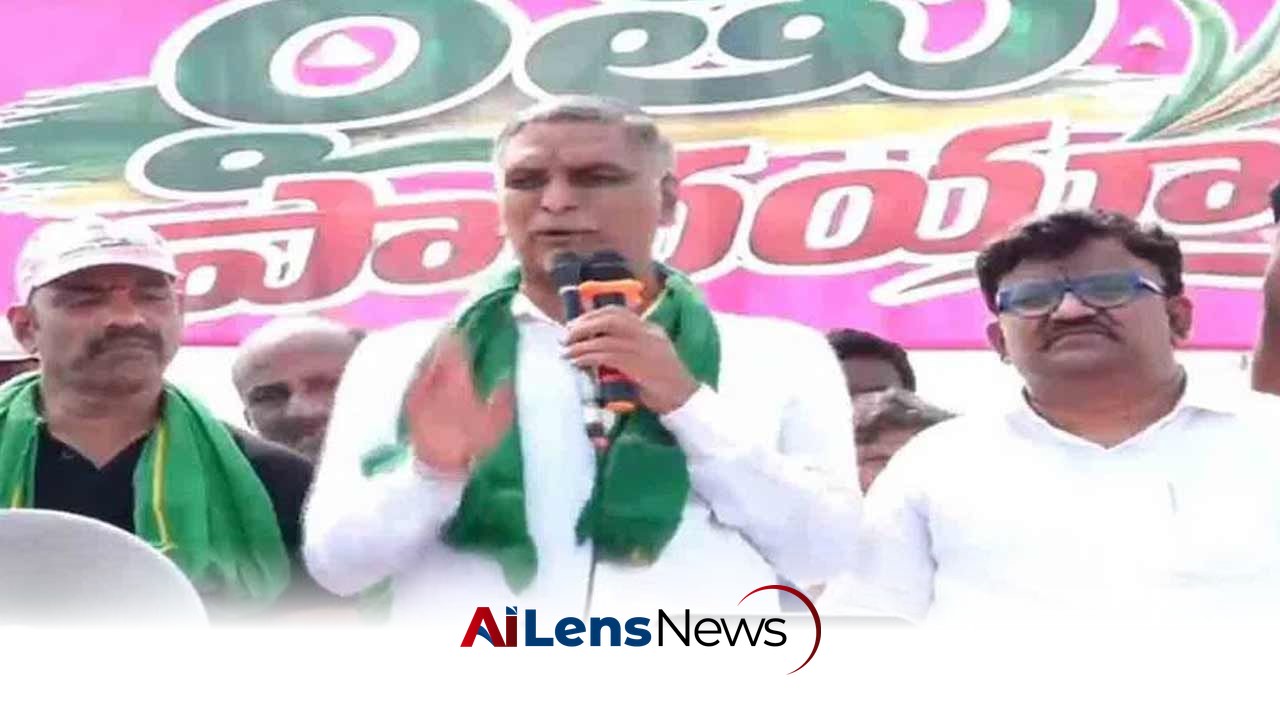


Former minister T Harish Rao accuses the Congress government of creating drought-like conditions in Telangana by failing to lift Godavari water, neglecting farmers' needs.
Hyderabad, India Jul 19, 2026 ALN: Siddipet: Former Minister T Harish Rao has alleged that the current drought-like conditions in Telangana are a direct result of the Congress government's refusal to lift irrigation water from the Kannepalli pump house. Speaking to farmers and BRS workers during a 15-kilometer padayatra from Annapurna Sagar to Ranganayaka Sagar, Rao emphasized the urgent need for the operation of the Kaleshwaram Lift Irrigation Scheme (KLIS).
The Kaleshwaram Lift Irrigation Scheme, initiated by former Chief Minister K Chandrashekhar Rao, is one of the largest irrigation projects in the country, aimed at harnessing the waters of the Godavari River to provide irrigation to drought-prone areas of Telangana. This ambitious project was designed to lift water from the Godavari River and distribute it across various districts, thereby transforming the agricultural landscape of the state. However, its effectiveness is contingent upon the proper management and utilization of water resources, which Rao claims has been undermined by the current government.
Rao claimed that the government has allowed 75 TMC ft of water to flow downstream from the Kannepalli pump house, which is being utilized by the Andhra Pradesh government. This statement highlights a crucial aspect of inter-state water disputes, particularly between Telangana and Andhra Pradesh, where both states often vie for limited water resources. The sharing of river water has been a contentious issue, with both states accusing each other of mismanagement and neglect. Rao's comments reflect a growing frustration among Telangana farmers who feel that their needs are being overlooked in favor of neighboring states.
In his address, Rao criticized Chief Minister A Revanth Reddy for his remarks suggesting that he could use the blood of BRS leaders to cultivate crops. This metaphorical statement, while perhaps intended to convey the urgency of the agricultural crisis, was met with backlash and further fueled the political rhetoric surrounding the issue. Rao responded to this by stating he would willingly offer his own blood if it meant the Kaleshwaram pump houses would be activated, emphasizing the dire situation faced by farmers in the region.
Rao accused Revanth of attempting to undermine the effectiveness of the Kaleshwaram Lift Irrigation Scheme, arguing that the Congress government's inaction is directly impacting the livelihoods of farmers. The Kaleshwaram project was designed to alleviate water scarcity in Telangana, and Rao's assertions suggest that the current administration's policies are counterproductive to this goal. He further claimed that the Congress government is neglecting the struggles of farmers by refusing to lift Godavari water, thus denying irrigation to vast areas.
Highlighting the achievements of Chandrashekhar Rao, who brought millions of acres under irrigation through various projects, including the Ananthagiri Reservoir and Mallanna Sagar, Rao made a case for the effectiveness of the previous administration's water management strategies. These projects have been pivotal in transforming the agricultural landscape of Telangana, contributing to increased crop yields and improved livelihoods for farmers. Rao's defense of these initiatives underscores the importance of effective water management in addressing the challenges posed by drought and water scarcity.
Rao also warned that unless the government takes action to lift water, both the NTPC thermal power plant and the city of Hyderabad would face severe water shortages. This statement highlights the broader implications of the water crisis, which extends beyond agriculture to impact urban areas and industrial operations. The NTPC thermal power plant, which relies on water for cooling and operational efficiency, could face disruptions that would have cascading effects on energy production and supply in the region.
As farmers grapple with the consequences of inadequate irrigation, many are reportedly resorting to drilling borewells at great expense and desilting open wells to access water. This trend reflects a desperate attempt by farmers to secure water for their crops, further exacerbating the financial strain on their agricultural operations. The rising costs associated with these measures could lead to increased debt levels among farmers, raising concerns about their long-term sustainability and economic viability.
Furthermore, Rao criticized the Congress government for failing to provide essential support programs such as Rythu Bharosa, Rythu Bheema, and loan waivers. These programs were designed to offer financial assistance and security to farmers, helping them cope with the challenges of agriculture in a water-scarce environment. The lack of these support systems has intensified the hardships faced by farmers, leading to widespread discontent and calls for political accountability.
Rao urged the public to support Chandrashekhar Rao's return to power to address these pressing issues, framing the upcoming elections as a critical juncture for the agricultural community in Telangana. The rally saw participation from thousands of farmers and BRS workers, showcasing the growing discontent among the agricultural community and their demand for effective governance and support.
In conclusion, the ongoing water crisis in Telangana has sparked significant political discourse, with accusations flying between parties regarding responsibility for the current situation. The demand for immediate action to lift Godavari water remains a focal point of contention. The current political climate in Telangana is characterized by heightened tensions as parties position themselves in anticipation of the upcoming elections, with water management and agricultural support at the forefront of the public's concerns. As the drought-like conditions persist, the implications for farmers, urban areas, and the broader economy will continue to unfold, making the need for effective policy responses more urgent than ever.
To learn more about the latest developments in Political Controversies, stay updated with our exclusive reports and analyses on AiLensNews.

