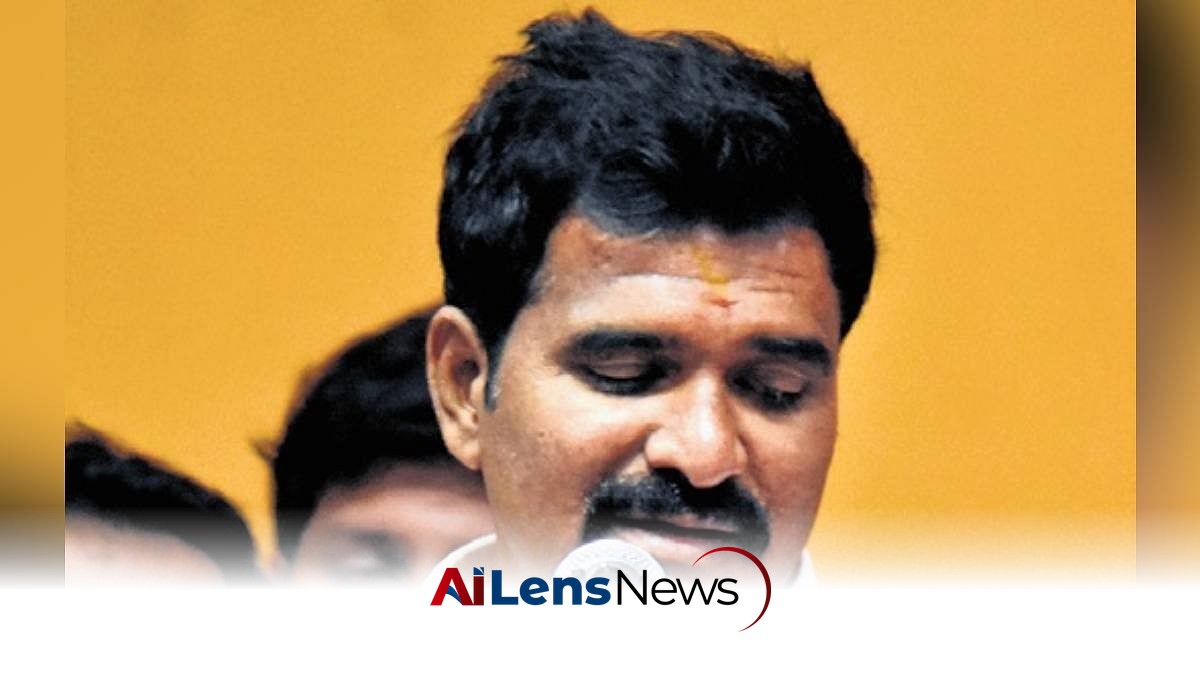


Electricity and Law Minister CTR Nirmalkumar announced that the Tamil Nadu government will approach the Supreme Court on Monday to seek directions for Karnataka to release Cauvery water.
Chennai, India Aug 2, 2026 ALN: Electricity and Law Minister CTR Nirmalkumar on Sunday announced that the Tamil Nadu government is set to file a petition before the Supreme Court on Monday. This legal move aims to seek directions compelling Karnataka to release Cauvery water to Tamil Nadu, a matter that has been a long-standing source of contention between the two southern states of India.
The Cauvery River, which flows through Karnataka and Tamil Nadu, has been at the heart of a complex and contentious water-sharing dispute for decades. The river is vital for agriculture and drinking water in both states, making the allocation of its waters a critical issue. The Supreme Court has previously ruled on the matter, but disputes over water release continue to arise, often exacerbated by changing rainfall patterns and agricultural needs. The Cauvery water dispute is not merely a legal issue; it is also deeply intertwined with the socio-economic fabric of the states involved, particularly impacting farmers and communities dependent on the river for their livelihoods.
Minister Nirmalkumar defended the Tamil Nadu government's decision not to convene an all-party meeting prior to approaching the apex court. He pointed out that while Karnataka's political parties have been united in their stance against releasing water to Tamil Nadu, the political parties in Tamil Nadu have shown a lack of cohesion. This divergence, according to the Minister, weakens Tamil Nadu's position in negotiations and legal battles over water rights. The lack of a unified front is a significant concern, as it can lead to fragmented legal strategies that may undermine the state's claims.
In a recent session, the Tamil Nadu Legislative Assembly engaged in discussions regarding the Cauvery issue, with all political parties participating in the debate. The assembly unanimously adopted a resolution concerning the water dispute, underscoring the importance of a collective approach to the issue. Nirmalkumar emphasized that every party, including the AIADMK, was given the opportunity to voice their opinions before the resolution was supported. He criticized any party that agreed to the resolution in the Assembly but later opposed it outside, suggesting that such actions were not in the best interest of Tamil Nadu. This highlights the often contentious nature of political discourse in Tamil Nadu, where water disputes can easily become a focal point for political rivalry.
Questioning the AIADMK's subsequent actions, Nirmalkumar noted that the party later challenged the resolution in the High Court. This legal maneuver has raised concerns about the potential fragmentation of Tamil Nadu's legal position. Furthermore, he criticized the DMK for filing a separate petition in the Supreme Court, arguing that having multiple petitions from the same state could lead to confusion and weaken Tamil Nadu's overall legal strategy. The implications of such internal discord are significant, as they can dilute the effectiveness of legal arguments presented before the Supreme Court.
In preparation for the Supreme Court petition, Chief Minister M.K. Stalin consulted with legal experts, including senior advocate Umapathy, who has a long history of handling the Cauvery dispute on behalf of Tamil Nadu. This consultation is seen as a crucial step in ensuring that the state’s legal stance is robust and well-prepared. However, Nirmalkumar alleged that while the government's petition was being drafted, the DMK hastily filed its own petition later that evening, which he claims undermines the unified front that Tamil Nadu should present. The strategic timing of legal filings can play a crucial role in how cases are perceived and handled in the judicial system, and this situation raises questions about the coordination among Tamil Nadu's political leadership.
Moreover, Nirmalkumar suggested that there is a political understanding between Karnataka's Deputy Chief Minister DK Shivakumar and the DMK leadership. He interpreted Stalin's comment that the Tamil Nadu Chief Minister stands "isolated" as an attempt to undermine the state's interests in the ongoing water dispute. Such accusations highlight the often fraught political landscape surrounding the Cauvery issue, where alliances and rivalries can significantly impact the outcome of legal proceedings. The interplay of politics and legal strategies adds another layer of complexity to an already contentious issue, making it difficult to predict outcomes.
As the situation stands, Karnataka has directed the release of only 3,500 cusecs of water, a volume that Tamil Nadu officials argue is insufficient to meet the state's agricultural and drinking water needs. Nirmalkumar reiterated that Tamil Nadu is entitled to receive its full allocation of water as determined by previous agreements and court rulings. The ongoing negotiations and legal battles are seen as crucial not just for immediate water needs but also for the long-term management of water resources in the region. The allocation of water from the Cauvery has far-reaching implications, not only for the agricultural sector but also for urban water supply and overall economic stability in Tamil Nadu.
The implications of this legal battle extend beyond just the immediate concerns of water allocation. The Cauvery dispute has significant socio-economic consequences for both states, particularly for farmers who rely on the river for irrigation. The resolution of this dispute is vital for ensuring food security and sustainable agricultural practices in Tamil Nadu, which is heavily dependent on the Cauvery for its agricultural output. Farmers in Tamil Nadu have raised concerns about the impact of water shortages on their crop yields, which can lead to economic distress and affect the livelihoods of thousands of families.
Furthermore, the dispute has broader political ramifications, as it often becomes a rallying point for regional parties seeking to assert their influence and protect local interests. The political dynamics surrounding the Cauvery issue can lead to heightened tensions between Karnataka and Tamil Nadu, affecting not just inter-state relations but also the political landscape within each state. The Cauvery dispute has historically been a catalyst for political mobilization, often leading to protests and public demonstrations that underscore the passionate sentiments surrounding water rights.
In light of these complexities, the Tamil Nadu government is committed to pursuing a strong legal case to secure the state's rights while simultaneously exploring avenues for an amicable resolution. The hope is that through legal and diplomatic efforts, a sustainable and equitable solution can be reached that respects the needs and rights of both states and fosters cooperation rather than conflict over shared water resources. The Cauvery River is not just a water source; it is a lifeline for millions, and its management requires careful consideration of environmental, social, and economic factors. The challenge lies in balancing these interests while navigating the intricate web of legal and political considerations that define the Cauvery water dispute.
To learn more about the latest developments in Political Controversies, stay updated with our exclusive reports and analyses on AiLensNews.

