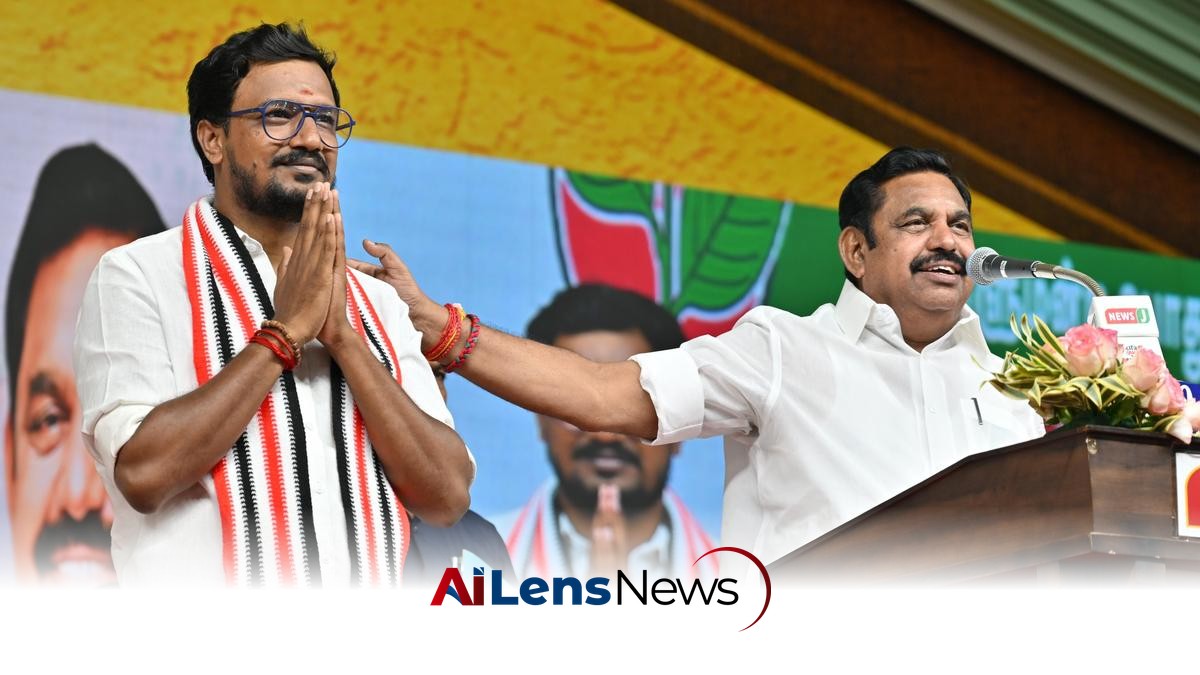


Singai Ramachandran resigns from AIADMK; key leaders Velumani and Viswanathan absent from crucial meeting chaired by Palaniswami.
Chennai, India Jul 24, 2026 ALN: Singai G. Ramachandran, the Secretary of the AIADMK students’ wing, has officially resigned from the party, making the announcement on social media on Thursday evening. This decision came just hours after he participated in a leadership meeting held in Chennai, which was chaired by the party's general secretary, Edappadi K. Palaniswami. Ramachandran's resignation has raised questions about the internal dynamics of the AIADMK and the state of its leadership amid ongoing challenges.
The AIADMK, or All India Anna Dravida Munnetra Kazhagam, is a prominent political party in , India. Founded by M.G. Ramachandran in 1972, the party has a significant legacy in the state's politics, often focusing on welfare schemes for the poor and marginalized communities. Over the years, AIADMK has experienced both political success and turmoil, particularly following the death of its long-time leader, J. Jayalalithaa, in 2016. The party has since faced internal strife and leadership challenges, which have intensified in recent years.
Ramachandran's resignation could be viewed as a reflection of the current state of discontent within the party ranks. The meeting that he attended was reportedly marked by tensions, as some members felt that certain functionaries were acting with an air of superiority. This perception of hierarchy within the party may have contributed to Ramachandran's decision to leave. According to an informed source, during the meeting, he was interrupted while speaking, which could indicate a lack of respect for his position within the party's student wing.
In addition to Ramachandran's resignation, the absence of other senior leaders such as former Ministers S.P. Velumani and Natham R. Viswanathan from the meeting is noteworthy. Their absence may signal a broader disengagement among key figures within the party, which could have implications for AIADMK's unity and effectiveness in the political landscape of . Political analysts often emphasize that a party's strength lies in its cohesion and ability to present a united front, especially in the face of electoral challenges.
During the meeting, various district unit functionaries were present, and discussions were held regarding the party's strategies and operations. Ramachandran's contributions were noted, but there were concerns about his repetitive contentions, which led to requests for him to allow others to speak. This incident highlights the challenges of managing diverse opinions within a political party, where the balance between individual expression and collective decision-making is crucial.
Edappadi K. Palaniswami, as the general secretary, holds significant authority within the party, and his leadership style has been a subject of scrutiny. The dynamics of power and influence within the AIADMK are complex, and Palaniswami's ability to navigate these challenges will be vital for the party's future. The fact that he is the sole decision-maker for the party, as indicated by the participant's comments, underscores the centralized nature of the party's leadership structure, which can lead to frustrations among other functionaries.
Furthermore, the absence of key leaders like Thangamani from meetings could indicate a disconnect between the party's central leadership and its grassroots members. This disconnect can be detrimental, especially as the party prepares for future electoral battles, where the support of both senior leaders and younger members is essential.
The AIADMK has faced significant electoral challenges in recent years, including a poor performance in the 2021 Legislative Assembly elections, where the party was unable to secure a majority in the face of a resurgent DMK (Dravida Munnetra Kazhagam). As the political landscape continues to evolve, the AIADMK must address internal dissent and strengthen its organizational structure to regain its footing in politics.
In light of Ramachandran's resignation, the party may need to conduct a thorough assessment of its internal dynamics and communication strategies. Ensuring that all members feel valued and heard is critical for maintaining morale and unity within the party. Additionally, fostering a culture of collaboration and respect among functionaries will be necessary to prevent further resignations and discontent.
As the AIADMK moves forward, it will be essential for the leadership to engage with its members actively, addressing their concerns and providing clear guidance on the party's direction. The implications of Ramachandran's resignation may extend beyond individual grievances, potentially signaling a need for broader reforms within the party to adapt to the changing political environment in .
In conclusion, the resignation of Singai G. Ramachandran from the AIADMK highlights the ongoing challenges faced by the party in maintaining unity and coherence among its members. As the political landscape in continues to shift, the AIADMK must navigate internal divisions and strive for a more inclusive approach to leadership and decision-making. The future of the party may depend on its ability to reconcile these issues and present a united front in the face of electoral challenges.
The implications of Ramachandran's resignation may also resonate with the party's youth wing, as it reflects the sentiments of younger members who may feel marginalized within the party structure. Young leaders often play a crucial role in energizing the base and connecting with the electorate, particularly in a state like , where youth representation is vital. The AIADMK's ability to retain and empower its younger leaders will be essential in shaping its future electoral strategies.
Moreover, the resignation serves as a reminder of the importance of internal democracy within political parties. When members feel their voices are not heard, it can lead to a lack of enthusiasm and commitment to the party's goals. The AIADMK must ensure that all voices, especially those of its younger members, are acknowledged and considered in decision-making processes.
As the party reflects on the recent developments, it might also consider implementing training and development programs for its leaders to enhance communication skills and foster a culture of respect and collaboration. Such initiatives could help mitigate misunderstandings and promote a more harmonious working environment within the party.
In summary, the resignation of Singai G. Ramachandran is not merely an isolated incident but a symptom of broader issues within the AIADMK. The party's leadership must take proactive steps to address these challenges, fostering a more inclusive and responsive political environment. The future of the AIADMK will depend on its ability to adapt to the changing political landscape while maintaining unity and coherence among its members.
To learn more about the latest developments in Political Controversies, stay updated with our exclusive reports and analyses on AiLensNews.

